


 Spotify

 iHeartRadio

 Apple Podcasts

 TuneIn

 Pandora

 Audible

 Amazon Music

 YouTube

 Castbox
Alicia Harper —Leading Achievement First and Redefining Joy in Schools
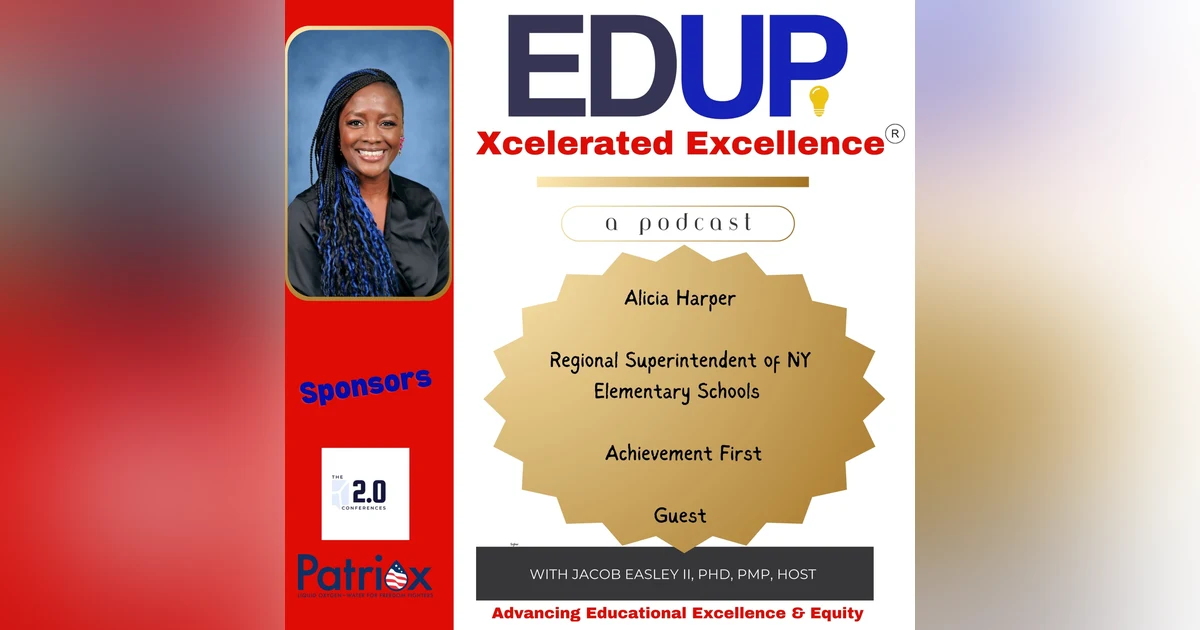

Our Guest, Alicia Harper, is a Superintendent at Achievement First. She is a turnaround strategist, and LinkedIn content creator known for her exceptional leadership in school transformation.
As a former principal, she led a turnaround school where math and reading proficiency rose from ~30% to over 90%, and staff favorability jumped from 47% to 95%, ranking #1 on Org Health Surveys during her tenure. More importantly, together with her team, she built a school where students felt happy and empowered, and their identities are affirmed because joy and rigor co-exist in every classroom.
With 15+ years in urban education, she’s celebrated for her innovative strategies and commitment to positive learning environments.
Alicia holds degrees from Columbia University and completed the Relay National Principal Fellowship. Trained in emotionally intelligent leadership by The Noble Story Group, she inspires change across her network.
Outside of work, she enjoys Brooklyn life with her husband and three sons.
Your Host: Jacob Easley II, PhD, PMP
Sponsor: The 2.0 Conferences.Register for the 2026 2.0 Conferences in Las Vegas, Nevada and receive a discount courtesy of EDUP Xcelerated Excellence with the code EDUPXE15OFF.
Your choice of the 2.0 Conferences include: CXO 2.0, Education 2.0, Health 2.0, Founders 2.0, and the Fueld Conference.
Sponsor: Patriox oxygenated water. Drinking Patriox helps oxygenate the body, promoting overall health, energy, and vitality. Receive a 10% discount on your next purchase with the code EDUPXE.
Resources:
Greeting: Eric Almonte
Research Assistant: Emma Worthington
#EDUPXE #EDUCATIONALEXCELLENCE #EDUCATIONALEQUITY
0:04 Oh, yeah. I mean, I don't remember everything that I learned in elementary school, in middle school, in high school or in college. But I remember the the teachers that had the greatest impact on me were the ones that I had the strongest relationships with were the ones who invested in me, who took the time to understand who I am as a person, who I am as a learner, what motivates me, what inspires me. And so we know that relationships are a strong determining factor in kids success, especially when they get to a place where their parent isn't bringing them to school anymore, right.
0:48 So in elementary school, someone is walking you to school or dropping you off. That's not the case in middle school. That's not the case in high school. And so it really. This is Eric Almonte, Assistant Vice President for Capital Giving at Princeton University. And you are listening to Add Up Accelerated Excellence. This episode of Add Up Accelerated Excellence is supported by the two Point O conferences to be held in Las Vegas, NV, April 7th through 9th, 2026. Business leaders, educators, healthcare experts, marketing and tech professionals, and founding entrepreneurs are welcome to take part.
1:41 Reserve your space today and receive a 15% discount courtesy of Add Up Accelerated Excellence with the code Add Up XE 15-OF F That's EDUPX E15 off. Check the show notes For more information or learn more and register online at the two conf.com. That's the two conf.com with the code Ed up EXE15 0FF. This episode is supported in part by Patriarchs. Ultra high oxygen content water drinking Patriarchs helps oxygenate the body, promoting overall health, energy and vitality.
2:24 In 2026, try Patriarchs on your journey for accelerated Excellence. Receive a 10% discount on your next purchase with the Code Add Up XE. That's 10% off with the Code Add Up XE at Patriarchs dot US. Patriarchs dot US. Find more details in the show notes. Welcome, welcome. Welcome to Add Up Accelerated Excellence, the podcast for the advancement of educational excellence and equity. And I'm your host, Jacob Easley, the second PHDPMP.
3:07 And today's guest is a rock star of an educator and educator leader. She is the regional Superintendent of New York elementary schools at Achievement First. Achievement First is a charter school network. And so I think it's important in today's context to talk about school reform. And that is somewhat of a dated word. So we're going to update that lexicon during this episode. Really, it's about ensuring that schools that perhaps have had a history of not doing well thrive and achieve excellence at high levels. So welcome to the show, Alicia Harper. Alicia, please introduce yourself to the Add Up Accelerator excellence community by giving voice to your name. And if you could just give us A and and sort of a high level overview of achievement first.
4:09 Thank you so much, Jacob, for having me on. I'm so excited to be in community with you right now and to just have a conversation about this really important work. As you said, my name is Alicia Harbour and I am the regional Superintendent for New York elementary schools at Achievement First Public Charter Schools and I've been in education for my entire adult life. I've been 15 plus years in the game and I know I don't like it. I don't look like I've been what I've been through or that I've been doing this work, but for me, this is my life's work. It is a call in, it is a mission. It's it is very closely, deeply connected to my opinion and and it's really, really important to me. And so that's why I continue to do it. A little bit about achievement first. We are a a multi state charter network and so we have schools in Brooklyn, NY, we have schools in Queens, NY. We also have schools in Connecticut and in Rhode Island. And so we are a public K12 school district and we mostly serve in neighborhoods where there are lower resources, where there are majority black and brown populations. And we just everyday try to
5:44 prove what's possible in education for all of our kids. Alicia, thank you for that. And anyone who's met Alicia, you know that her energy is infectious. I really appreciate that. And you talked about this life work as your mission, and you've been doing this for more than 15 years or about 15 years. So you are a native New Yorker, so and you've shared with me openly that you grew up in New York City in foster care in the system and you attended largely under resourced schools. So what have those experiences?
6:26 What were those experiences like for you, and how did you navigate them in your own journey towards educational excellence? Yeah, so, so fun story is I I didn't actually major in education when I was in college. I majored in psychology. Well, initially I thought I was going to be a doctor and so I was pre Med until I had to get to or go and I was like, yeah, no, I'm not doing this anymore. But I majored in psychology and I had a minor in education. And when it came time for me to graduate, I knew that I wanted to just be a part of a solution because as you said before, I grew up in Brooklyn, I grew up in New York.
7:13 I went to five different elementary schools because I was in the foster care system and I went, I lived in different foster homes in elementary school and depending on which where you live that you went to school in your neighborhood. One of the things that I noticed about all of the schools that I went to is as a as an adult, I realized that we were closely underfunded. There were just things that I saw in college and that I saw people talking about their school careers, their school journeys, their public schools that they went to was very different than the school that I could describe that I went to. And so I knew that there was an issue. I didn't have words like add reform. I didn't have words like educational equity. I didn't know all of those things at the time as an 18 year old or 19 year old.
8:20 But I knew that it was that something was wrong and I knew that I wanted to be a part of the solution. I also thought a lot about if I came out of the public school system in New York in in the neighborhoods that I grew up in and I got to college and I wasn't as fully prepared for the rigor that I was going to experience in college. I really thought about then what about my peers? What about, you know, the people that I consider like, really close friends, friends who became family, who did not go to, you know, the schools that I went to for the college that I went to or who did not have an opportunity to be in the classes that I was in. And so I just knew that there was something wrong with the system, and I knew I wanted to fix it. And so that's sort of like how I landed here. So Alicia, thank you for that.
9:28 And how did those experiences, you started talking about this, but how do those experiences shape your beliefs about how schools can, in a sense, show up for children and especially those navigating instability or uncertainty? Because really, your story is a story of, and I don't want to say it in a way that sounds negative, but a story of a survivor in some ways from systems that many folks are not familiar with. Yeah, that's so true. I think when I was in in elementary school, I'm aging myself now, but back then the classes were tracked and so I was in it and in by track. I mean they put all of the kids that they sort of see as high potential in the top class of the grade and all of the kids that they probably see as lower potential in the bottom classes of the grade.
10:29 So that it's like if I'm in fifth grade, 5 O1 might even top class, whereas five O 5 is the class that is the bottom class of the grade. And even within that system, I saw that there were disparity with new resources because in five O 1 we had, you know, we got to go on field trips, we had the teachers who would, you know, we had textbooks that were newer if we got a new batch of textbooks that year. Whereas in five O 5 that was not the case. So there is a there are gaps within the gaps and there are disparities within the disparities, first of all.
11:14 So I would say that one of the things that I saw in terms of like how can schools show up for kids and families that need it the most is really understanding where that family is coming from. Really understanding what are the challenges that's impacting families? What are the challenges that's impacting just that's getting that's impacting just getting kids to school? What are the barriers like that? And like, how can we work with families and not just like decide that we know what the issues are that that they're facing and create these plans for them, but what does it truly look like to work with families and understand what a partnership is?
12:08 You know, you know, that's actually brilliant because we often focus on teaching and learning, which is what's happening in schools between teachers and students and how school leaders can support it. But we have fewer conversations about the the broader context, which means the family lives and how do we extend teaching and learning beyond just what's happening in an individual classroom or school to those conditions outside of the school that support a child outside of that classroom or that building. So I think that's very important. So you have served as an assistant principal, a principal and now Superintendent.
12:56 What inspired you most about the work and and those changes that you saw or changes in demands across the different levels? So what inspired you each level if you could? You know, and each level I'm really inspired by the kids. At the end of the day, This is why I do this work. I do this work so that our kids can have the education that they deserve. I think a lot about my younger self. I think a lot. I talk a lot about Alicia on my social media and what and this idea of there is a kid with so much promise and so much potential and sometimes that gets tapped into and it gets cultivated and they are able to do really great things.
13:58 And sometimes it doesn't. And until we get to a space where everyone that has the opportunity and the access for their gifts to be really nurtured and cultivated, I'm not going to stop doing this work. And so like at the AP level, at the principal level, and now at the Superintendent level, the thing that really drives me is the work for the kids. I think it's really easy to be at a Superintendent level to and not be in schools and not see the kids daily. I think also as it when I went from AP to principal, it's really easy to be in your office and to, you know, just do the planning work, do all the things that needs to happen behind closed doors. And I'm not saying those things aren't important. Those things are very, very important. But even now in my role as Superintendent, even as a systems leader, I spend 4 out of my five days in schools doing school visits.
15:04 So I'm usually at two different schools every single day. And when I'm in those schools, a portion of it is spent with my principal doing some coaching work, I'm doing some development work, but the majority of my time is actually spent with my principals and a piece in classrooms with kids, with teachers doing the work alongside them. So just out of curiosity, because I'm, I think this is a phenomenon for most of us who go into some leadership role. Did it happen to you or did you or did you prepare for a leadership role? So how did you know?
15:44 How did that come about? That's an interesting question. I was a third grade teacher and at the time the 5th grade class. This one fifth grade class went through three teachers on there and the third teacher went to lunch and never came back. And so my AP at the time came up to me and she was like, hey, as of tomorrow you're going to be a fifth grade teacher.
16:26 And so I had to take over the ass in the middle of the year. And what I learned in that process of dividing up my current kids, my third graders, in amongst the other third grade classes, taking over this 5th grade class, essentially resetting the class so that we had systems and structures in place so that learning could actually take place. I actually had a little bit of resentment from my AP and I was like, this is not the way you approach an adult and a a teacher who has like poured so much into a school.
17:09 And if and if it needed to be that I had to take over the class then flying. But the way you come up to someone and engage them in a conversation like that should not just be on a random. And I'm literally, because I remember this, it was a random Wednesday afternoon, which it was like, as of tomorrow, you're going to be a fifth grade teacher. And so going from teaching to being an API knew I wanted to do that because I, I felt like I could have a greater reach, a greater impact. And I, I felt like I could do it differently than how I was experiencing with my current leaders. And so that was something that I did pursue. I pursued the assistant principal role while I was in the assistant principal role and I was in that role for a number of years. At some point I began to prepare for principalship. There is a program at Achievement 1st called the Principal fellow program.
18:07 And so I applied to that program and I and I and I was a part of that program and it's a pretty rigorous two year program that prepares assistant principals to step into a principal seat and take on the role of principalship. And so I did that program Superintendent, I would say that that was not a role that was yet on my radar. And so I would gently pushed or gently nudged into this role. I loved being a principal. And you know, like I, if I could go back to being a principal tomorrow, I would absolutely do it. It was just such a, it's such a demanding job, but such also, there's just something so special about creating a vision and seeing that vision come to life in every single classroom in your school across kindergarten, first grade, 2nd grade, 3rd grade, 4th grade, you know, with all teammates. And that, that was a very, that, that was really magical for me. But I did, you know, I answered the call of stepping into the Superintendent role because I do believe that it is a calling. It's not just a job.
19:29 And now I'm able to work with schools across my district and just bring in a little bit of what I felt as a principal and what I was able to cultivate as a principal. And to me, that's really, really magical, and that's also really, really inspiring. We definitely appreciate that. And so when you left from leadership of managing or leading a single school to overseeing a district, how did your leadership identity and decision making mindset evolve?
20:10 And I know you said you you were nudged into it, which I can definitely relate to. Yeah. So I mean, I think that more than anything, I had to stay even more rooted and grounded in my values, in my standards, in my beliefs about what's possible for children because I was, I'm not suiting my own ear, but 22 I was. My school was in turn around when I took over and I had a charge of turning around the school in five years. And we were able to do that in less than three years where we went from the bottom of our district.
20:54 Like our proficiency was around 35%. And in the span of three years, we were able to get it up to 90% in math, in phonics, in writing. And so we were and that's a really great accomplishment. And it, it just really changes the trajectory of lives of our kids if 90% of them are able to do the things on grade level. And so when I step into this sort of like district seat, so the hat that I had to put on was the hat. What does it look like to scale? What does it look like to scale these results?
21:35 What are the systems that need to be in place in order for all of our schools to achieve at that high level? What's the coaching that needs to be in place? What's the school visits that need to be in place like? What's the professional development that needs to be in place like? Things like that? Like what does it look to roll out a curriculum at a level with all schools as opposed to just one grade or one class or one school? So that's the the shift that I had to make. It's like thinking about some my building, me, my building. We we roll in together to Oh no, we are all in this together. This it's not just about my 400 plus kids. It's about the thousands of kids that we serve every single day. So that's the the biggest thing that I would say, the shift that happened for me.
22:24 But ultimately, I had to stand and double down on the things that I value, that my standards and my beliefs in what kids and adults deserve and what they can do. Because I have found that those things are the things that get tested at this level. I, I appreciate that. So you mentioned the word turn around and we at the top of the show, we talked about reform and we're going to get into that. Thank you for listening to Add Up Accelerated Excellence. This episode is supported by the 2.0 Conferences to be held in Las Vegas, NV, USA, April 7th through 9th, 2026.
23:10 Business leaders, educators, healthcare experts, marketing and tech professionals, and founding entrepreneurs are welcome to take part. Reserve your space today and receive a 15% discount courtesy of Add Up Accelerated Excellence with the Code Ed Up xe 15-OF F. That's Add up XE 15 off. Check out the details in the show notes or learn more and register online at the two conf.com. That's the two confat.com with the code Ed up XE15 0FF. This episode is supported in part by Patriarchs. Ultra high oxygen content water drinking Patriarchs helps oxygenate the body, promoting overall health, energy and vitality. In 2026, try Patriarchs on your journey for accelerated excellence.
24:03 Receive a 10% discount on your next purchase with the code Add Up XE. That's 10% off with the code Add Up XE at Patriarchs dot US. Patriarchs dot US. Find more details in the show notes. And we're speaking with Alicia Harper, who is regional Superintendent of New York Elementary schools at Achievement First. And in an article Achievements on Achievements First website, that auditor refers to you as the Turn Around Whisperer, highlighting how you build a school culture that teachers enjoy working in and students love to learn at where students love to learn.
24:53 Can you illuminate what is required for a successful school turn around? I That's a throwback article. I yes, that is one they referred to me as. That's hilarious. What's required for a school turnaround success? That is a loaded question. I wouldn't say the things like grit and resilience is required because that is the truth. Those things are required. I think one of the first things though, that is required is this idea, this belief in what kids deserve and what kids can do and what teachers deserve in a school that they work with and what teachers are capable of doing and a conviction to stand by that no matter what. Because I think if you have those two things, so many other things fall into place, right?
25:59 Like if we are, when you take our first assessment, we're at 30% proficient. It is so easy for people for leaders to be like, right, I don't know what to do with this or they did their best. But if you have a conviction around what kids can do and what they deserve, then that's not OK with you. And if you have a conviction around what teachers can do and what teachers deserve, then that's not OK with you because you also know that your teachers are capable of more. And I'm not necessarily saying like do more work, work longer hours, come in on the weekends, but be more intentional. You have a belief around like what intentionality could look like.
26:44 You have a belief around what your school schedule needs to look like in order for your teachers to have quality lesson planning meetings, in order for your APS to actually lead those meetings and do a development that's necessary for your teachers. So if there's anything that I would say is necessary, necessary, it definitely is that belief and that conviction. Now, there are also some tactical things that are required as well there, you know, there definitely needs to be lots of strategic systems and structures in place so that your teachers can grow at the rate that you need them to grow, right?
27:26 There needs to be structures in place around coaching, around development, around how to prepare for lesson planning, around how often do APS go into rooms to actually observe teachers and coach them. And it can't be just like the beginning of year observation and then that like media evaluation observation and end of year because we're not going to get the growth and attraction that we need on the weight that we needed for our kids. And so one of the things that I also had to do as a turn around principal was build out systems and structures for my teens so that everyone got what they needed and so that it can outlive me.
28:19 I'm no longer the principal there, but those systems and structures are still in place and they're still able to produce I results and really strong outcomes for kids because I because I was able to put those systems and structures in place years ago. And out of curiosity, is that school within your network? Do you supervise that school as a Superintendent today? Oh hell yeah. Not a ghostable for me. I, you know, I have a, it's a school that's very near and dear to my heart. I, you know, like I love this school with down to my bones.
29:00 And I still visit obviously every week. I still go to like the parent events, the family events, the families, They still have my phone number. They'll text me things and updates about their kids, but it's it was definitely one of the one of my personal requirements in stepping into this role. You know, I'm, I'm laughing with you because anyone who's seen Abbott, Abbott Elementary, it's kind of reminds me of that Janine moment where she left her school and went to work in the district office and that emotional tug that she had of wanting to go back to the school, help the school, but also how she would peek, peek in on her classroom.
29:48 So that brought to mind a, a clear vision of me of what that looks like somewhat some, I guess, a bit of separation anxiety at times. So seems like you're doing really well with that. So you're not a Janine? You know, I'm, I feel resonating so much with that. The, the, the, the episode where she like goes back and like peeks into her classroom and just like she's like, how are they doing and things like that? And why is this sub in here? I remember that so vividly. I'm more like the, have you ever seen a movie, if you've ever seen a movie, Mean Girls, where the mom is videotaping while the girls are on stage doing their Christmas Jingle. I'm more like that because every time I'm here, I'm just like videotaping or like, you know, sending them like text messages, like, yes, you guys are doing it. I'm so proud.
30:42 I'm like a proud mom, but I, I mostly refer to myself as like their proud big sister. We also have a theme of Beyoncé. Like we, we say like if you've ever been to a Beyoncé concert, Beyoncé, my girl puts on four people and you do not leave the same. And so we have a theme at my my form from a school where we have to give them Beyoncé. We give our kids Beyoncé, we give our parents Beyoncé and all that. And so I always tell them, like y'all a giving Beyoncé and I'm like a proud Mama Tina out. Here I love that, I love that. So a mini achievement for students are black Latin eggs and from low income families and for many college will be a first time achievement in their families. How does the network define equity in this context? That's a great question.
31:39 And as someone who was also a first Gen. college student, it's something that's very near and dear to my heart because there's just so much you don't know going into the process. There's So it is a very, very challenging process from picking schools, visiting schools, filling out applications, essays, scholarship information, financial aid, all of those things. I, I just remember doing it and I remember not having anyone in my family that I could ask questions to. Luckily, I had a really great college advisor who was really deeply invested in me as a student and as a person. But one of the things that we do, because we know the challenges of being a first Gen.
32:31 is we really think about equity as how do we want to remove barriers for people and to ensure that there is access and opportunity for people. And so some of the first things that we do when they are in high school is their AP classes are part of our curricula in high school. So there are a certain number of AP classes that our high schoolers, they just take because it's a part of the curriculum. It's not because you are a wizard in, you know, calculus. So, you know, in math. So now you're taking calculus. It's just like that's part of the trajectory. And we also see those things in other schools, in more in neighborhoods that are predominantly high income, right?
33:21 We see that in Scarsdale, you know, we see that in, you know, just neighborhoods across the nation and across this state. And so we modeled our curriculum off of that. The other thing is that everyone does have a college counselor, college advisor, and they do work alongside the students and alongside their families as well. So it's not just education for the kids, it's education for the families in terms of like what to expect, what's the timeline. And we don't start that work in in their senior year. We actually start that year fresh, that work freshman year and then there is an addition to that in sophomore year, junior year and so on and so forth. Every single year in high school, our kids get to take a college trip somewhere.
34:14 And so like some of the seniors this year, they went on a tour of HBC US, which and it was an overnight trip. And so like they've gone to so many different schools, so many SUNY schools, HBC, US and so many other schools just to learn, to see the campus, to learn about it. They also have someone supporting them through scholarships that might be a scholarship applications that might be a really good fit for them. So when we think about equity, we think about removing barriers for our kids. And then we also think about defining opportunity and access for them.
34:56 And you've mentioned a word earlier about intentionality. So could you speak to the design logic of the network for holding high expectations while providing support for students and helping them to meet those expectations? So I like the story around those students who are pursuing the path towards college, but you may have students who may not be in that camp. So for across your population of students, what is the design logic, intentional design for holding high expectations? Yeah, Thank you so much for that. So like in terms of like horse work, you know, everyone is, they do have this, that there are certain amount of credits that you need, you know, with high school, there's certain amount of regions you got to pass to get your diploma. And so those things are a part of achievement for us, but it's also just a part of New York City and being a high schooler in New York City.
35:59 And so we have that system in place for kids who, you know, we figure out by the time they're maybe like sophomores or juniors that they are, they do not want to go the route or the path of going a traditional like 4 year school or two year school. Then there is some CTE work that they're doing. There's some like we, we, we have a small number of our students that do go into trade schools and they are able to get the support and the guidance that they need in order to be successful in those areas. And for those who may not be familiar with Regions or CTE, can you just share a brief overview of the Regents process and CT ES?
36:56 Yes, I completely forgot I'm you know, like I'm thinking just like a New York type thing. Yes, so Regents is that is a it's kind of like a final of a final. So it's a test that every every New York State kid has to take different for different subjects. They have to have a certain number of regions credits in order to meet the requirement to graduate. And so there might be regions for ELA, and then there's a math one and history and so on and so forth.
37:40 And so all of New York State high schoolers have to meet that requirement in order to graduate. And so we have that. We have regions part, we have classes that prepares scholars for their regions and so on and so forth. When I say CTE, that acronym stands for a career and technical Education. And so that is, so if there is a student who is not interested in college, the answer can't just be, OK, good luck, right? Could because that is a disservice to that kid, that is a disservice to that family. And that's doing the opposite of what we promised to kids and families.
38:25 So what we do if they are not interested in college and that's not the path that they want to take, is that we support them in exploring different CTE options. Yep, that's exactly, you know, we used to call that vocational Ed back in the day. So achievement first emphasizes that teachers are not just instructors, but mentors and role models or their students. And I think that sort of lends itself to the idea of supports and high expectations. How does the network intentionally cultivate mentorship among teachers? And why do you see teacher student relationships as the most powerful lever for long term student success?
39:10 Oh, yeah. I mean, I don't remember everything that I learned in elementary school, in middle school, in high school or in college. But I remember the the teachers that had the greatest impact on me were the ones that I had the strongest relationships with. Were the ones who invested in me, who took the time to understand who I am as a person, who I am as a learner, what motivates me, what inspires me. So we know that relationships are a strong determining factor in kids success, especially when they get to a place where their parent isn't bringing them to school anymore right so in elementary school someone is walking you to school or dropping you off that's not the case in middle school. That's not the case in high school, and so it really. Not only determines their success, it determines like how often they come to school.
40:10 We know that chronic absenteeism is, it's now the buzzword in education across the nation as we come back from, as we're, you know, making gains and attendance from Colvin. But in the relationships are the thing that makes kids want to come to school and allows kids to be invested in school. Because I might not like algebra, right? Like, I might not like bio, but I am invested in my teacher because I know my teacher is invested in me. And my teacher believes in the possibility of what and my teacher believes in what's possible for me.
40:50 Yeah, it's sort of that influential leadership and you want to make your teacher proud in some ways, so you often will push a little further. And so I really appreciate that. And the reality is that teacher relation, that teacher student or student teacher relationship carries through not only in P12 but also in higher education. So outside of high quality advisement, that's probably the second most influential factor in student success is the relationship they have with their instructors. Oh yeah, absolutely. I'm I'm aligned today. Drawing on your experiences, let's dream together for a bit. If you don't mind, If you were to develop a school or a school system from the ground up, what would that school or district look like in terms of teaching and learning experiences that would define the unique value of that organization. So you can either choose it from the level of, again, principal. I know you have you have a soft spot for the principal's role, but also as a Superintendent.
42:09 This is a juicy question. I am definitely a dreamer, so I love it. I love this question. When I think of like the like the ideal school, it would definitely be a school where joy and learning joy and rigor coexist. It would be a school that's a lot of hands on things, you know, not just pencil to paper. There we go. But really building things right and and designing things and kids can really own their learning in a way that feels like it's not just top down my teacher telling me to do something, but I have created this great thing and I can present it to the world.
43:03 And by world I mean their class or their school. It's a school that not just have like really strong academic systems in place, but also that has really great extracurricular activities in place for kids. You know, boys clubs, Girls clubs, people clubs, just swimming, soccer, basketball, just acting, dancing, All of those things are Fine Arts so that kids can really learn to blossom and bloom even outside of the classroom. One of the things that I saw so much as a principal, I was a principal in Bushwick, Brooklyn, NY. And that is a school that has that's a neighborhood that has a high newcomer population and high bilingual population. And one of the things that I realized as a principal was that there are places that our kids can shine. That's while they still develop in the language of English. So they may not have been, you know, comfortable or felt comfortable speaking in their classroom, but put them in a dance studio and they just, you know, blossomed. And that also supported them when they were back in the classroom.
44:34 So I would definitely have a school that included some so many extracurricular activities. I think a lot about access, I think a lot about opportunity. And if you know, when I think about like schools on let's say like the Upper West Side of Manhattan, they have those things in house. But then they're also so many programs after school that are available for kids that also are very expensive. And so if I had a bunch of money, I would have those things in schools that are in lower resource neighborhood and make those things free for our black and brown children because that is what they deserve. You know, I thank you for that.
45:25 And as you begin to talk about this dream of building a school from our school or district, in this case, a school from the ground up, I forgot to add and resources were not a limitation. So I think that would definitely, definitely shape someone's dreaming in a different in a different direction. Because as you mentioned earlier, your experience has been as a both as a as a student, but then working with turn around schools often resources are strained. Yeah, so. Absolutely, absolutely. And and you're, you're spending a lot of time figuring out where to where do I put the resources right? What, what is going to give us the biggest bang for our bar? What does the community need the most? Yeah.
46:18 And and that, that's also one of the tough parts of being a leader when you have limited resources Now, how then do you prioritize in order to achieve the results you want? So schools may not feel, and you're still trying to, as you say, mentioned this joy. I I guess it could put a strain on even what joy feels like, not only for students, but for you as a leader, knowing that your students would benefit from certain opportunities, but not necessarily having the resources to to make those available. Oh yeah, I definitely agree with that. And, and I, I agree.
47:00 I think I, you know, I'm on a, I'm on a mission to redefine joy in schools also because I, I think that joy is not only something that can exist during like fun time or free time during recess, it also should exist in the learning. The learning is the joyful heart as well. You know, in, in reading a book that reflects back who I am, right? And, and, and learning about myself in literature, in math, in science, and so on and so forth. That is really, really joyful.
47:41 So Alicia, for educators listening, and I'm going to amend that, I'm saying educators, but those who may also consider going into education. So what would you say to aspiring teachers, folks who want to go into teaching? And then secondly, what would you say to aspiring leaders? What advice would you give to them leading with both urgency and humanity? And so that's two parts. I'm not sure if the answer is the same, but I'm going to let you use your discerned minute and and what advice you might give folks.
48:23 Yeah, I would say like for both the teachers and the leaders, be grounded in that we're here for kids, that we need to do things that are best for kids and and it doesn't have to look like a teacher, what's best for teachers versus what's best for kids. It doesn't have to be a battle that tension either, or it can be both. And so that's one thing that I will say the the thing that I would say for people who are entering into education is find your school. That is the school that you envision thriving in. Because I sometimes I'll see that someone goes to a school and they're like, oh, this is hard. I don't have the support that I need. You know, I don't have insert whatever The thing is that they need and they give up on education because of that. And it doesn't have to be like that. There are so many schools out here in in just in New York City.
49:36 There are so many schools and so find the school that is going to that is closest aligned. So who you are as a person to your vision to your mission and to what you need to thrive because it exists. It's there. Hold on to that optimism to leaders. I would say that to understand that when you step into a leadership role, you are not just the person responsible for the results, you are. And that that is a, that is a burden to carry and it's heavy, but you also responsible for the people responsible for the results.
50:20 And don't lose sight of that. Don't lose sight of the fact that you are have now been called to support the people, to invest in the people, to nurture the people so that they can get really great outcomes for our kids. I do sometimes think that sometimes leaders forget that and that's where that's where the magic lies. So we're speaking with Alicia Harper, who is regional Superintendent of New York elementary schools at Achievement First. And Alicia, we know this is your first ever podcast, and we appreciate that you have entrusted at UP Accelerated Excellence to venture into this world of podcasting, to tell your story and to shine a light on some of the great work that's happening at Achievement 1st.
51:15 And if you would, could you give us insights into what's next for Achievement First or for some projects you might be working on? And how might the Add Up Accelerated Excellence community engage with that work? Yeah, great question. I'll first start with what's next for achievement first. So we just did some restructuring in our network. We as I shared earlier in the episode, we were charter network across three different states, so in New York, Connecticut and in Rhode Island. And so what's next is we have decided to regionalize.
51:58 And so we are in a space where we are able to really give each state the things that they need depending on the unique needs of each region at each state, which is I'm just really excited to see what comes next. Because of that, for Mickey, as a person, as as an educator, I am on a mission to just expand my impact both within the AF network and also our side of my mind charter network. And so I, you know, want to continue mentoring, continue coaching and working with educators just outside of this beautiful charter network that I'm in. I, this is the first time I'm sharing this, but I've most recently started an LLC.
52:55 I formed an LLC and so it and I'm working on a website, it's called Harper Haven and it's going to be a space for turn around school leaders to just have have a ton of resources that they might need to be able to do the very hard work of turning school and school systems around. And so I'm really excited about that and I'm really excited. Then I get to share that with you first. But thank you again, a lots of trust here, I love it. Yeah. So we have so many exciting things happening at Achievement 1st.
53:37 And so you can always go to our website www.achievementfirst.org. If you are an educator, if you are a teacher, if you're an aspiring teacher or leader, we always have positions available and open. And so we we welcome people who agree with our values and want to do this great work of educating kids. You can also in in a few weeks I will have my website up. But in the meantime, you can always find me on LinkedIn and just engage with the commentary with the post.
54:21 Send me some DMS if you have any questions about any turn around work or just school leadership work. Lisa Harper, thank you for this opportunity to learn with and from you here at Add Up Accelerated Excellence, where we seek to advance educational excellence and equity. Thank you so much. I'm so appreciative of you, Jacob, and the entire community and I'm I'm just ready to continue doing this work. Thank you for engaging with Ed Up Accelerated Excellence, a member of the Ed Up Experience network of educational podcasts. You can find this in other episodes on Spotify, iHeartRadio, Apple Radio, YouTube, and other outlets where you listen to your favorite podcasts. If you like this episode, don't forget to follow us and share within your network.
55:18 To leave a comment or suggest a guest, contact us online at EDUP xe.com. A special thanks to our research assistant, Emma Worthington, a PhD student of Fordham University's School Psychology program, and we want to hear from you. If you have feedback on this or other episodes or would like to nominate a guest, contact us online at eduxe.com, where you can leave an e-mail or a voice message. That's Edux e.com.


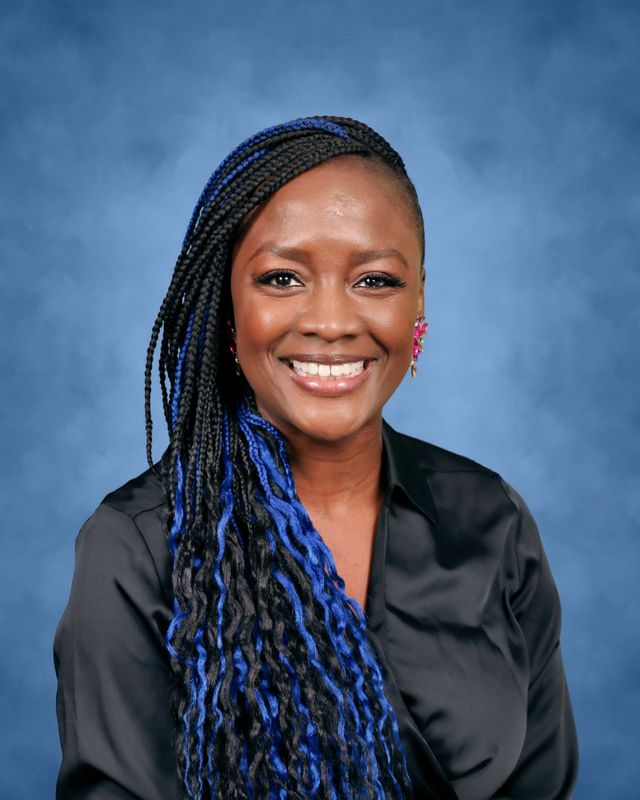
Superintendent, Turnaround Strategist, LinkedIn Content Creator
Alicia Harper is a Superintendent, Turnaround Strategist, and LinkedIn Content Creator known for her exceptional leadership in school transformation.
As a former principal, she led a turnaround school where math and reading proficiency rose from ~30% to over 90%, and staff favorability jumped from 47% to 95%, ranking #1 on Org Health Surveys during her tenure. More importantly, together with her team, she built a school where students felt happy and empowered, and their identities are affirmed because joy and rigor co-exist in every classroom.
With 15+ years in urban education, she’s celebrated for her innovative strategies and commitment to positive learning environments.
Alicia holds degrees from Columbia University and completed the Relay National Principal Fellowship. Trained in emotionally intelligent leadership by The Noble Story Group, she inspires change across her network.
Outside of work, she enjoys Brooklyn life with her husband and three sons.