Advancing Innovation and Access to Higher Education at Western Michigan University
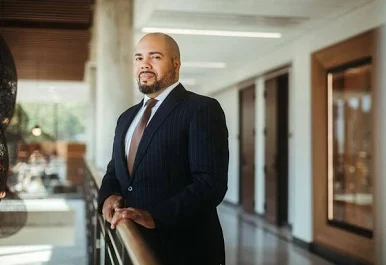
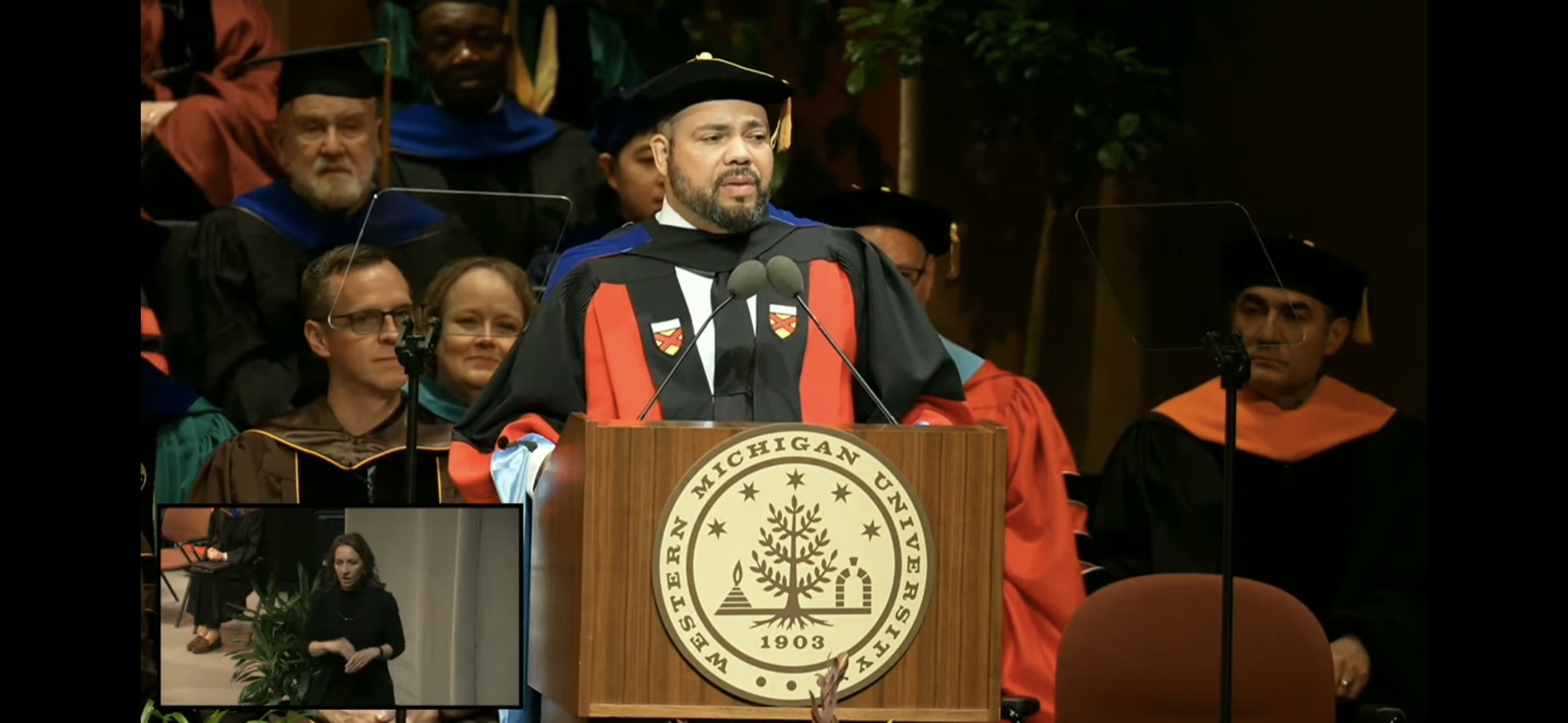
We revisit the most listened-to episode of EDUP Xcelerated Excellence, a timely conversation with Dr. Julian Vasquez Heilig, Provost and Vice President of Academic Affairs at Western Michigan University (WMU). Dr. Vasquez Heilig is an internationally known scholar and nationally recognized advocate for educational effectiveness and equity. His strategic approach to innovation and community-centered leadership has helped WMU redefine access, retention, and belonging in higher education.
In their conversation, host Dr. Jacob Easley engages the Provost in a powerful dialogue about WMU’s bold commitments to diversity, representation, and courageous leadership. Throughout the conversation, Dr. Vasquez Heilig describes the “Western Way”—an approach undergirded by innovation. Innovation, he emphasizes, is not a brand slogan; it is a tool to ensure that “all may learn.” From equitable recruitment pipelines to structural commitments honoring past pioneers, this episode offers a blueprint for institutions determined to close equity gaps and serve their communities authentically.
Below are three standout moments from their exchange.
DEI Commitments in Practice at WMU
Dr. Easley: “Your 10-year strategic plan includes a goal for diversity, equity, and inclusion. One objective asks university leadership to adopt policies, delegate authority, and prioritize economic support for DEI and justice proportional to campus demographics. What do conversations in your office as provost sound like related to this objective?”
Dr. Vasquez Heilig: “One of the things we have, again, dovetailing with our mission ‘so that all may learn,’ is the Bronco Promise. Families who earn under a certain threshold—somewhere in the 50s or 60s—get a full ride to Western Michigan University. The original Promise was the Kalamazoo Promise Program, and that provides for any student from all neighborhoods, so you get a good proportion of students of color and students from low SES backgrounds through that program too. Between the Bronco Promise and the Kalamazoo Promise—and there’s also Detroit Promise—we have a substantial number of students who historically would not have had access to higher education.
We are the largest recipient of Kalamazoo Promise students. I think over time, Michigan and Michigan State have had a thousand, and we’ve had about 2,000. That’s something that should be said.
Our institution has also striven structurally to be committed to diversity. I don’t know how many universities have a college named after their first Black graduate. We have Merze Tate College. A lot of institutions name colleges after donors who gave multimillion dollars, but we named ours after our first Black graduate. Our Racial Justice Center, a long-standing center, is named after our first Black professor. So is there another university in the nation that has a college named after its first Black graduate and a center named after its first Black professor? I suspect there’s not.
That shows that structurally Western is committed to diversity, equity, and inclusion. I’m the provost, so I hear everything—I see under every rock. I’m not going to tell you that Western has solved climate issues or all the things higher education is grappling with. But we’re committed to do it, and we have to be courageous. I think that’s the key word: courageous leadership.”
Recruitment and Retainment of Diverse Faculty and Staff
Dr. Easley: “The 2024 Inside Higher Ed survey of provosts reveals increasing faculty and staff turnover. How has WMU addressed this, particularly in maintaining a diverse and inclusive faculty and staff?”
Dr. Vasquez Heilig: “It’s recruiting and retention. On the recruiting side, we’ve put forward resources for colleges to recruit faculty of any background whose work is focused on historically marginalized communities. That’s not just for Black or Latinx faculty—though often those faculty are working on those themes. We funded faculty across colleges, and that hadn’t happened before here. We’ve committed those resources.
But we’ve also committed resources because when you have talented faculty of color, other universities will come try to poach them. Western didn’t have a policy where we would try to fend off those overtures, so we do that work now too. We try to match offers. You can’t always keep faculty—sometimes they’re moving to be closer to family, or there are other reasons beyond the offer—but we will do that work.
I had lunch with a couple of Black faculty today, and they expressed some issues. I gave them my word that I would do everything I could to make sure we address the issues they brought to me. It requires a personal touch and commitment. And again, I go back to that word: courage. Having courage to do the work and do the right thing.”
WMU’s Approach to Student Recruitment and Representation
Dr. Easley: “If representation part of why so many students are choosing WMU? What are you doing differently to recruit diverse populations?”
Dr. Vasquez Heilig: “In higher education, we’re talking about the enrollment cliff. The reason for that predicted drop-off is the 2008 recession—there were fewer babies born after that recession. Universities will face an enrollment cliff if they assume and continue the same recruiting path they’ve always used.
We have to think about geography. Where should we be recruiting? Who should we be recruiting? The growth in K–12 education is primarily among students of color—places like Chicago, Detroit, Grand Rapids. So we must continue to recruit African American students, but we also have to think about how we recruit more Native students, how we create relationships within Native American communities. I appointed a liaison to the Native American community—a tribal member who is faculty. We’re talking about where we can find talented Native American faculty because we’d like to double the number of Native American students on our campus.
With Latinx students, we went to the Latinx Faculty and Employee Association and asked them to give us a plan for recruiting because that’s where the largest growth in K–12 is happening—Grand Rapids, Detroit, Chicago, Denver, LA. How do we become an emerging HSI? Fifteen percent makes you emerging—we’re at 12% right now. There’s only one HSI in Michigan. That’s Andrews University. If we want to address changing demographics, we have to think differently. We can’t do what we have always done.
I just got a new T-shirt that says Los Broncos, and we’ll be giving it to Spanish-speaking visitors on campus. We have our first brochure in Spanish—Western has never had a brochure in Spanish. Different communities have different expectations in the recruiting process, and we’re thinking about how we develop those relationships in the Black community, the Native American community, and the veteran’s community. Veterans are looking to transfer credits from their programs or community colleges. How do we better facilitate military veterans and ROTC on campus? Diversity matters to us in all its forms, and we understand there are different needs and different strategies we must be tuned into.
If you do the same things, you should expect the same results.”
Listen to the full episode:
“Dr. Julian Vasquez Heilig—Advancing Innovation and Access to Higher Education at Western Michigan University” on EDPU Xcelerated Excellence, hosted by Dr. Jacob Easley II, PMP.
Transforming Communities through the Black InGenius Initiative (BiGI), University of San Diego

