Anti-oppressive Education and the Non-neutral Role of Schools in Social Equity
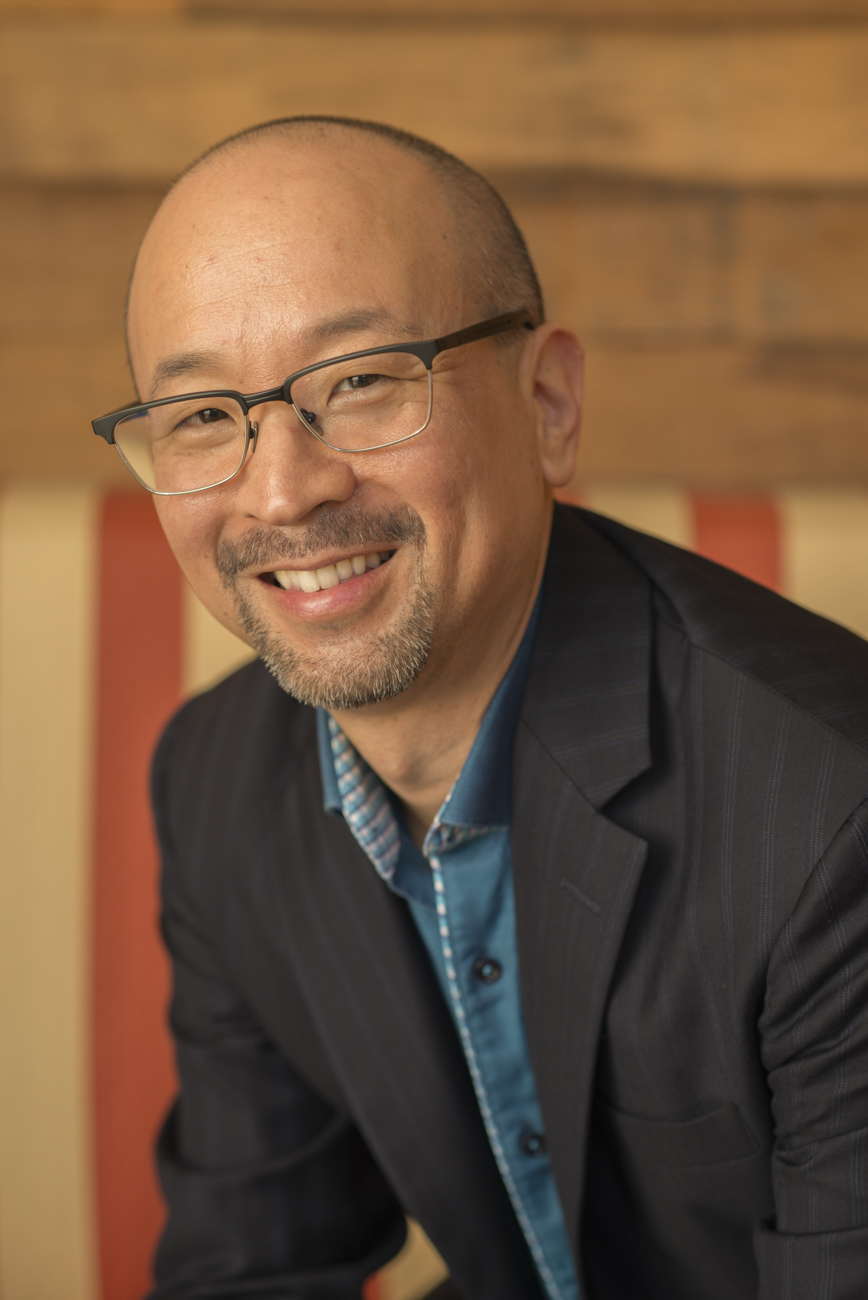
We return to the most listened to episode on Spotify of EDUP Xcelerated Excellence, a timely conversation with Dr. Kevin Kumashiro, then-Interim Dean for the School of Education at Hofstra University. A nationally recognized scholar, organizer, and advocate, Dr. Kumashiro is known for his leadership in anti-oppressive education and his insistence that schools are never neutral in relation to equity, justice, and democracy.
In this conversation, host Dr. Jacob Easley II invites Dr. Kumashiro to explore how inequity is built into the very foundations of schooling, and what it means to prepare educators to teach toward justice in every context. Together, they explore the history and function of public education, the backlash against DEI, and the urgent need to reimagine teaching as a collective, justice-oriented endeavor.
Below are three outstanding moments from their exchange.
What Is Anti-oppressive Education, and Why Are Schools Not Neutral?
Dr. Easley: “You have proposed using frames for analyzing issues, particularly for the exploration of contradictions. Can you recap for those who may not be aware of what anti-oppressive education is? And in your opinion, what lies behind this new idea of anti-DEI in a country that is pluralistic and espouses democracy?”
Dr. Kumashiro: “I like to begin by naming the moment we’re in and naming the context honestly. One of the key starting points for anti-oppressive education is recognizing that schools have never been neutral spaces.
Our earliest public schools in this country were never designed for equal opportunity—they were created for a small, privileged group: white, property-owning men. As more students were ‘included,’ we invented new ways to sort and differentiate them—segregation, tracking, labeling, discipline policies, and more. Over time, the function of schooling has largely been to sort people, not to level the playing field.
If we acknowledge that inequities like racism, classism, and sexism are built into the very foundations of schooling, then efforts such as DEI initiatives, affirmative action, multicultural curriculum, and targeted student support are not ‘special advantages’ or extras. They are attempts to correct a system that was structurally inequitable from the start. The anti-DEI backlash makes sense only if you cling to the myth that schools already operate on a level playing field.
Anti-oppressive education asks us to surface these contradictions rather than pretend they don’t exist. Schools can absolutely function to maintain the status quo, but they can also be spaces where people begin to question, organize, and imagine something different. Throughout history, universities and schools have often been sites of major social movements. Our job is to name the ways schools solidify inequity—and at the same time, to lean into their contradictory potential as places where we can advance equity and democracy.”
How Higher Education and Teacher Preparation Can Advance Equity
Dr. Easley: “How can educator preparation programs and institutions of higher education effectively address issues of equity and DEI on campus—sometimes even in subversive ways—so that diversity, equity, and community are truly part of the educational enterprise? How can institutions begin to think about effective ways of contributing to greater equity on campuses?”
Dr. Kumashiro: “One of the first things we can do is take concepts like justice, equity, inclusion, belonging, and community and really operationalize them. They can’t just be abstract values on a strategic plan—we need to define what they mean in our programs, assessments, and day-to-day practice.
When I think about preparing teachers, I often return to the contradictions they will face. Some people say, ‘We should train teachers to protest against high-stakes testing, scripted curricula, and rigid standards.’ I support protest and pushing back. But if that’s all we do, we ignore the reality that students are still taking those tests, and the stakes are still real. We have to prepare teachers to work for justice even within those constraints.
I also remember supervising a student teacher who said she couldn’t wait to have job security so she could only teach ‘honors’ or AP classes—where behavior is easier and she could ‘really teach.’ That mindset tells us a lot about how we’ve internalized narrow notions of where ‘real teaching’ happens and who is seen as deserving of our best efforts. Similarly, LGBTQ educators and allies may prefer to teach only in fully affirming environments, but conservative or repressive schools also need people committed to equity and justice.
So the responsibility of teacher education is not to say, ‘Anti-oppressive education happens only in progressive spaces.’ It’s to prepare educators to teach toward justice in any context—progressive or conservative, urban or rural, resource-rich or underfunded. Every space is filled with contradictions. Our task is to equip educators to recognize those contradictions and navigate them in ways that expand, rather than constrain, equity and democracy.”
Why People—Especially Men of Color—Should Enter Teaching
Dr. Easley: “What would you say to any person who is thinking about going into education—especially given the current discourse around teacher shortages and the need to increase the number of male teachers of color? What recommendations would you give to anyone considering the teaching profession in general, and specifically to men of color?”
Dr. Kumashiro: “As a society, we need to embrace education as a fundamental pillar of democracy, wellness, and justice. That means reframing what it means to be a teacher. Teaching isn’t just a ‘noble profession’; it’s deeply justice-oriented work.
I’ve worked with many young people, especially students of color, who are engaged in racial justice, anti-imperialist, climate justice, and other social movements. Often they’ll say, ‘I’m interested in justice work, but I don’t want to be a teacher—I want to be an activist,’ as if those are separate paths. In a similar way, some people say, ‘I don’t want to be a leader; I just want to be a change agent,’ as though leadership itself is suspect. We need to reclaim teaching and leadership as central to social change. Teachers can and should be at the heart of struggles for racial, social, and climate justice.
We also have to move away from seeing teaching as a highly individualized act. If you imagine yourself alone in your classroom trying to carry everything on your shoulders, of course burnout is inevitable. But if we see teaching as collective work—embedded in networks of colleagues, families, communities, and movements—the role looks very different and much more sustainable.
There’s another challenge: people often come into teacher preparation programs with very fixed ideas of what ‘good teaching’ looks like—usually what worked for them as successful students. But those of us who ended up in these programs are the ones for whom schooling worked. We learned how to ‘play the game’ and navigate the hidden curriculum. That doesn’t necessarily mean schooling worked for the majority of students, especially those who were marginalized or pushed out.
So our job isn’t simply to prepare people to help students succeed in the world as it is, if the world as it is is deeply unequal. Our job is to help future teachers build the capacity to imagine the world as it is not yet—and then to work collectively toward that world. If we can get people, including men of color, to see teaching as a powerful site of activism, imagination, and transformation, we may inspire a whole new generation eager to enter the profession.”
Listen to the full episode:
“Dr. Kevin Kumashiro — Anti-oppressive Education and the Non-neutral Role of Schools in Social Equity” on EDUP Xcelerated Excellence, hosted by Dr. Jacob Easley II.

Host
Entrepreneur, higher education leader, podcaster, scholar, and change agent. President of Xcelerated Excellence Consulting LLC.
Dr. Jacob Easley II is an internationally accomplished and award-winning educational leader and entrepreneur. He is an expert in educational policy and politics, focusing on educational accountability, effectiveness, and improvement. He has served in various faculty and leadership positions across five different states and the District of Columbia. Dr. Easley is proud of his work as an advocate for equity and access and quality educational opportunities for all students. He has published numerous books, articles, and commentaries on educational accountability, change, equity, and educator preparation. He is the immediate past president of the New York Association of Colleges for Teacher Education (NYACTE). Dr. Easley is a National Association of Holmes Scholars Alumni (NAHSA) lifetime member and former president of the organization. He is also the founder of the International Congress of School Effectiveness and Improvement’s (ICSEI) Culture, Race, and Intersectionality Network.
Transforming Communities through the Black InGenius Initiative (BiGI), University of San Diego

