


 Spotify
 iHeartRadio
 Apple Podcasts
 TuneIn
 Pandora
 Audible
 Amazon Music
 YouTube
 Castbox
 Prince Johnson—NYTOTY2026: Championing Sustainability, Civics Education, Career and Technical Education (Part 2 of 2)


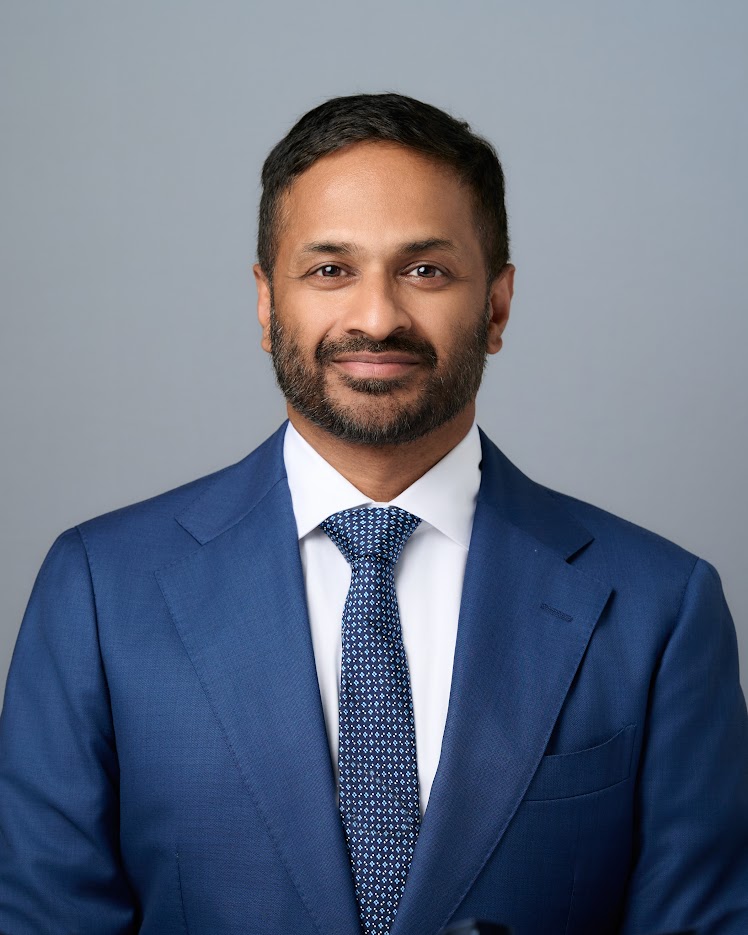
Our Guest, Prince Johnson, a 26-year veteran educator, is the 2026 New York State Teacher of the Year as well as the 2025 Gilder Lehrman New York History Teacher of the Year. A passionate advocate for career and technical education (CTE) and a leader in sustainability, he teaches social studies at Food and Finance High School in New York City and serves on the NYCPS Climate Education Leadership Team.
His drive as an educator was shaped by the injustices he observed while teaching on Rikers Island. Today, he developscross-curricular projects that unite history, culinary arts, and environmental stewardship. He encourages students to apply their skills and voices to create stronger, more equitable communities, always with the goal of empowering every student to realize their full potential.
Your Host: Jacob Easley II, PhD, PMP
Sponsor: Patriox oxygenated water. Drinking Patriox helps oxygenate the body, promoting overall health, energy, and vitality. Receive a 10% discount on your next purchase with the code EDUPXE.
Resources:
Greeting: Anna Young
Research Assistant: Emma Worthington
#EDUPXE #EDUCATIONALEXCELLENCE #EDUCATIONALEQUITY#XEListeningTour
0:03 You know, I, I think there has been a shift across the country. It's still there. I think that there's still this remnants of thought that CTE is for only sort of kind of kids. So anyway, I, I feel what I learned at Rikers was we need to break the system. We need to, you know, this is not justice and really only public education can afford like can focus on us, right? And that's why I'm glad to be in public education 2627 years, right, Because we have to educate everyone. We, we don't have the choice, right? We can't pick and choose who the kids are. We we have to educate every kid who comes into my classroom. And I'm proud of that.
0:52 But I also want to make sure that when they leave our school that they're employable, and not just employable but have a career that they can be happy about, that they can have joy, that they can support their family and as a result, support their community. Hi, I'm Anna Young from Sunnyside Literacy Lab, and you're listening to the Ed Up Accelerated Excellence podcast. Are you listening?
1:35 Listening is more than just hearing. It's the engine of transformation. When leaders truly listen, they unlock hidden insights and spark meaningful change. The power of listening turns quiet voices into catalysts for educational excellence and equity. That's why we've launched the XE Listening Tour, a journey dedicated to amplifying every voice, especially those least heard from this week. Seek out and listen to a quiet voice, a student, a colleague, or parent. Let us know what you learned about educational excellence or equity from their story, and record your experience and insights via voicemail at Add Up xe.com. Your contribution may be featured on this podcast. Are you listening?
2:35 We are join the XE listening tour at Add Up xe.com. This episode is supported in part by Patriarchs. Ultra high oxygen content water drinking. Patriarchs helps oxygenate the body, promoting overall health, energy and vitality. In 2026. Try Patriarchs on your journey for accelerated Excellence. Receive a 10% discount on your next purchase with the code Add Up XE. That's 10% off with the code Add Up XE at Patriarchs dot US. Patriarchs dot US.
3:21 Find more details in the show notes. Welcome, welcome. Welcome to Add Up Accelerated Excellence, the podcast for the advancement of educational excellence and equity. And I'm your host, Jacob easily the second PhD P&P. And thank you for returning as we engage with the second part of our conversation with Mr. Prince Johnson, who is the 2026 New York State Teacher of the Year. We left off with him discussing the importance of shifting culture within schools for cross collaboration, interdisciplinary work that leads to, from his perspective, joy, deeper learning and deeper engagement among students. So Prince, let's jump right back in. So this is not your first stint in education. So you're teaching teaching history. Now, first of all, tell us what what courses are you teaching? So you're teaching?
4:37 I teach AP African American and I also teach government and. Economics. OK. All right. And so I want to get back to that. But before that, I understand you were teaching at Rikers. So if you could tell us a bit about that experience, but you're going to have to set it up for us because not everyone would know what we mean when we say someone is incarcerated at Rikers or teachers at Rikers. Right. So I taught eight years in the Bronx. That was my first year's teaching. I taught at alternative high school and I decided the opportunity through John Jay opened up too many teachers to teach at Prikers Island.
5:24 It's a Correctional Facility. It's an island that houses multiple jails. Each jail has a different population and so at night time I would go to AM, KCAM, KC. They're all acronyms and across. I believe it was called AM KCI would go there and I taught adult men. These were, and this is when I was about 23 years old, right, 232425 years old. I was their age. I was their age teaching them to prepare for the GDP.
6:06 Now, these men, I do not believe for the most part were not in my class to work. They needed, they just wanted to be out of their cells. They really just needed some space to be out. And so they would come to my class and I'll add a correction officer right outside my classroom. Really unique experience. And this was back in the early 2000s. So we would, I would literally open up New York Times and we would just talk about what was going on in the news. And sometimes I would have a somebody accused of some white collar crime and they would literally go through the stock market and explain to us, you know, what's a good buy?
6:53 It's a good sell. It was a really education for me. But what really what I realized though, is that many of the men there had learning difficulties and learning disabilities similar to. And obviously what I've also noticed is almost were from minority communities, right? And I really did not understand. And you know, I guess I was sheltered, right? Really, my parents sheltered me a lot. Even though I started my life in Brooklyn, I really didn't.
7:33 I didn't realize this was the real situation, right. So one thing to like you need about it or more about it, but actually see it to talk to people who have families. But at that point I realized I needed to learn about the system. I didn't. I didn't understand this school to prison pipe or and over time, I realized our school systems were we're not doing justice for our children, especially the ones like me who would easily hide and and fall through the cracks if we if they don't have a Miss Alexander, right? And a lot of us don't.
8:18 A lot of us just get passed on. A lot of children just get passed on. They don't have the reading or writing ability. They get passed on to the next grade, the next grade, the next grade. They grad, they graduate, but they have no skills and they really can't function properly and they have no skills. There's no career technical education. They have no, how can they join the workforce? And So what opportunities are going to really be not just for them, but for their families and for their communities. And that's when I started taking a look at CTE as a pathway. I feel that CTE really is the pathway. And it's not just for minority communities.
9:00 It's not just for black and Hispanic and Indian communities. When I've traveled through the state, I went to certain rural areas of New York State who honestly are living much more poor lives in a lot of ways than anybody in New York City is right. That the risk, the resources in some areas in these rural areas of the state are really a lot lower than what we have here. And they are suffering the same situation with less resources. And these are white communities, you know, And you know, it goes back to the Rust Belts, right? All these factories leaving and leaving behind high levels of unemployment that that these areas have never recovered from.
9:45 And what I see between those two communities, whether urban or rural, is CTE can be the answer, the bridge between high school to workforce, right? Whether they have, you know, whether they want to go on to college like most of our students at Food and Finance, most of them more than 90% go on to college. All right. So it's not that CTE and, and this is something I think parents are starting to come around and I think America is coming around. CTE isn't this backup planning. It isn't this, well, it's only for certain kind of kids, right? It's literally for every every And I have a nine year old son and I'll tell you right now, I wasn't thinking that way before he was little. I really wasn't.
10:36 I was like, he needs to go to college just like me. He needs to, you know, become an academic like me. But my mind has changed about that. And if he decides he wants to do career technical education and he wants to be an electrician or a welder and or a Clumber and he wants to make more money so he can pay my credit card bills, I have no problem with that. So, you know, I think there has been a shift across the country. It's still there. I think that there's still this remnants of far that CTE is for only sort of kind of kids. So anyway, I feel what I learned at Rikers was we need to break the system.
11:24 We need to, you know, this is not justice. And really only public education can afford like can focus on this, right? And that's why I'm glad to be in public education 26 times still marriage, right, Because we have to educate everyone. We don't have the choice, right? We can't pick and choose who the kids are. We have to educate every kid who comes into my classroom, and I'm proud of that. But I also want to make sure that when they leave our school that they are employable. And not just employable, but have a career that they can be happy about, that they can have joy in that they can support their family and as a result support their their community.
12:16 So, yeah, that's that's why I have been so strongly. And sometimes, you know, I have the sometimes I, you'll see me in a chef coat, you know, you know, I don't wear that in the in the class, right? I'll wear that in the kitchen when I'm in the kitchen, but I wanted to make sure even in my New York National State Teacher of the Year pitcher is with all the other state Teacher of the Year award, I wore my chef coat, right? I could have wore a suit like everyone else. I purposely wore a chef coat because I wanted to give visibility to C team, right? Because even as a civics teacher, I realized this is the path to justice. This is the path to breaking the cycle that we've had first way to law of injustice for so many communities. Well, you know, that's beautiful. So wearing, wearing this chef coat for the ceremony speaks to in some ways, I'm just going to throw this out. There's the importance of breaking bread as sort of the foundations of civics in some ways. And I, I really like this approach because as you were talking about the importance of CTE, a career and technical education, which if I'm going to date myself and I'm going to do it now, we used to refer to that as vocational Ed. Yeah, yeah.
13:43 But. There was a schism and there has been. I think you're right. I think that's starting to erode somewhat, but it probably does exist in certain corners of the world. And it Harkins back to the great debates between Booker T Washington and WE around should We I? Was thinking that too. You know, it really is an interesting thing, but I think there is this middle path, right, between Booker T and WDD Dubois, right? That this idea, yeah, Booker obviously thought, you know, got to get those skills, right? You got to be employable and you got to start your own businesses. That's how we lift the community.
14:23 And then we got the boys with the talented temp, right? But I think we can have it both ways. Why not educate our students in both pathways throughout high school and then let the kids decide, right, whether they want to continue on? I mean, a lot of our students end up, you know, and end up in other fields, right? But there's so many soft skills that they learn while they're learning these certifications, right? That it's an it's employable skills in any field. So why not allow our kids to get those gifts? I had to to see what the real world is like before before they go ahead. So, Prince, I understand that during your interview you said that you wanted your legacy to be that of being a great dad. Can you said shed some light on that? And.
15:25 Yeah, yeah. That was a question. They asked me what my legacy wanted my legacy to be. And I knew the right answer, you know, I knew that, you know, the the status quo answer was to be, you know, this great teacher. I impact education throughout. But what came out was, and I wasn't planning this at all. I was just I just folk. And I said, I want to be known as a Greek death. And the only way truly I can, I feel like I can do that is this. I don't want to leave this world worse than I done right.
16:07 And whether it's the environment or the politics or the conditions of education, I can't leave it worse than I got. And my hope is that I can be a change maker. I am a change maker, right? I have this opportunity now. I know this is a very special soapbox I have. I'm very special that most teachers never get the chance to right? And a lot of teachers probably deserved it. But I'm not wasting it. Let me tell you, Jake, I am not wasting this opportunity because I feel that it's my obligation as a as as a man who wants to be a great dad, who who wants to leave this world in a better place. I have to try to make Jake and and push for sustainable approaches.
17:04 You know, every time I'm really worried about how this will be where the world is going. But to wonder and what's wonderful Jacob is I'm meeting likewise. And you know, sometimes we were like, Oh my God, the the world, Oh my God, look, look at all the pollution and look at this and that. And then you meet other like minded people. And there's a lot of people. In fact, my students, when they come into my classroom, they're already well versed in sustainable approaches, you know, so the education is happening, you know, and, and I can say from when I first started teaching, it's not like pulling teeth anymore about talking about sustainability. They know it. Well, the kids know about it and they want to do something about it.
17:48 So this generation, I have a lot of hope for this generation to, to move forward and make the changes necessary to make to, to alleviate some of these conditions that we're living. I I appreciate that and I'm going to ask you a question that I find that I'm beginning to ask of teachers when they're, when they appear on this show. And in your case, I think this is profound because you are a male teacher of color. You are the current New York State 2026 teacher of the year. What can society and school communities do to not only recruit, but to retain talented male teachers of color?
18:39 That is a great question actually. I gave a speech at an event for men to teach, which is an organization that tries to attract specifically I'm already men, black and Hispanic men into the classroom. And there's studies shown that for children of color, which is the majority of our students in New York City, if they can just have one teacher, 1 male teacher of color, it has a profound impact on the rest of their educational per student.
19:24 I think there's a lot of situation, there's a lot of things we can do. One is we, I feel like we do attract commitment of color. The problem is we can't retain, we're not retained because the system that we have set up doesn't give the support that easement, right? And so there needs to be a better culture and better awareness from administrators, super superintendents of how, what, what their needs are. And the only way to do that is to actually have conversations like pointed questions, right?
20:16 Pointed discussions about what their needs are to retain them. And, you know, I'm actually part of that trying to attract teachers to New York City, you know, right now. Well, actually what's coming out, I think next month is New York City Public Schools is coming out with a whole campaign to attract teachers. And I'm actually one of the teachers involved in that. So you'll see Jacob Sue and billboards of me on the subway and commercials and, and, and radio sound bites of me. It's going to be surreal, I'll say that. But I think that is one thing that we need to do is and, and also get into the colleges, you know, I, you know, really target men of color and, and create a culture where it's OK to become a teacher, right?
21:20 Pay is important. I think that's a big portion of it. You got to put food on the table, right? And there's definitely, and that's also a problem with CTE teachers too. It's not just men of color. But you know, why would you go into a field where you can get paid better in another field, right? Even for CTE teachers, you know, if you're a welder, why would you teach when you get paid much better as a little bit, right? I'm in the in the private second. So, yeah, I mean, I think the unions are working on this. The UFT is working on this. I know that. Nice. It is working on it. You know, trying to attract.
22:00 I know a lot of colleges from Brooklyn College, Queens College are working on it. The CUNY system is working, but it is a big problem across the country. And you know, there are many times when you can go, oh, your whole education without one black man as a teacher. And in New York City, how can that happen, right? It's not even statistically you would think impossible. And honestly, I'll say this, Jacob, I did not have a teacher of color till I got to college, right? I did not have. And when I finally did, it was I open, it was another Miss Alexander moment, right?
22:47 I had a doctor Furon, Dr. Owens, absolutely phenomenal to professors, filled up classrooms, so engaging and also showed a different side to history that I really didn't know. I never was exposed to those ideas. And they they actually, even though I'm not a black man, they took me under their wing, under their wings and, and helped me and guided me and was a mentor to me. And as children, you need that too. You need vendors. You need somebody who might look like you or who might understand the same situations you're going through or what your community is going through. And when you go through all these years and you never see Someone Like You, you got to wonder like, well, you know, how can you blame the kids for feeling unengaged or not feeling like school is for them or it's not representing who they are? And also, I think there is in importance not to say that you have to be a certain community to teach a community. Obviously I'm indie, right?
23:53 I don't fit any community. Most of my kids, I've rarely had an Indian student. Let me just tell you that right now, OK. But I I can also say I've experienced things that may help me understand other children, how children of color a little, a little bit better. Yeah, yeah, yeah. This episode is supported in part by Patriarchs. Ultra high oxygen Content water drinking Patriarchs helps oxygenate the body, promoting overall health, energy and vitality.
24:34 In 2026, Try Patriarchs on your journey for accelerated excellence. Receive a 10% discount on your next purchase with the code Add Up Xe. That's 10% off with the code Add Up Xe at Patriarchs dot US. Patriarchs dot US. Find more details in the show notes. Listen. Are you listening? Listening is more than hearing. It's the engine of transformation. When leaders truly listen, they unlock hidden insights and spark meaningful change. The power of listening turns quiet voices into catalysts for educational excellence and equity. We've launched the XE Listening Tour, a journey dedicated to amplifying every voice, especially those least heard from.
25:34 And we want to hear from you. This week, seek out a voice least heard from a community member, a parent, or a student. Let us know what you learn about educational excellence or equity from their story and record your voicemail at edupxe.com. Your contribution may be featured on this podcast. Are you listening? We are join the XE listening tour at edupxe.com. And Prince, I have to ask you because AP African American History is actually a new exam.
26:23 So if you could, because I, I, you're actually probably the first conversation I've had with someone who teaches AP African American History again, and this is a relatively new development. Can you talk about what your experience has been? Have you had any any, any resistance? That would have been some of the joys in doing so. So I think the, the whole AP African American nationally only started developing, no, not developing, but first offered a meal piece about four years ago in a few schools of accepted.
27:03 And about 3 years ago, I really wouldn't say I found out that this was something happening on the AP level. And I've taught other AP courses before and you know, I went back to Rutgers University in a sabbatical many years ago to learn more and engage more in African and African American history. I realized, hey, this is something that has to be taught in our school. Like where we are title one school, right? Over 85% of our kids are receiving free or reduced lunch. It's just a measurement of poverty. Vast majority of our students are black or Hispanic.
27:43 And then yet we're teaching U.S. history, but we don't have the perspective of what African Americans don't, which I believe is so vital for every American tongues. And I think we're still living and you know, the politics of today is that we're we're still living in a in a country where we have not dealt with our ugly history. Now, I went to Germany this past summer and I saw how Germany deals with Holocaust. They're not. They're not shy about it at all. It's everywhere. You can see it on the ground. They have cobblestones or tripping stones. They call it of actual the location. They marked the location up in front of any place where individual were taken from where they used to live and they're hit their hit.
28:38 Their name is there the year they were, they were murdered and and bought the death camp that they were. And in America we're still dealing with some this history. And so I got to teach it and it was a dream come true for me because this is what I would want to teach 5 periods a day or two. And the kids want it. In fact, we have a higher demand for that than we have seats for right now. I know across the country it's not offered at places like Florida, for instance, there's been pushback of including some of the curriculum, specifically things like Black Lives Matter or anything dealing with gay or lesbian history, right. So then I think the AP they they might have Colin Gordon might have edited to make it more appealing. But even then it is a it is not allowed to be taught in in many, many districts across the country. But luckily, Jacob, I teach at New York State, all right. And that's a little thing I can say is that I do have the freedom and we do have push to make sure our students get this education, which I'm lucky.
30:04 So I haven't received any pushback at all. But in fact, I've received a lot of support for the Muslim but I know across the country and I've talked to other teachers across the country. They it is it is a fight in front of our school boards. You know it is very political to you can offer. Well, thank. Thank you for that. And so again, we're speaking with Mr. Prince Johnson, who is the 2026 New York State Teacher of the Year and the 2025 Gilder Lehrman New York History Teacher of the Year. So what is next for you and how might the Add Up Accelerated Excellence community engage with that work? Well, I'm hoping well.
30:59 I'm already advocating for changes within sustainability and CTE. These two fields with civics hand in hand, need to be pushed throughout the state. There needs to be more funding. There needs to be more support in hiring teachers, especially CTE, and to retain them just like men of color and in education. So I've been working on my public policy chops. Right now I'm in a fellowship called the EPFP Fellowship. And you might know it. I don't know, Jacob, if you do.
31:41 And so I think next week I'll be going to DC, to Capitol Hill and meeting with Rod Menendez from New Jersey and other congressmen. I'm trying to still line them up on that day next Wednesday. But also I didn't going to local community boards. And really that's where a lot of the change happens is local, local politics really has direct impact on every. So I've been going to the Community Board that is of the Upper West Side directly that, and where our school sits in Hell's Kitchen and they live in the community. And when they hear, they've asked me to speak there, I'm just, I think last week and they are very, very receptive of, of everything I've grown up and they, they believe, OK, well, how can we help?
32:38 And so I'm constantly advocating, obviously for me, you know, I'm in this transitional space, learning what my opportunities are from everything from looking for an EDD program, possibly, you know, to go into, to do a little bit more research into the field to, to just networking. And I'm seeing the kind of advocacy and work I can really do. So that's what I'm hoping to do more advocacy work. And here continue my education. That's something is credited to me is that education is is is quiet. Prince Anne, it's clear that you are a lifelong learner and of course, just in that vein are a role model or yes, you would be a role model for students to nurture their own sense of lifelong learning.
33:45 So that's something that is absolutely commendable. But I want to thank you for this time to learn with and from you here at Add Up Accelerated Excellence. Thank you. Thank you for engaging with Ed Up Accelerated Excellence, a member of the Ed UP Experience network of educational podcast Jitters, and we encourage you to participate in our XE Listening tour by listening to the educational stories of others and sharing your thoughts with us at EDUP xe.com. You can find this and other episodes on Spotify, iHeartRadio, Apple Radio, YouTube, and other outlets where you listen to your favorite podcasts. If you like this episode, don't forget to follow us and share within your network.
34:32 To leave a comment or suggest a guest, contact us online at eduxe.com. A special thanks to our research assistant, Emma Worthington, a PhD student of Fordham University School Psychology Program, and we want to hear from you. If you have feedback on this or other episodes or would like to nominate a guest, contact us online at EDUP xe.com, where you can leave an e-mail or a voice message. That's at UP xe.com.
Johnson
Prince Johnson, a 26-year veteran educator, is the 2026 New York State Teacher of the Year as well as the 2025 Gilder Lehrman New York History Teacher of the Year. A passionate advocate for career and technical education(CTE) and a leader in sustainability, he teaches social studies at Food and Finance High School in New York City and serves on the NYCPS Climate Education Leadership Team.
His drive as an educator was shaped by the injustices he observed while teaching on Rikers Island. Today, he develops cross-curricular projects that unite history, culinary arts, and environmental stewardship. He encourages students to apply their skills and voices to create stronger, more equitable communities, always with the goal of empowering every student to realize their full potential.