


 Spotify
 iHeartRadio
 Apple Podcasts
 TuneIn
 Pandora
 Audible
 Amazon Music
 YouTube
 Castbox
 Tiffani Jaseph—Championing high-quality special education as the 2026 Arizona Teacher of the Year

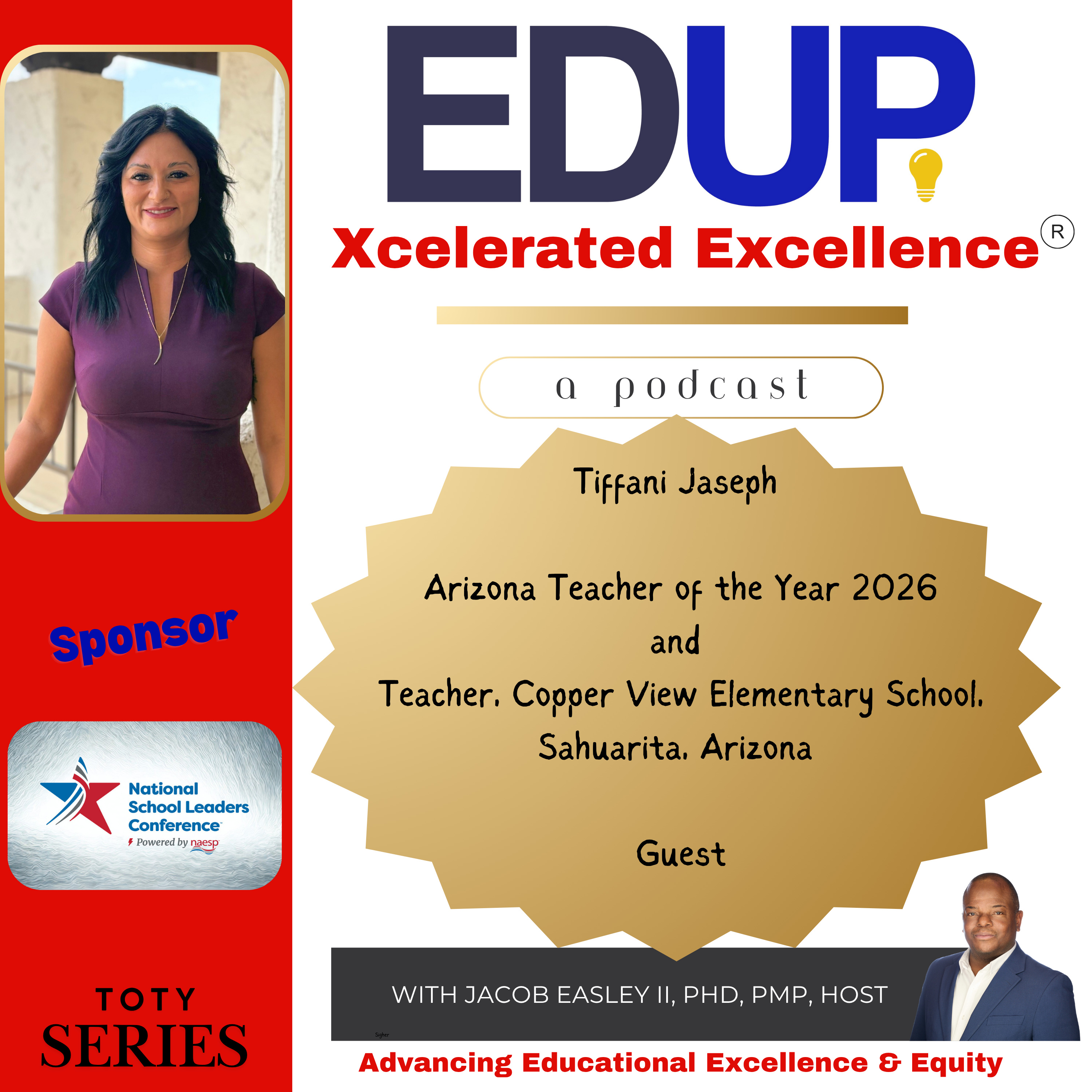
Our Guest, Tiffani Jaseph, is a dedicated special education professional with 16 years of teaching experience. She earned a Bachelor of Arts in Elementary Education and a Master of Arts in Special Education from the University of Arizona.
Driven by her passion for children, Ms. Jaseph began her career in general education but soon realized her true calling in special education and made the transition to that field.
Throughout her career, Ms. Jaseph has worked in three school districts. At the Sunnyside Unified School District, she taught in an extended-day special education program for fourth and fifth graders. In this role, she provided specially designed instruction while also supporting students' needs in the general education environment. In Yuma, Arizona, she worked in a special education resource setting, where she facilitated intervention groups for students from kindergarten through sixth grade.
Currently, Ms. Jaseph teaches at Copper View Elementary School in Sahuarita, Arizona, where she focuses on accommodating students with higher support needs. For grades kindergarten through fifth, she is committed toincluding her students in the general education environment whenever possible while ensuring that her classroom is accessible for both academic and social-emotional development. Her classroom emphasizes inclusive, strengths-based instruction tailored to diverse learning styles.
Ms. Jaseph has received numerous accolades throughout her career, including being named Teacher of the Year at both her Yuma and Sahuarita sites, a finalist for Sahuarita District Teacher of the Year, and most recently, she was named Arizona Teacher of the Year for 2026.
Your Host: Jacob Easley II, PhD, PMP
Sponsor NAESP. National School Leaders Conference–Powered by NAESP is designed for Pre-K–12 principals andassistant principals, featuring high-impact learning tracks, networking, and the newly added "Camp Lead-A-Lot" retreat. Held July 13-15, 2026, Orlando, FL, learn more and register at naespconferenence.org.
Resources:
Greeting: Dr. Rosa Rivera-McCutchen
Research Assistant: Emma Worthington
#EDUPXE #EDUCATIONALEXCELLENCE #EDUCATIONALEQUITY #TOTY#XEListeningTour
0:02 You know, what I have learned is that what that really means is seeing the child for who they are and what they can do. So I already have the students that who come to me on my caseload and are my students, they already come to me with disadvantages and they already come with some come with, you know, maybe medical needs and some come with trauma. So we're talking all over the spectrum. They've already have a, they already have a disadvantage. They might not only look different, but they learn different. And so when you build a curriculum based on love, that means you see the child 1st and you give them a place to feel safe and to feel like they can be themselves. Because some of my student students have pretty significant behavioral needs.
0:44 Well, that's not easy to deal with, right? But we provide a space for them to where we get through it and we still show up for them the next day. I have students with medical needs who need to navigate their their life very differently than anybody than some other people. And so we need to provide a place where they can have their feeding tube changed or their diaper changed, right? So we have that going on. And then we have, you know, students who who might be autistic and have limited verbal communication. This is Doctor Rosa Rivera.
1:25 McCutcheon, author of Radical Care Leading for Justice in Urban. Schools and you're listening. To add up accelerated excellence. Welcome to the Ed Up Accelerated Excellence podcast, and we would like to share an opportunity for educators to contribute to our XE Listening tour this week. Take time to listen to a community member regarding their educational excellence and equity experience because we believe that by listening, we unlock the engine for powerful educational transformation. Share your insights via voicemail at Ed Up xe.com and your comments may be shared on air with the podcast.
2:07 That's the XE Listening Tour at edupxe.com. School Leaders this summer your leadership journey continues in Orlando. Join the National Association of Elementary School Principals for the National School Leaders Conference July 13th through 15th at Disney's Coronado Springs Resort. Connect with principals, assistant principals, and education leaders from across the country for powerful conversations, practical strategies, and inspiration you can take straight back to your school community for instructional leadership and school culture to Wellness and success.
2:53 This conference is designed for leaders at every stage. Learn more and register today at NAESP conference.org. That's NAESP conference.org. Welcome, welcome, welcome to Add Up Accelerated Excellence, the podcast for the advancement of educational excellence and equity. And I'm your host, Jacob Easley, the second PHDPMP and today's guest from the great state of Arizona, Tiffany Jacef, who is 2026 Arizona State Teacher of the Year.
3:38 She is an elementary school teacher in special education and Copper View Elementary School. Tiffany, welcome, welcome, welcome to the podcast where you introduce yourself to the end up accelerated excellence community by giving voice to your name and what's top of mind for you right now? I know you've probably finished a really productive day at work. So what's top of your mind and your and your name please? Sure, yes my name is Tiffany Jay Stuff. Yes, as you said I am the 2026 Arizona State Teacher of the Year. I teach elementary education, so my school is a kinder through 5th grade, so K5 school.
4:23 And I had the privilege of teaching special education, working specifically with the highest support needs population. And so I get the privilege of working with a variety of students and they all, they all come with more of the complex needs. And so like for instance, I'm ending a week with my students this week on a Friday. So there's been a lot going on in my classroom, lots of learning, lots of hands on activities going on. I have students who have medical needs, so I do have a student or two in a wheelchair or a Walker. So in my classroom, if you were to come in, you'd see a lot going on. So I, we're kind of just like winding down the school year. So right now we're, I'm just kind of at a point right now we're, I'm making sure all of my students are set up for success for the summer and communicating with parents. So just making sure everything's good to go and that, you know, we've had, we've had a lot of learning this year. So yeah.
5:22 So that's wonderful. You're making me think as you talked about winding down the end of the school year, many students have Ieps and you talked about setting them up for summer. So for your students, what does that look like in terms of the continuation of of services in the summer, Maybe not for all, but for some of your students? Sure. That's a great question because as I am doing a lot of Ieps right now, they're they're Ieps are done throughout the year, but it just kind of happens where a lot are happening at the end of the year. So I had this one today, for instance. And so far, none of my students need to do summer school. So really what's happening is we're having conversations like, OK, your students not going to be in school.
6:08 And some of these kids really thrive on routine. So how do you handle your kids during the summer? So we have open conversations about that. And we talked about some things, like sometimes parents write out a schedule for their students. I have an autistic student who really thrives on the same routine every week. So she kind of works with him to write out a plan. On Mondays we're going to go to the park. Tuesdays we're going to go to the pool. Wednesdays we're going to go to the children's museum. So she has to kind of keep that consistency. And I also offered to send home some work so that some of the students can kind of keep that paper and pencil or like academic part of the routine so that they don't fully disconnect from that. So for each student, it's different, but we really just kind of try to have an open conversation about if I can do anything to help or ideas that parents can use to kind of keep them active and not just like on the screen all day long. So I mean in in part, this is probably why you are the teacher of the year because many students, as you know, we've seen it in cartoons and movies work or reading over the summer. Right.
7:13 Yeah. So, and here you are advocating talking to parents, even though it may not be formal instruction, but ways in order to ensure that students continue to thrive in terms of life goals but also academic achievement. So let's talk about your award as the 2026 Arizona State Teacher of the Year. So when you were named the Teacher of the Year, what was going on in your mind in that moment? Honestly, that's one of the I love. I've gotten that question before and I love that question because I describe it as like the most surreal moment. It honestly, I was so honored to be named teacher of the year for my school and then I went on to be a a finalist for the district.
8:00 So they pick, they pick 4 for the district and then those four get recommended to the state. So as I was going through this process the whole time, I'm like, this is just so cool to be thought of in this way. And so when I made it to top 10 for the state, at that point, I'm like, this is just crazy. And then I made it to top five and then we had the ceremony and, and then I ended up winning. And I just remember like, it's like time kind of stood still and I, I just, I, I had to take a deep breath. And then I was just like overcome with joy and honestly mostly gratitude because they are seeing me and, and I will take pride in that, but I feel like they're seeing my students and what I stand for and that that's the coolest part.
8:45 Yeah, excellent. I was going to ask you that. So what did it mean? What does this recognition mean, particularly given the student population that you work with? For me, it means that I really need to use my year of service to advocate for educational inclusion. I feel like I'm get given an opportunity to talk about how special education and general education can work together to make amazing things happen. Because I don't think it's I don't think it is something that people haven't heard of before that special education kind of gets, you know, they get the trailer in the back of the school kind of a thing. Like I have literally taught in a trailer in the back of a school before and in a special education classroom, you know, and that is something that people know about.
9:33 And so over the years we worked really hard to change that and to really make students who have special needs part of the community. You know, in the school, we have our own classroom. We are we are entering all classrooms. We are part of field trips, we are part of performances. We are attending as much as the classroom as we can handle. And so I feel like I'm given that opportunity to talk about how it can work really well because in my school, we run that inclusion model. And so my students, even the ones who have the highest support, complex medical needs, they are included in the general education classroom as much as possible, of course. So, yeah, that that that it really means the most to me to be able to talk about that because I just have my heart is in this and, and in it with my families and my students.
10:20 And I guess talk about it. It's it's pretty cool. Well, I, I can definitely hear your passion. It rings through in how you talk about your work. So let's describe, if you can, inclusion for folks who may not know what that term means. So we all know in education we have lots of very discipline specific lingos and it may change from state to state and district, but we often mean some of the same things. So in in inclusion, what is the model that is using your district or your school and what does it look like during the day for you? So that's a great question. So really the idea behind inclusion in general is to get special education to get them to to connect with general education.
11:07 So the idea behind my program and of course it's individualized because I have students with a variety of needs. So I have some students who come to me for maybe a couple times throughout their day for some academic or behavior support, and then they spend the majority of their day in class. I also have students who need to spend the majority of their day with me because maybe they have medical needs or they have behavioral needs and they can't be in the general education classroom for very long. So it's my job to figure out how long they can be, and then I have aids who can help me navigate that. So really what the goal is, is for my students to be able to take part of a general education classroom as much as possible and not just be a visitor, but an integral part, an actual student who can go take part in activities, work with students, do as much work as they can, take part in anything extracurricular. So basically depending on the student, it can very how it look.
12:08 But we want our students included in classrooms and and be one of them, not just a visitor who stops by once in a while. So that really is that's really the idea is to be included as much as as much as possible and to feel like they're part of the community. Right, right, right. So this is a model where students may move throughout the day depending upon what their learning strengths are, where they're matched and tied to learning resources and learning goals, whether that setting is in your classroom. You know, I've often heard special Ed classrooms called resource rooms and and other programs are called general Ed classrooms.
12:50 So that's often the particularly in elementary schools, that's often some of the terminology used. So you began your career, though you didn't start out as a teacher in in the special education arena. So what happened? So first, how did you what, what, what prompted you to become a teacher and then what? What happened that shipped your direction from general education to special education? It's kind of it's kind of a cool story. So I decided I would say in high school and I was getting ready to apply for colleges. I really told my, I remember, tell my mom, I think I'm interested in being a teacher. And she was like, Oh my gosh, honey, that would be so good for you to be so good at that.
13:35 I'm the oldest of four. And so I'm just like a mom by, by habit, by nature. And, you know, I believe anybody who's a teacher, they just had that heart to be a parent to like, even if you don't have your own kids. So she was like, I think you should do it. So that was all I needed. So I, I, I went ahead and declared elementary education as my major. But I remember always just having an interest in special education. I remember I was talking to somebody. I don't remember who it was. Maybe it was you when we did an intake. I'm not sure. But I remember in high school visiting a facility where they serviced people with special needs. And I remember just kind of really being drawn to it and just not loving the services that I saw there. And I remember just like taking that with me, like, gosh, this should look better.
14:23 So special education is just something that I've always been interested in. And I remember when I was talking to my advisor in college, I told her that I didn't know which route to go. And she's like, well, what if you declared your under, you know, your undergrad, your bachelors for elementary education, and then maybe you could do your masters and special education if you're interested in that. And I really like that idea. So I was like, OK, let's, let's start with general Ed and see how I feel. So I started, graduated, I got a teaching job who was teaching 2nd grade, Absolutely loved it. And then after a little bit of time, I decided it was time to get my master's. And so after a couple years, I started it was teaching, doing my master's at the same time and then finish that. And then I, it was kind of a good thing I got my master's paid for because there was special education funding at the time.
15:13 But one of the rules was if you accept this money, you need to teach special education for, I think it was at least five years. And so after I graduated, and I thought, you know, I should just try it. I should just try it. I should get my five years done, see if I like it. So there was an opening at my school. I asked my principal if I could take it. He's like, sure. So I just kind of went in and then honestly, like it wasn't perfect journey, but I pretty much never looked back after that. I I think I've always naturally wanted to help. And so the thought of helping students in special education was I was drawn to it because I think I knew deep down that that was an area of need. Like if you want to make a difference, let's talk about making a difference kind of a thing.
15:57 So yeah, I just, I fell in love with it. I fell in love with the students. I fell in love with the small group. I fell in love with the connection. I fell in love with the families because you are not only taking on students with special needs, you're helping their family. You are giving them a place to send their child that's safe. So I really, I really just fell in love with it. And yeah, so that's kind of my story. You know, as you were talking, I, I had to say I, I, it sparked something in me. It took me back to my days of teaching in the elementary school. And yes, I did have one of those years where my office was in the trailer and because I taught foreign languages and, and my trailer was a split trailer, half and half.
16:41 So on the opposite side, when you open the door, it was a special education teacher. And she and I had because we, you know, we have such close proximity during planning time, I realized even I'm teaching a foreign language, I was learning so much from her. So I found that it was much easier to take skills and approaches to teaching our methods from special education and use those in general education. More so the reverse. Yes, yes. So I, I have to say for those who special education, special education teachers who do it really well, it's like wearing 2 capes instead of one in some ways. So I appreciate that.
17:29 Speaking of curriculum and teaching, I've heard you describe your classroom. You describe that in your classroom, the number one curriculum is love. So I know you've talked about preparing your students to leave close out the year, working with parents to find ways so that they can continue to thrive over the summers. But what does that look like? A curriculum of love in your classrooms? And how do you go about designing love and and facilitating learning experiences through love? You know, what I have learned is that what that really means is seeing the child for who they are and what they can do. So I already have the students who come to me on my caseload and are my students.
18:20 They already come to me with disadvantages and they already come with, some come with, you know, maybe medical needs and some come with trauma. So we're talking all over the spectrum. They've already have a, they already have a disadvantage. They might not only look different, but they learn different. And so when you build a curriculum based on love, that means you see the child 1st and you give them a place to feel safe and to feel like they can be themselves. Because some of my student students have pretty significant behavioral needs. Well, that's not easy to deal with, right? But we provide a space for them to where we get through it and we still show up for them the next day. I have students of medical needs who need to navigate their their life very differently than anybody than some other people. And so we need to provide a place where they can have their feeding tube changed or their diaper changed, right? So we have that going on.
19:13 And then we have, you know, students who who might be autistic and have limited verbal communication. We say non speaking. And so we provide ways to get them to communicate with us. So all of that is not coming from a textbook. That's coming from us providing, being love and care for these students. And I say us because it's my 7 aides and I were a team. And so we we have to naturally look at what they need 1st and everything else is secondary. Academics is secondary, but what do they need first physically and emotionally? And then everything else kind of comes into place. And so that's really what I mean when I say the first curriculum is love because we're not using a textbook to show up for these kids every day. We're just showing up and being a place for them to land. Yeah.
19:59 What comes to mind, You know, you said that and yeah, as you were describing it was dignity, particularly students who have very specific needs. And sometimes those needs create an environment where you stand out even more. And sometimes folks feel embarrassed by by that. And so imagine being able to. Embrace your difference in a place, and I think you can. I think you can only do that in a place where you're valued. Yes, absolutely. So working with the the students in your classroom? No, actually I'm, I'm going to change gears because you mentioned something you mentioned you have, did you say 7 aids? Yes, as in 6 + 1.
20:46 Yes. So as as you, I've never worked in that environment before, yes, having aid but not 6. So that means for you and you said you plan together. So let's talk about prepping for that many different people and personalities and then how do you monitor and ensure that everything is is carried off, so to speak, as well as it can be? So that's something I've really had to learn as I go because prior to this position I did as you mentioned earlier resource. So I was the teacher. I've maybe had like one aid in the past, but coming into this program where we're we're switching to higher support needs children.
21:35 I, I had never taken on the role of having multiple aids before and it's fluctuated, but right now I've had the most aids I've ever had. And I can say that proudly. I feel like because the majority I've had probably at least three of them for a few years. One of them I've had for since I started, so that I'm in my 6th year. I've had some ladies stick with me for a while and then I've had some revolving doors with other positions. So I really had to learn. And what the biggest thing that I've learned is that I look at us as though we're A-Team and not like I'm the boss kind of a deal. So we just really try to learn each other's personalities and I talked to them about what's going on.
22:22 I tried to assign the adults to specific kids that I feel like they kind of have a good personality mix with, they kind of vibe with. I sometimes ask them what they're comfortable doing. So there's just a lot of ongoing conversations with them and I really try to make sure that they feel like they have a voice and that they know that they're valued because truly, truly, truly, my program would not run without them. There is absolutely no way. And so I just really want to make them feel, you know, valued and respected and, and like their voice is heard as well. And so it's, it's taken some time, but we've really tried to build a really strong community in our class.
23:03 We laugh a lot, we joke a lot, like we make light of difficult situations. And so I would just say it's ongoing conversations and check insurance and and safe places, right? So that they can come and talk to me if they need to and they can rely on one another because if somebody's absent, then somebody can come in and cover. So yeah, so it's just kind of not only we're building the community with the kids, but with each other as adults as well. And, and that definitely makes sense because in such close quarters, I'm not sure how large your room is, but that number of people, adults and children, you do have to make sure there's some social cohesion.
23:44 Yes, yes, definitely. And also it's nice too, because some of them, some of them like to like be out more. So, you know, we kind of need to plan it so that people are not always in the room because when we're all in the room together, it's a lot. So sometimes it's really nice when somebody goes and stays with another kid for a while and then comes back later. So just kind of mapping. It's like mapping basically. So what what? What would be 1 misconception that you would like for for the public in general to know that you think that they probably have about special education that you would like to demystify? You know, I think what I would, I would like for people to, to know is that it's actually OK to be a little fearful, a little scared of like stepping into an education classroom. It's, it's OK.
24:34 It doesn't make you wrong. There's nothing wrong with that. What I want people to know is that you can own that and be willing to eliminate the fear. So come visit, come see how it looks. You know, behavior is communication. So are you a little scared of their behavior? I get that. But guess what? They're just trying to communicate something. So let's learn how to not be scared of that. And that's something I've had to work with my aids as well, because everybody doesn't come into the classroom knowing exactly what to do. I've had to make a million mistakes before I've figured things out. So it's, I think it's the idea of it's OK to be a little nervous and scared of what is different and what you don't know, but be willing to eliminate the fear and learn about it and be willing to just be open to how inclusion can look.
25:21 And, and that's what I would preach to general education teachers who are a little bit nervous inviting students with special needs into their class or people who might not be a teacher. But just like what I don't really know much about special education. Well, they're amazing kids who could do amazing things. And it's okay if you don't know the answer to everything and and you want to ask questions. You know, you made a very quite a few powerful statements, but this idea of behavior is communication. I mean, that's something that can be directly lived, as we talked about earlier, drawing on some of those highly effective practices from special education and commuting them to general education.
26:02 So when we talk about behavior issues, often times it it stems to a lack of understanding of students and what they are trying to express to us. But it also can be the conditions of the classroom. Absolutely, for sure. Thank you for listening to the Ed Up Accelerated Excellence Podcast, and we would like to share an opportunity for educators to contribute to our XE Listening tour this week. Take time to listen to a community member regarding their educational excellence and equity experience because we believe that by listening, we unlock the engine for powerful educational transformation. Share your insights via voicemail at Ed Up xe.com, and your comments may be shared on air with the podcast. That's the XE listening Torrid at up xe.com. Have you ever felt like everyone else in education has their people, their network, their place to grow, and you're still searching for yours?
27:02 The National School Leaders Conference, powered by the National Association of Elementary School Principals, is where school leaders come together to reconnect with their purpose, to find fresh inspiration and remember they're not doing this work alone. This July 13th through 15th in Orlando, you'll hear real stories, learn practical strategies, and build relationships with leaders who truly understand the challenges and joys of this profession. Whether you're an aspiring leader or ready to lead the school community, this experience is designed to help you grow, recharge, and lead forward with confidence.
27:54 Learn more at NAESP conference.org. That's NAESP conference.org. So if you were to sit down, which I'm sure you have already had sit downs with state leaders, but with leaders and policy makers, what would you recommend to them for the recruitment and retention of outstanding teachers like yourself? You know, that's such, such a good question and it's such a complicated question because sometimes, you know, those things can be answered related to like funding and things like that, right? For me, though, the biggest, the biggest thing that has kept me here is feeling like I'm valued and supported. And I have not always felt that way. I have not always felt like I have somebody I can go to when I'm struggling with students or I need more support or I need more access to more learning, you know, giving, giving, a lot of it is funding.
29:03 Like we need acts, we need to be able to go to learning event, you know, to educational events to learn, learn more. We need to get our hands on materials to provide for the students. So a lot of it is funding, but the problem is that isn't always available to everybody, right? So to me, the biggest thing is it's finding inventive ways to allow districts to show their teachers that they can have support in some kind of capacity. And sometimes that can be an inventive ways. You know, sometimes it's honoring a teacher's after school time or honoring the fact that they need to leave early or honoring the fact they need to come in late or offering a place where they can come and talk and feel safe and feel heard and, and not be ignored. And so it's, it's not, I don't have a simple answer, but we've got to find a way to make teachers still valued and to feel like they, they, that they can be heard and have a place that somebody can make them feel support and not like, well, it's a, it's a you problem, not a me problem. And I've experienced that.
30:01 And so, you know, I, that's why I take so much pride in, in helping my team and trying to support the Jenna teachers because it's, it's burnout is high, especially in special education. And so we, we've, we've got to retain teachers because specifically special education teachers, they are so hard to come by. A lot of people won't even touch that job. So we just, we got to find a way to to, to make special education teachers feel valued and to feel like they have a place to go to ask for help because we don't always know what we're doing. We're just here to try. Two points 1 is you're right, special education is one of the shortage areas across the nation, but in my state, particularly in New York, I'm not sure about in Arizona, saying we also have an excess of folks who are certified because of many programs now in teacher preparation are dual cert programs, Gen.
31:00 Ed and special Ed. But teachers will opt out of a special education placement more often than they will a general education placement. And also you said something that I thought was very profound and I'm hearing sort of a, a unifying thought about learning when I, when I'm, when I listen to you, you said support where you can go in and ask questions of you don't know something. You are not viewed as being incapable or you're not viewed as being someone who is under qualified. So I get the sense that you're very, I'm not saying you're comfortable, but you know how to navigate ambiguity. Yeah, I've had to learn how to do that. Yes, yes.
31:51 But being able to recognize not knowing as a potential launchpad or launching pad for knowing. Yes, I, I, I, I think that like that, that is the, the biggest thing I've learned is that, especially coming to my job, I came in willing to take on something that was hard, but I knew I didn't have all the answers. So I was willing to kind of learn as I go. But I'm all type of person. I will ask the questions and I will ask for help and I will ask you to come and show me what to do and what can I do better. And I want the feedback. And then I can give that to like my aides, right? Like they don't, they're going to make mistakes too. And I want to know it's all right, we're going, we're going to do better next time, right? Like I model that all the time. Like I didn't handle that very well. And so I just thought I need a place to be able to like run that off, you know?
32:37 And I'm also good at telling parents too. I'm not sure, but I'll try and find out for you. We're speaking with Tiffany and Jason, who is the 2026 Arizona State Teacher of the Year. So Tiffany, I really appreciate the insights and the energy you bring to this conversation, but really to the profession because it what rings through for me is that you really love what you do. And as you mentioned earlier at the top of the show, it's not just about what you do in services students, but also of the wrap around services, meaning parents and even other teachers who come in contact with your students.
33:20 So that's quite beautiful. And I mean that in the most serious way because not all individuals and not all educators take up that mantle and being a resource to the full community, though you may do very well in your classroom, you may. And for a number of reasons, we sometimes those may be a personal reasons, you know, and when life is tough and you're managing work and home, you don't have the the time and the resource, but that's really beautiful that you do that. So what is next for you as the 2026 Arizona State Teacher of the Year?
34:01 And how might your broader community or the end up accelerated excellence community engage with some of the work that's that that's forthcoming? Well, I do have the amazing honor of connecting with all the other state teachers of the year. So there's 56 of us. I believe you've already talked to Prince from New York. So we are our our own national cohort. So we get to continue to meet. We actually will be meeting again in the summer for space camp in July. So we and we have continuous zooms going on. So we have continuous education and connections happening. So we're all trying to elevate with one another, learn from another, teach with one another. So that, that's a huge thing that where we can bring back to our own states, things that we're learning. And then as far as my state goes, I get to kind of speak around Arizona and I'm being invited to do different. I have a keynote next week at the college graduate at the college graduation for NAU Northern Arizona University. So I'm going to get to do things like that. And a lot of times people are obviously asking me to speak about special education.
35:07 So I'm going to continue to do that as well. But honestly, you know, my goal after this is just to continue to keep learning and, and improve my craft. I, I don't don't really see myself doing anything different right now. I want, I kind of want to stick with what I know and what I love right now, but I think this is opening some doors. I'm going to be collaborating on a new curriculum that will hopefully help people with Down syndrome. So I'm going to just continue to try to help as much as I can around my state with, with the opportunities that I'm being given. So. Tiffany, that's wonderful. But before we go out, because you brought this up, I have to ask one more question. And that question is, when you convene with your peers who are also the state teachers, what has been the biggest take away or what have you learned from those convenings? You know, honestly, what I have learned is to take pride that I was selected.
36:06 So one of the things that we've all worked on when we all got together for the first time, we went to Google and we all got together in February and, and in Santa Clara, CA. And one of the activities that we did is we all had to say our state and we all have to say, I am teacher of the year. And the whole point of that was to like, we all have like this imposter syndrome of like, why was I chosen? How could this, you know? But it's like we were chosen for a reason. So I've learned to be proud of myself because it's really not just about me. It's about what I stand for. But I did work my butt off to get here, so I'm going to be proud of myself for that. And we are definitely proud of you.
36:46 So Tiffany and Jason, I want to thank you for this opportunity to learn with and from you here at Add Up Accelerated Excellence, where we seek to advance educational excellence and equity. Thank you. Thank you. Thank you for engaging with Ed UP Accelerated Excellence, a member of the Ed UP Experience network of educational podcasts, and we encourage you to participate in our XE Listening tour by listening to the educational stories of others and sharing your thoughts with us at Edu pxe.com. School leaders join us at the National Association of Elementary School Principals conference in Orlando, FL July 13th through 15th.
37:30 Learn more and register at NA ESP Conference org. You can find this and other episodes on Spotify, iHeartRadio, Apple Radio, YouTube, and other outlets where you listen to your favorite podcast. If you like this episode, don't forget to follow us and share within your network. To leave a comment or suggest a guest, contact us online at EDUP xe.com. A special thanks to our research assistant, Emma Worthington, a PhD student of Fordham University's School Psychology program, and we want to hear from you. If you have feedback on this or other episodes or would like to nominate a guest, contact us online at EDUP xe.com, where you can leave an e-mail or a voice message.
38:12 That's at UP xe.com.

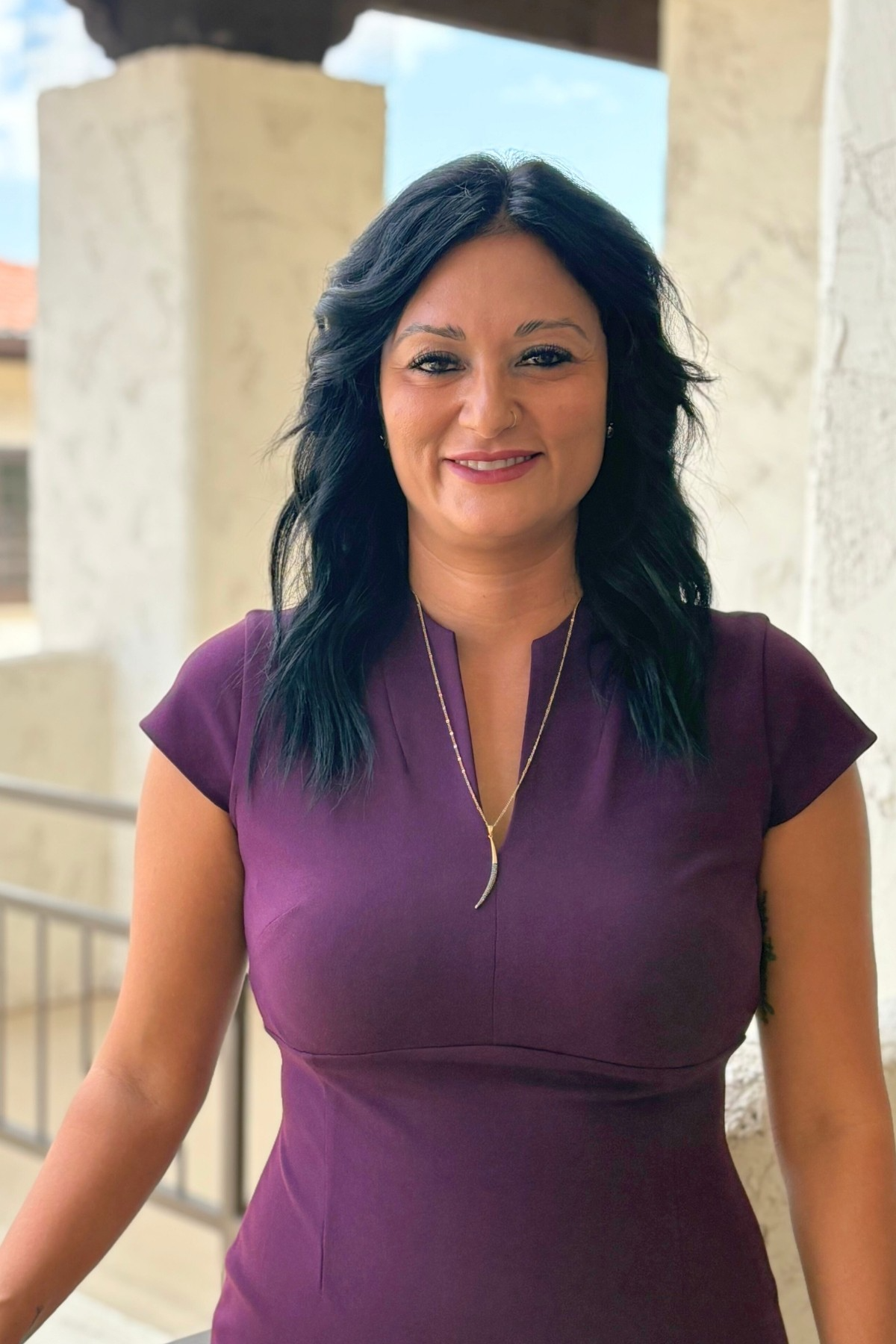
2026 Arizona Teacher of the Year
Tiffani Jaseph is a dedicated special education professional with 16 years of teaching experience. She earned a Bachelor of Arts in Elementary Education and a Master of Arts in Special Education from the University of Arizona. Driven by her passion for children, Ms. Jaseph began her career in general education but soon realized her true calling in special education and made the transition to that field.
Throughout her career, Ms. Jaseph has worked in three school districts. At the Sunnyside Unified School District, she taught in an extended-day special education program for fourth and fifth graders. In this role, she provided specially designed instruction while also supporting students' needs in the general education environment. In Yuma, Arizona, she worked in a special education resource setting, where she facilitated intervention groups for students from kindergarten through sixth grade.
Currently, Ms. Jaseph teaches at Copper View Elementary School in Sahuarita, Arizona, where she focuses on accommodating students with higher support needs. For grades kindergarten through fifth, she is committed to including her students in the general education environment whenever possible while ensuring that her classroom is accessible for both academic and social-emotional development. Her classroom emphasizes inclusive, strengths-based instruction tailored to diverse learning styles.
Ms. Jaseph has received numerous accolades throughout her career, including being named Teacher of the Year at both her Yuma and Sahuarita sites, a finalist for Sahuar… Read More