


 Spotify

 iHeartRadio

 Apple Podcasts

 TuneIn

 Pandora

 Audible

 Amazon Music

 YouTube

 Castbox
Dr. Brad Fuster—Championing Innovation in Higher Education at San Francisco Bay University and EDUP Innovation

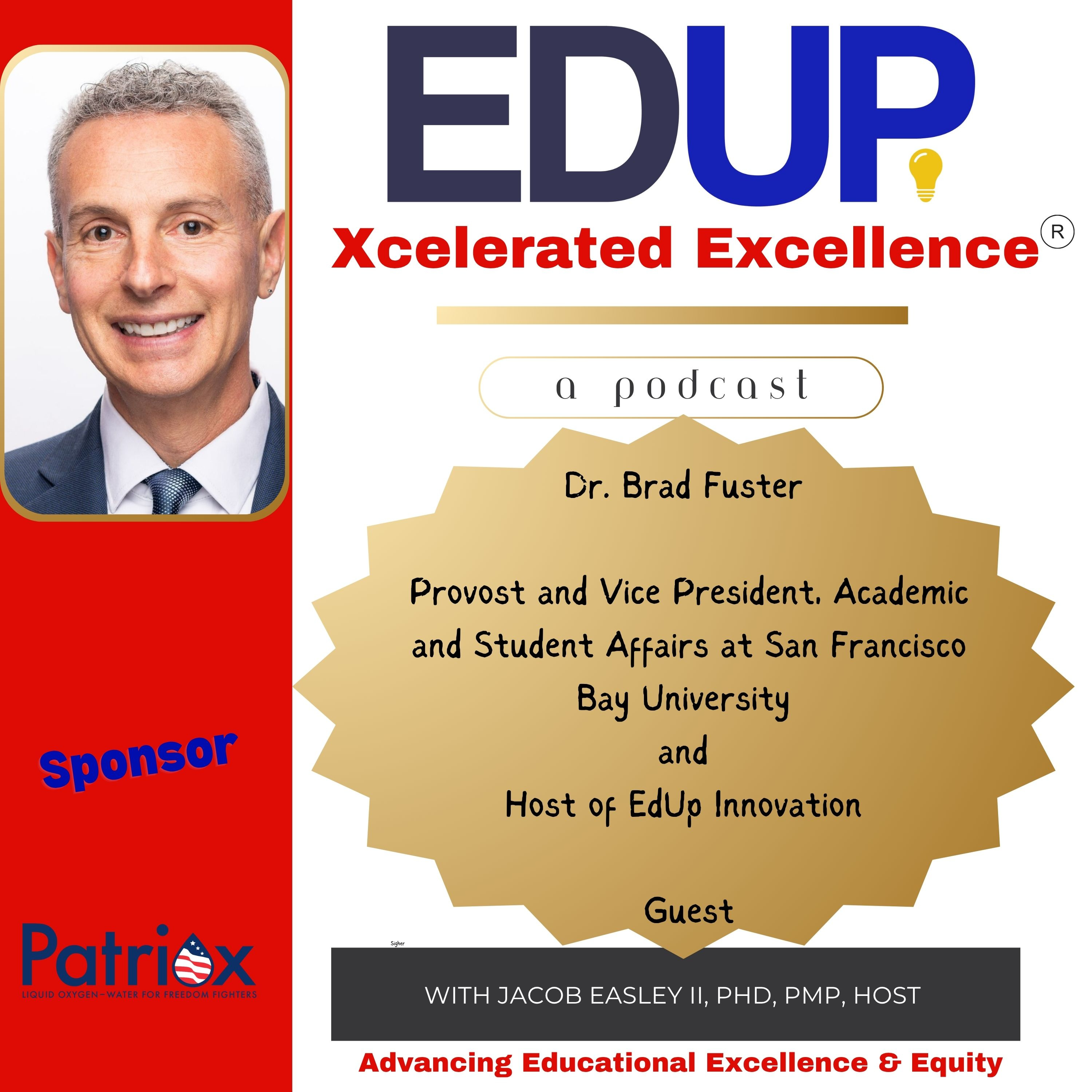
Our Guest, Dr. Brad Fuster, is Provost and Vice President, Academic and Student Affairs at San Francisco Bay University and Host of EdUp Innovation. Brad Fuster has extensive experience in higher education leadership. As a respected music professor and academic leader, Fuster brings deep expertise in academicaffairs, enrollment management, international program management, and technological innovation to SFBU. He has held key leadership positions at SUNY Buffalo State University where he was a Vice President, and at Keuka College (NY), where he served as provost and intermittently as acting president, managing a substantial institutional budget and leading numerous academic campus-wide initiatives.
During his tenure at Keuka College, Fuster led sweeping advancements in experiential learning, new program development, general education revision, international growth strategies, and led a successful Middle States reaffirmation. He significantly improved student retention and success by demonstrating his strong commitment to diversity and inclusion, as well as helped stabilize institutional finances through grantsmanship and innovation.
As an expert in higher education, Fuster has published numerous articles and book chapters and presented at national and international higher education conferences by special invitation. He has wrote about higher education under contract for US News & World Report.
Your Host: Jacob Easley II, PhD, PMP
Sponsor: Patriox oxygenated water. Drinking Patriox helps oxygenate the body, promoting overall health, energy, and vitality. Receive a 10% discount on your next purchase with the code EDUPXE.
Resources:
Xcelerated Exellence Future Teacher Award
Greeting: Anna Young
Research Assistant: Emma Worthington
#EDUPXE #EDUCATIONALEXCELLENCE #EDUCATIONALEQUITY#XEListeningTour
0:03 First of all, the the president here, Nicola Danny, has this healthy disgruntlement with higher education. And so I think if you look at the outcomes, you know, 4-5 and six year graduation rates in the United States, they're around 60%. And what does that mean? I mean, 40% of the students who enter higher education are leaving with no degree and debt. And 60% is a bailing grade you wouldn't get on an airplane that, you know, 40% of the time left you stranded and took your money. And that's what's happening to millions and millions of students in the United States. So let's start there.
0:47 Those outcomes are really bad. And then if you dig into that 40% who's leading with no degree in debt, who is it? It's the first generation hell eligible underrepresented student who is already at risk. And now we're putting them in a situation where they're even further behind. And So what are we trying to do as a challenger brand? We're trying to a shine a light on that demographic and that statistic and say this. Hi, I'm Anna Young from Sunnyside Literacy Lab and you're listening to the Add Up Accelerated Excellence podcast. Thank you for tuning in to Add Up Accelerated Excellence, the podcast for the advancement of educational excellence and equity.
1:42 And we would like to share 2 wonderful opportunities for educators, policy makers, advocates, and scholars to engage in community. First is with our Ed Up Accelerated Excellence Listening Tour, because we fundamentally believe that by listening to others, we empower the engine of transformation, unlocking the hidden insights that spark meaningful change. This week, listen to a voice that you often don't hear from to seek out new insights about educational excellence or equity, and share your thoughts via voicemail at edupxe.com. That's edupxe.com, and your thoughts may be shared on air through this podcast.
2:38 That's the XE listening tour at Ed Up xe.com. In addition, Deans, directors, and faculty of educator preparation programs, we invite you to submit nominations for Outstanding Future Teachers for the Accelerated Excellence Future Teacher Award. Research informs us. That teaching is one of the most rewarding professions and one upon which all others are dependent. So help us in elevating educator preparation by nominating an outstanding future teacher for the Accelerated Excellence Future Teacher Award 2020 Five 2026.
3:26 Find more details in the show notes. This episode is supported in part by Patriarchs Ultra high oxygen content water drinking. Patriarchs helps oxygenate the body, promoting overall health, energy and vitality. In 2026, try Patriarchs on your journey for accelerated excellence. Receive a 10% discount on your next purchase with the code Add Up XE. That's 10% off with the code Add Up XE at Patriarchs dot US. Patriarchs dot US. Find more details in the show notes. Welcome, welcome, welcome to Add Up Accelerated Excellence, the podcast where we seek to advance educational excellence and equity.
4:24 And I'm your host, Jacob Easley, the second PHDPMP. And today's guest is Doctor Brad Fuster, who is Provost and Vice President for Academic Affairs at at San Francisco Bay University and is host of one of the remarkable podcasts of the Add Up Experience Network. He hosts Add Up innovation. So Brad, welcome to the show. Would you introduce yourself to the audience by giving voice to your name and just give us a 35 aerial perspective on what's top of mind for you? Currently. Yeah.
5:06 Hey, Jacob. Thank you. Good morning. It's 7:00 AM on the West Coast here, so I'm up bright and early talking to you on Friday here. And yeah, I, I have the privilege of serving as as Provost at San Francisco Bay University. I'm coming up on two years here in the role. And, you know, I love being in Silicon Valley. I love all of the innovative things that we're trying at San Francisco Bay University and that sort of people like you and others on the add up experience platform have have inspired me to start the Add up innovation podcast. And I'm, you know, I don't really care if people listen. I'm having so much fun having these great conversations with, with innovative leaders, university presidents, faculty, staff, administrators who are doing really innovative things in a, in a, in a space and in a time where higher Ed is struggling, continues to struggle and innovation is the way forward. So it's a passion project for me. I love, I loved having these conversations. It forces me to read things I wouldn't otherwise read or, you know, have conversations with folks I wouldn't otherwise prioritize making time to talk to you. And it's just been such a blessing and and such a rich experience for me.
6:27 So Brad, thank you for that. To kick us off with this, I, I, I'm just going to throw this out there, but do you have a working definition for innovation? Yeah, that's a, that's a, a tough one right out of the the gate here at 7:00 AM. Jacob, it's probably not going to be so elegant. But, you know, for me, I really think about with innovation hand in hand, I think about disruption. I think about, you know, and if you go back to kind of Clay Christensen's work and his, you know, just disruptive innovation book, I think about where you have 4000 universities who are all pretty much doing the same thing in the same way, where we have a four year undergraduate experience.
7:18 That's, that has a cycle with the kind of crop cycle where students go to school from September through May in semesters and they take classes and units of, you know, 3 credits and they hit 120 and then they graduate. They all pretty much take the same kind of general education, whether you're at Harvard or whether you're at a local Community College. And then, you know, that system and that structure in 2026 is not really serving students as, as well as it could. So to me, innovation in higher education is when somebody looks at that structure and says we're going to smash all of that down, the 10 year system, the the college schedule, the credit structure and we're going to actively try and build something different.
8:06 We're going to disrupt the current model. And if you think about like what the digital camera did to Kodak or if you think about what Netflix did to Blockbuster, those are the types of disruption and innovation that I'm seeking to shine a spotlight on in higher education. And it's the work that we're trying to do at San Francisco Bay University so long winded. But for me, I think innovation is really when you have a disruptor in the system who's actively trying to to improve outcomes and do things in a radically different way. Or thank you for that. So not long winded because I think the context and painting a picture is important for our conversation today.
8:51 So we're going to go backwards a bit and then come forward to really to to explore this idea of innovation. So you began your career as a music professor and a professional musician, so an orchestra work. How exciting is that? But what initially drew you to music and how did that discipline shape the way you think about leadership and creativity? Wow. Great, Great questions. Yeah, I was a music professor. I was a orchestral percussionist. All three of my degrees, bachelor's, master's, doctorate, are in percussion performance, which is not the typical pathway to a Provost position or to leadership. And that's certainly if you go back to 18 year old me, you know, I just wanted to play music. I just wanted to play in an orchestra. I had a very long and successful career as a orchestral musician playing with orchestras, you know, in Hollywood and really all over the world, touring all over the world. And, you know, eventually I became a music professor in 1999.
10:01 I was, I got a full time tenure track position at Montana State University and worked there for six years. And during that time I became the interim music department chair. And, you know, the chair went on sabbatical and I thought, wow, this is this is really interesting. I can help shape the curriculum. I can fix some things that I see that will will serve students. And then I saw my own like music department chair position at Buffalo State University in 2005. And that was a really unique opportunity because we got to form the department sort of from scratch. It was a performing arts department that was music, theater and dance all smashed together.
10:43 Everything was growing at the time. So they hired a full time chair of music. And so I was chair there for 9 years. And I think in that role I really honed my leadership ability. I was kind of a young professional, associate professor of music, playing full time in the Buffalo Philharmonic, working full time at Buffalo State University. And then after nine years in the chair position, the president kind of tapped me on the shoulder and said, hey, the guy who does enrollment management left. Would you like to be the interim AVP of enrollment management? Because you grew the music department, Maybe you could help us grow the whole university. So I sat for a year in that role, and that concluded, and I thought I'd go back to music. But then she tapped me on the shoulder again and said, hey, our vice president and chief technology officer left. Would you like to be the, the, the CIO? So OK, now I'm, you know, on the president's cabinet in an interim capacity.
11:38 And then I thought, I'm probably not going back to music like this. It was an organic kind of journey into higher Ed leadership. I then did an ACE fellowship, which I highly recommends. Great program that gave me a year to really explore what leadership in higher Ed looks like and what it means and what would be the right fit for me. And then eventually in 2018, transition to become Provost at KUKA College and stop teaching music and eventually had to stop playing music and just kind of moved into full time leadership size Provost at KUKA from 2818 to 2025 S 6 year run there through the pandemic, which was tough for for lots of schools and especially that school.
12:24 And then two years ago came out here to San Francisco to join the mission of being a disruptor. And, you know, actively trying to fix some of the the things that I think all of us who work here see in higher Ed that are not really serving students as well as they could to be that to be that Netflix to be that, you know, digital camera to really try and disrupt the model. And we're doing some great work here. And I'm having a blast and certainly learning a lot, continue to learn a lot. And so that's been the, the leadership arc from kind of musician, music professor into, you know, full time academic leadership. So Brad, it really sounds like your role at Buff State being a chair of that of that department really was sort of that entree into these big ideas around innovation. I think so, yeah.
13:21 I mean that's the role I was in the longest. You know, I've been in higher at 26 years and that nine year run as chair at Buffalo State, I certainly learned a lot, you know, had great colleagues, really have a lot of love for that program still still in touch with those folks. I really got to try some some things, you know, and and find my leadership voice. So yeah, that was a very pivotal position for me. And you know, I mean, it's really unique position because you're in a position to create something from the ground up, which many leaders don't have the opportunity. As you mentioned, your Provost tapped you to step into roles that already existed within the existing infrastructure. I'm sure you continue to innovate in that way, but could you illuminate for us what is it like to be to come in and be able to create programming from the down, up? Yeah.
14:20 So I've had that opportunity twice in my career. Once was when I came to Buffalo State and we had to kind of form the music department. And I think that really prepared me for this role as as Provost at San Francisco Bay University, where literally nothing really existed here when I came. We're a new brand, a new university. We've only been around as San Francisco Bay for like 5 years. The president's been here three years. I've been here 2 years. I hired all of the faculty here. I hired every single faculty member I had to hire. We rewrote the catalog, we rewrote the student handbook. Literally every operational policy we have has been rewritten. So that is daunting, my friend.
15:02 That is in one. In one way, it seems like a, a dream, right? Because you get to put your stamp and fix a lot of the nonsense that perpetuates in higher Ed. On the other hand, it is daunting because when I first got here, I was thinking, OK, how should we structure? Well, we'll have departments and the departments will have chairs and the chairs will report the Deans and the Deans will report to me. I'm like, wait a minute, this is this is we're just rebuilding the same system because it's all I knew. And so to kind of use some design thinking and work backwards and think like, what are we trying to accomplish for trying to serve students and what structures will serve students the best? And you know, how can we kind of rebuild this airplane, by the way, while we're flying in it to, to really have a structure that will serve students the best. And so we have a very flat structure. We do not have tenure.
16:01 We we do have shared governance, but it's not in through a formal committee structure. It's, you know, I meet with the department chairs here and we talk about what, what changes we want to make or how we can better serve students. And then we execute immediately. We don't study it for 10 years and send it to committees to, to debate. And I can give you some examples. We were in here in my office meeting on a Friday, and our librarian said, look, 70% of the books that we're using are available through free subscriptions from our databases. And so I asked the chairs, what would it take to get the other 30%? And they're like, we can do this.
16:42 So we decided on a Friday, you know, SFB will have free textbooks for all students. And then on Monday when I kind of walked to work, we have a big one of those digital signs in front of the building and there was free textbooks like decide on a Friday that we can do free textbooks. And on Monday there is a billboard that says come to SFB you we have free textbooks. That's how quickly we can make a decision and execute on it. And especially one that that really serves students. So I love that agility. I love working with my chairs and faculty to make rapid decisions that will benefit students.
17:23 I'm. Speaking with Brad Fusta, who is the Provost and vice president for academic affairs at San Francisco Bay University and the host of Add Up innovation, the podcast part of the Add up Experience network. So Brad, this, this idea of being able to your current position to produce right on time innovation. So this sort of rapid iteration of, of new ideas. I I think that serves really well in a very new places. And as you said, a flat structure. And I'm going to have you to think out of it.
18:03 When your institution grows exponentially in terms of students and faculty, how do you think you'll be able to maintain that rapid innovation and in in real time when often the process becomes, and I want to say bureaucratic, but you know, you have to work in different channels to be able to implement. So as you will grow larger, how does how does one think about scale and at the same time maintain some of that that unique features of being able to implement pretty much on a dime? Yeah, it's a multi $1,000,000 question. Jacob, you asked the tough questions. Yeah, right now our size which is small allows us to be very agile, very nimble, very responsive. The governance structure even when we scale will not change, right.
18:56 So that kind of making collective decisions, we're not going to put a big cumbersome committee structure in place. We're going to continue to kind of lead by consensus and, and, and move forward very rapidly. Another answer to the question of scale is AI. We are an AI first institution. We have AI built in from the bottom up. When you asked before, you know, how do you approach the blank page and start from scratch? Many universities now are realizing this technology that's that's emerged is, is the future and in many, many cases the 4th industrial revolution, right.
19:40 And if we're graduating students who don't know how to work with AI, we're graduating students who are not prepared to succeed in in the workplace. And So what are universities doing? They're bolting AI onto existing curriculum. We build AI in from the body. Like when we redesign courses, we've embedded AI in multiple meaningful ways into our curriculum. So assignments are telling students use Chachi PT to do this, use Claude to do that, and don't use it for these things. We also have an AI tutor that rides along with the classes that the students can have conversations with at night. That we learn in real time what, what they're struggling with, what they're doing well with. And so our ability to kind of scale, that is what we're working on now actively is launching a degree that's completely online that has AI faculty avatars built into the class.
20:38 And so we think that that are trained in our pedagogical model. So we think in terms of scale. Scale doesn't necessarily mean more humans in the loop. And as we serve more and more students, I think we're experimenting with how can we use artificial intelligence to give students a really human centered, meaningful education to maximize the work of the faculty. So we want to grow. We're going to grow, but we're going to do it with technology. And I don't know that we're going to have a much larger workforce than we currently have. So I think the the rapid decisions that we can make shouldn't be tremendously affected as we as we serve more and more students.
21:23 I definitely see the design logic and this idea of being able to integrate or build with AI from the ground up is definitely a treasured position to be in. So again, I think there's some uniqueness in being able to develop from the ground up. So now serving in the in your role as Provost and vice president of Academic Advance at San Francisco Bay University, the university describes itself as a Challenger brand disruptor in higher education. So you alluded to this before, but what attracted you to the position and can you unpack this concept of Challenger brand in higher education, four year university?
22:11 Yeah, Yeah. Well, there's just, there's a million attractive things about working at San Francisco Bay University. First of all, the the president here, Nicola Danny, has this healthy disgruntlement with higher education. And so I think if you look at the outcomes, you know, 4-5 and six year graduation rates in the United States, they're around 60%. And what does that mean? I mean, 40% of the students who enter higher education are leaving with no degree and debt. And 60% is a failing grade you wouldn't get on an airplane that, you know, 40% of the time left you stranded and took your money. And that's what's happening to millions and millions of students in the United States.
23:00 So let's start there. Those outcomes are really bad. And then if you dig into that 40% who's leaving with no degree in debt, who is it? It's the first generation Pell eligible underrepresented student who is already at risk. And now we're putting them in the situation where they're even further behind. And So what are we trying to do as a challenger brand? We're, we're trying to, A, shine a light on that demographic and that statistic and say this higher Ed is unacceptable. And then B, we're going to put some things in place at San Francisco Bay that that really endeavors to, to serve that student in a, in a different way. And so if you think about Challenger brands just in stuff that you and I buy every day, Airbnb is a Challenger because it disrupted the hotel industry.
23:56 Some people prefer to stay in a house when they travel or to stay in an apartment and not stay at a Marriott. Airbnb is not trying to replace Marriott. It's trying to serve a piece of the market that's currently underserved or unserved by the current model. They're not trying to be the biggest in the vertical. That's what we're trying to do. We're not trying to, you know, look, we're surrounded by Berkeley in the north and Stanford in the South of us. We're not trying to compete with Berkeley and Stanford. Those R ones have their place and they're great at what they do, but we know that there are millions of students in California and nationally who are not served by the current model because the data suggests that they're 40% of the students are leaving.
24:41 We want those students and we argue that if they caught if with the structures and decisions that we've made here, mandatory faculty training classes capped at 20, AI tutors riding on board, super low tuition, free textbooks, wrap around support and unlimited mental health support. Those investments are really, really serving students in a way that many community colleges and, you know, other state institutions are not able to provide. And so we want to be that option for students. And you know, as I mentioned earlier when we were talking off camera, we have an awful lot of international students.
25:21 We have students here from 45 different countries and then increasingly now more domestic students largely from California. Our population is first generation, definitely eligible underrepresented students from largely Oakland or San Jose. You know, our, our neighbors in Silicon Valley, those are students who traditionally either wouldn't go to college or if they did go to college, maybe would, would graduate in a 20% to 25% range, which is, you know, again, completely unacceptable. Our fall to spring retention for the entire university was 99.76%. So we retain pretty much 100% of our students and students that are in a demographic where, you know, most other universities are, are really struggling to put things in place that allows those students to really thrive and succeed. So our initial data would suggest that the bets that we've made, the investments that we've made are really paying off for these students.
26:22 And that is what is supremely attractive about the work that we're doing at San Francisco Bay University. And I think what we're showing here is not just like, look how great we are, we're it's proof of concept that these investments can be made at other institutions. And and like we can serve as a model so that many other institutions can, can make some of the moves that we've made and, and increase their retention and success rates. So a near 100% retention rate is really that's astounding. It's it is. Yeah.
27:02 This episode is supported in part by Patriarchs. Ultra high oxygen content water drinking Patriarchs helps oxygenate the body, promoting overall health, energy and vitality. In 2026, try Patriarchs on your journey for accelerated excellence. Receive a 10% discount on your next purchase with the Code Add Up XE. That's 10% off with the Code Add Up XE at Patriarchs dot US. Patriarchs dot US. Find more details in the show notes.
27:50 All of this innovation happening. We don't want folks to believe that everything's amazing and great. What have been one or two of the significant challenges you have faced as being a Challenger brand disruptor? Yeah. So, you know, when I talk to my friends and colleagues in higher Ed and I tell them about, you know, the work we're doing here, we have this big financial runway to to take the risks that we're taking, not even really risks experiments. And we have WASP accreditation, which are like the two biggest things you need, you need, you need money and you need accreditation. And then you need the political will, right? You need a president who's saying we will, we will serve these students and we will invest. They, they think like, you know, you must be on Mars because like how, how you know, how is this even possible? And I listened to the challenges. I was just at the ACE conference, you know, a month ago and I listened to the challenges in the sector. You know, there's a lot going on in Washington, DC that is really challenging higher.
28:55 We're not, we're not affected. We don't we don't take title for funds. We use our own funding. We don't do research. So we're not reliant on federal grants. You know, I think the challenges we have are largely, at least from a political standpoint, because we have a lot of international students. I saw an e-mail go out yesterday saying we advise you not to leave for spring break. We advise you to stay here because the the political landscape is so dynamic and the F1 visas are so fragile right now that if you're in the United States, stay in the United States. And attracting students from overseas to study here right now is like at an all time like we are about as unattractive as as a nation as you could be. I would not come here if I was an international student. It's just extremely hostile.
29:51 So the F1 visa situation is a challenge for us. I also think kind of the startup nature of what we're doing. When I came, there were like 25 employees a year and a half ago. And now we're, you know, approaching 200. And so 10X growth in a, in a year and a half, that's painful. Like to lead through that speed and level of change is, is a challenge. And it's a fast-paced kind of messy environment. You have to thrive in ambiguity. We change directions on a dime. Higher Ed is not used to that. And so when you hire people out of traditional higher Ed, they think they're joining a university that's going to be the same experience that they've had where, you know, decisions are deliberated over and slow moving.
30:41 And that is not being that you will not thrive in this. So, you know, when I started, I had no admin assistant. I was, I was setting up searches. I was ordering lunch, I was working all night. You know, I was doing, doing what you do in a startup environment and startup in higher Ed or not, it's rare you have a startup in higher Ed. And so if you're, if you're able to thrive in that environment, that's great. If you're not able to thrive in that environment, it's it's hard to hire the right employees here who are going to thrive in kind of the chaos of, of working units, such a fast-paced environment. You, you bring up a really interesting point. So this idea of traditional higher Ed and startup mentality don't always it's like oil and water they. Don't.
31:29 They don't gel so well. So when you think about hiring folks, are you find that finding that folks are jumping ship from other universities or are you reaching out or mining the landscape for perhaps untraditional community members who may not have taken the traditional higher Ed route, working in in traditional higher Ed, but maybe innovators in their own disciplines and workspaces? Yeah, great questions, Jacob. It's a bit of both to be honest. You know, we're so in Silicon Valley, we're surrounded by the biggest and the best companies in the world.
32:10 And some of our faculty have spent most of their time in industry and they've kind of made all their money and they're a little bit burned out on the pace and the schedule of working for Google or Apple. Nothing against Google or Apple. I use both products everyday, but they're they're ready to teach. They want they want a different, they want to change. And you know, a lot of us folks have have spent time in industry. Maybe they were an adjunct and they're like, you know what, like I love students. I love teaching student. Like that's the person I want to hire somebody who, you know, brings tremendous amount of industry expertise, probably has a PhD, has managed, you know, hundreds of people in their organization. And they're like, you know what I really want to get back now in, in my 50s and 60s, I'm ready to enter a new, a new chapter of my life and I want to teach.
33:03 I've hired a lot of people who, who kind of come from that background. I've hired a few from traditional higher Ed who are folks like me and the others who are a little slightly disgruntled with, with higher Ed and, and want to make a change. And when I, I'm so passionate about the work we're doing here and now that we're actually having some, some really tangible results, you know, I speak about that and that fires people up. And so, you know, just yesterday I was in San Jose 8:00 in the morning. I was talking to 42 high school guidance counselors from at the Metro Ed District. This is a place where kids go to their high school for half the day and then they come to this place and they learn things like welding or HVAC or Med tech. And I was saying, look, we have, we have these, these great programs in business, computer science, psychology, super low tuition, in some cases free.
33:59 We have a start up scholars program and I can talk to you about those. Students don't don't pay any tuition. They don't pay any room aboard. Everybody gets free books, they get a laptop and they get $10,000 to, to found a passion project when they graduate. Perfect for these, these students who like working with their hands and like, you know, so I was talking to these high school guidance counselors, pretty much similar conversation to what we're having this morning, you and I. And at the end, two or three of the guidance counselors came up to me and they said, are you hiring guidance counselors? Like are you, are you hiring advisors and counselors? Because I love what you're saying and I love the work you're doing. And so I think now that we have this proof of concept and we're having such good results, it's going to be magnetic. It's going to attract the talent that is organically aligned with our mission and the work we're doing. So it gets easier now that we, you know, we've stood up our programs, we've put critical mass in place and it's going to, you know, it's going to, it's going to attract the right talent to the organization.
35:01 So it's a little bit easier now. A year ago, it was very difficult to say like this is the vision. We don't have anybody working here yet. Come join me and and we'll do this together. But yeah, I mean, we, we made some great hires and some early adopters jumped on with the work we're doing. And I'm so thankful to have the team around me that I have. That makes sense. I mean, and what you're talking about now is having folks who want to come join you and you have to turn them away or, you know, you're having your programs growing exponentially. I had an advisor once who would call those better problems. Yeah, those are great problems. That's right. Yeah.
35:42 So we're going to shift a bit, if you don't mind and talk about add up innovation. Yeah. So the podcast, which amplifies voices of leaders and disruptors in higher education. And given your current role, I can see how this is there's a there's a red line that seems to make sense from your attitude and your passion for this space as a disruptor and the guest that you bring on the show. So what inspires you to start the show? Yeah. Thanks, Jacob. So when I moved from from upstate New York to San Francisco 2 summers ago, you know, I had a rickety U-Haul truck with my stuff in the back and I drove for five days across the United States and I decided I'm just going to listen to podcasts, right? You've got 15 hours a day of drivetime, not great radio reception.
36:41 And so I'm just going to, I'm just going to scroll through podcasts. And I found the add up the add up experience, right with with Joe and Alvin. I found, I think your podcast, I found Nicole Puff who does add up curriculum, Laurie Chanderson, who does add up accreditation. And I just like for days and days burned through these episodes driving my truck, you know, across Kansas. And I thought, gosh, you know, this seems like so much fun. Like I could I could do this. I could figure out how to do this, but I was ironically a little bit intimidated by the tech. You know, I didn't want to spend like hours editing and I knew I didn't have that kind of time to dedicate, but I love the idea of it. So anyway, I got here, I started doing the work and then was invited on podcasts to speak.
37:35 And I hadn't ever been a podcast guest, so I went on Nicole's show. I did add up Provost with Gregor, my friend Gregor and you know, I don't know, maybe half a dozen other podcasts, some mostly on that up platform, some not on the Ed up platform and had a had a blast. And then actually started talking with Nicole and Gregor and said, like, how hard is this to do? What does this look like? They introduced me to Alvin and I sort of pitched him like, what about add up innovation? I'm doing all this work. I'd love to kind of connect with other people who are doing innovative things in higher Ed and learn from them and shine a spotlight on them and celebrate them. And Alvin was like, yeah, do it here, here's how you do it. And, and kind of, and it was all over e-mail. He's still been sending me these like go to Spotify, create this account, send me the password, do this, upload an image, record a trailer.
38:31 And it, it, it happened like overnight and boom, add up. Innovation was born. And so I made this dream list of here, the guests. I'd love to have principal amongst them. Or where people like Ben Nelson, founder of Minerva University, Paula Blanc, you know, from Southern New Hampshire, Michael Crowe, people who kind of launched hyperscale institutions, but also smaller and lesser known people who are doing really innovative things. I wanted to find them and also celebrate them. And so kind of 1 by 1, I reached out to them and they're like, yeah, Brad, I'd love to come on your show. I would love to do this. And so Ben was generous enough to be my first guest and I can and I really didn't know what I was doing, you know, at this microphone.
39:16 I had turned around this way so that the sound was super terrible and recorded the whole episode with awful audio. And my son, Max, he's he was a music technology major at Temple. Shout out to Max go. Anyway, Max is a music technology major. And I said, listen, dude, I need you to to edit my podcast. I need you to put some music and some graphics. And when people screw up, I need you to slice it out. And he's like, yeah, dad, I can do that. And he said, you know, do you think you can pay me? And I said, I love that you're asking. I love that you're asking. And also I'm going to remind you that I pay your rent in New York City.
39:59 And so if you don't want to be homeless and living under a bridge, you will edit my podcast for free. So he does and I'm super thankful. And so I just get to do the fun part. I just get to kind of have the conversations and ship it off to him. And he he makes it look pretty. And then we throw it up on Spotify and. I don't, you know, I'm not trying to make any money. I'm not trying to monetize. I, I, I'm doing this because it's a passion for me. It's forcing me to read things I wouldn't read. It's, it's forcing me to have conversations with folks that I admire that I wouldn't otherwise carve out time at 7:00 in the morning to, to do so.
40:41 I love it. It is my passion project and I'm so thankful to, to Elvin and Joe, you know, for, for helping me launch it. I think we have similar, similar stories there. I and Elvin is really, really quick pace. Yeah, yeah, yeah. You should do it. You should do. It. Actually, Elvin was the one that encouraged me to start my podcast. We used to work together and when they, he and Joe started Ed up, he was like, you should do a podcast with Elvin. I really like the idea. I appreciate it. I understand and, and this is something that I think would be interesting for me, but I said I don't have the time. It took a few few years to get into the space.
41:22 But I, I also appreciate the bad audio because you, you know, I mean, you can understand that starting at a startup institution really and starting a, a division or unit at in your prior work is that a lot of it is just paper clips and rubber bands. That's right. That's right. The passion and goodwill and folks are figuring things out. So you have to give yourself a bit of grace. Thank you. At the same time, that's right. So you've interviewed, as you mentioned, many leaders from across higher education. Have there been conversations that have fundamentally changed the way you think about innovation and can you shed a light on any of those? Yeah, I mean, so many.
42:11 I learned from every conversation I have, right? It's every conversation on add up. Innovation is a gift to me. And I take something from from everyone I've spoken with, you know? And in some cases, I've been so blessed that some of these folks are truly my heroes. Like I've been following Ben Nelson since 2010. Like I remember sitting in my kitchen in Buffalo, like learning this guy is going to found this tech tech giant is going to found a university from scratch and he's going to teach students all over the world and they're going to have multiple campuses and they're going to start and end in San Francisco. So like literally for 15 years I've been following this guy's career and I really do admire him and the vision to found Minerva.
43:02 So that that very first conversation really set the tone for everything that was going to follow. I've I've also learned a lot from Stratzy Kulinski. He's the president at New U University in Washington, DC and Stratzy really pushed for three-year degrees. He was, he was the one, you know, we talked earlier about the, the teaching university students with the rotation of the crop cycle. Why are we still doing this? And he, he said, look, we're, we can shave 25% off the time to completion. You'll have better success rates, better opportunity, you know, to get into the market, lower the, the risk. And, and so we're doing that too. At San Francisco Bay University, we were one of the first universities approved in California to offer 90 credit degrees.
43:49 So we, you know, our, our bachelor's have a 120 credit pathway and a 90 credit pathway. So I've learned a lot from Stratzy Brian Rosenberg, who wrote the book, Whatever it is, I'm against it. Change resistance in higher education. I love that book. And I heard him speak at a few conferences and I, you know, I loved my conversation with him because he lived through the very traditional academia where, you know, he was President McAllister for like 18 years. And he, he was able to move forward in a very change resistant system. And so talking about change resistance and how to punch through change resistance to still get things done and serve students, that was a really rewarding conversation.
44:36 But really every, you know, I love every episode. I really listen to, you know, because I don't know if you do that too. I like hear things that God, he was making that point. That's amazing. Next time I talk to him or her, I'm going to I'm going to have that conversation. So yeah, it's really been just so wonderful for me. Yeah, I I agree with you. So the podcast in some ways is a less ongoing lesson for the host for sure. And as you mentioned, yes, your son does the behind the scenes editing, but you have to prep for those interviews. True reading. Things that you probably hadn't read before thinking about exactly what is it that you want to nurture in that conversation that 3545 minutes? Some folks have longer podcasts, but you, you mentioned as you were talking about the 90 credit degree or three-year degree, it made me think about in the back of my mind, another argument that's happening between college for work and college for individual and also our community enlightenment and uplift.
45:54 How what are your thoughts and think about this world of innovation? Because I think in some ways that we're thinking about college for work that fundamentally changes how we think about how you had. It doesn't get at the point that I actually love learning. I love continuous growth and I think almost all institutions want students to be lifelong learners. Of course feel that. So how do you balance that between development and transformation for individual and their communities and this idea of college for work? Yeah, great, great, great question, Jacob. So at SSBU, you know, listen, we sit in the middle of Silicon Valley. Our degree portfolio is very narrow. We have degrees in business, computer science, data science, electrical engineering, business analytics, like it's a very tight almost Polytechnic type portfolio. We are expanding, we are adding psychology next year and we're going to continue to to kind of mushroom out to maybe a dozen or so degree options, but we're not going to have 80�� options like many universities.
47:00 We're just going to have kind of about a dozen and they are all kind of career oriented in nature. That being said, I also think that we need, we must graduate students who are lifelong learners and the conversation around kind of learning for the sake of learning to, to create passionate lifelong learners versus learning for career preparation. I, I don't think it should, it should be a both and solution. And the, the tack that we've taken at SFBU, again, we have this blank slate. So we could do whatever we wanted. Here's what we did. If you look at the general education requirements at most undergraduate institutions, they are the typical liberal Arts and Sciences distribution model where you have a category for arts and a category for social science and natural science and math and writing and blah, blah, blah. And to the high school student coming in, it looks like just more of what they did for the last four years, right? OK, I'm taking chemistry, I'm taking history, I'm taking, you know, political science, I'm taking statistics, I'm taking math.
48:08 And they don't really see. It's like a jigsaw puzzle where they just get little pieces, but they don't see the picture on the cover of the box that they're trying to put together. That was the general education I had at a very good liberal arts school. Probably you too. You're shaking your head. And maybe when I was 35, I realized, Oh my gosh, like, this is how these things fit together. This is the picture on the cover of the box. This is why I read the Belle of Venetian War. This is why I, you know, like This is why I read Thucydides is because I can. It'll help me make meaning out of the world we're living in. It also taught me how to read, study, and love learning. Not every student makes that connection.
48:49 I became a professor like I'm, I'm a rare read. Most students just go on and they become a data analyst and they're like, well, you know, archaeology or anthropology. That was a total waste of time. The general education we built here endeavors to teach durable skills. And it's not a distribution model where students pick from a menu. They, it's 10 courses that were designed as a suite of 10 courses. And students take every single course and they all go together and there's a through line intentionally designed throughout. And they all have how to titles so that the outcome is super explicit to the student. It's right in the title of the class. How to tell your story, how to be creative with AI, how math works in the real world, how your brain works, how to lead, how to make social impact. These are the titles of the the classes and they're purposefully interdisciplinary.
49:42 And so we weave in the liberal arts as context for the explicit outcome that we want. So when you're taking how to lead, you're also learning about history. You know, when you take how to tell your story, you're also learning about writing. When you take how to design your life, you're also learning about philosophy. And so the liberal arts are there, but they're there in the context of these are the durable skills that we want you to have when you go out into the real world. And so we asked 45 of our neighbors, Google, Apple, Tesla, Meta, you know, the, the biggest and the best companies in the world, Amazon, FedEx, what's important to you when you hire an employee. And we, we heard things like they need to know how to communicate and communicate in a global context. They need to know leadership, they need to be resilient, they need to be tenacious.
50:33 You know, these, these are the characteristics that we, we heard. And so we made those, the learning outcomes of our general education. So for us like to balance back to your question, higher Ed for job preparation or higher Ed for kind of lifelong learning. The solution is in the general education if you have the ability to design one from scratch, that threads the needle for the student. So, Brett, I definitely appreciate that and I think that in itself is an innovation. For sure, yeah. I would bet that most students would tell you they struggle with, or let's put it this way, they may not struggle outright, but I think it's hard pressed to go into a classroom and on a regular routine basis have faculty be able to articulate how the course you took last semester connects to what this course. 100%.
51:36 Though we see that in traditional, we even see it in doctoral programs, we see it across Gen. Ed where you probably are less likely to see it are usually in technical programs. Right, right. That's right. The technical skills build 1 on another, but outside of those type of programs you, I mean you're spot on. Oftentimes is left to the student to make those kind of piece. Piece together. The puzzle thoughts together or when you get to your senior project, but you're working on a particular topic and your advisor then helps you to make connections. It's not until that late in the game and I I really, I think it's quite sexy that the titles, the title that your course is a question.
52:22 It is sexy. It is a sexy curriculum. It's called the Agility Praxis pathway. That's the title of the agenda. And so APP, all the courses are APP one O 1, APP one O 2. And that is what we want. We want the students to have Praxis, A practical experience. These are again limited to 20 students, highly experiential. So when you, if you were to peek into one of those classrooms for any one of those classes, what you're going to see is not a lecture. You're going to see students up writing on whiteboards, writing on sticky notes, talking with an AI chat bot, creating their own podcast, working in groups out in the field. You know, we took them all to Muir Woods and we went through the redwoods and they were journaling. You're going to see highly experiential teaching and learning in those spaces by design. And you're right that through line is totally absent in the in the typical higher Ed undergraduate experience that if you're teaching, you know, political science one O 1, you have no idea what that student took before they came to your classroom.
53:28 Maybe math is is about the only sequential. Like in order to take calc two, you probably should have taken calc one and before that algebra. And so that, you know, math is a very kind of linear sequential curriculum. Everything else is a mess. And our our curriculum is designed to really curate a learning experience for the students. And there's a capstone at the end of the genet. And so when they graduate, they have to synthesize everything that they learned in the first nine classes and actually launch a social movement and do something that has a social impact and measure it. So we believe this is the right approach to to kind of guide students through the undergraduate experience so that when they graduate, they're both job ready and they're lifelong learners.
54:16 They're great citizens. You know, they, they really got a holistic experience here. So I just realized that we're having an interdisciplinary conversation. We were talking about we are their podcasts add up innovation and we went right back into describing the the sexy curriculum. Yeah. That's going to be the the subtitle now, the agility Praxis pathway quote, the sexy curriculum close quote Jacob Easley. The second that's the we're going to we're going to. I'm going to change the website immediately. I love it. Well, it definitely draw some new eyes.
54:57 Thank you for tuning in to Add Up Accelerated Excellence, the podcast for the advancement of educational excellence and equity. And we would like to share 2 wonderful opportunities for educators, policy makers, advocates and scholars to engage in community. 1st is with our Ed up accelerated excellence. Listening Tour because we fundamentally believe that by listening to others, we empower the engine of transformation, unlocking the hidden insights that spark meaningful change. This week, listen to a voice that you often don't hear from to seek out new insights about educational excellence by equity and share your thoughts via voicemail at Add Up xe.com. That's Add Up xe.com and your thoughts may be shared on air through this podcast.
56:00 That's the XE listening tour at Add Up xe.com. In addition, Deans, directors and faculty of educator preparation programs, we invite you to submit nominations for outstanding future teachers for the Accelerated Excellence Future Teacher Award. Research informs us that teaching is one of the most rewarding professions and one upon which all others are dependent. So help us in elevating educator preparation by nominating an outstanding future teacher for the Accelerated Excellence Future Teacher Award 2020 Five 2026.
56:49 Find more details. In the show notes speaking with Brad Fuster, who is Provost and vice president for academic and student affairs at San Francisco Bay University, and he is the host of Add Up Innovation podcast. So, Brad, for younger scholars or junior scholars who might be listening and they want to become change agents in higher education, what advice would you give to them? I would challenge some of the assumptions that are built into the machinery and I can I can get, you know, if again, I'm going to circle back to Brian Rosenberg's book, whatever it is, I'm against it. Change resistance and higher Ed higher Ed has systems that reward change resistance, right?
57:43 Like there's actually mechanisms in higher Ed that are are meant to prevent change. And so to the junior scholar out there, if you know, if you're at a university and you see a way that you can serve students, that is kind of outside the norm, whether that is through like a living learning community or through any means to kind of create multiple meaningful relationships with students. If there's an opportunity to change the distribution of your portfolio with teaching, research and service, I would encourage you to have those conversations with the leaders at your institutions. And also every university has a Center for teaching and learning, right? And that is usually a very safe space for folks to have kind of radically new ideas and bounce around, you know, new concepts in in teaching and learning.
58:38 And so if you're teaching a class that is the typical 16 chapter textbook where you teach a chapter a week and you just read from the slides and it's lecture, lecture, lecture, lecture, one thing you do have is academic freedom. And so get rid of that textbook, get rid of that yellow legal pad from Graduate School that has your lecture notes and try and engage students in a way where they are agents of their own learning. Students are not empty vessels into which we pour knowledge and they consume it. That's how I learned, Jacob. When you went to university, that's probably how you learned. That is not how learners are approaching their education in 2026.
59:20 They have the entirety of the world of knowledge in the palm of their hands on their. So what you need to do is not really provide content, it's to provide a learning experience in which students can thrive and learn their own content. And that is a radical shift in the way knowledge has been transferred, right? When I went to school, I listened to the professor lecture. I wrote down important things. I went to the library, read books about it, quoted those books and papers, submitted the paper to the professor as evidence of, hey, I've learned something from your class. He graded the paper. I learned from that, we moved on to the next class. That is 100% like medieval technology.
1:00:02 And we should not be teaching that way anymore. And so because you have academic freedom, find ways to not do that. Any more fine, fine ways to get the students out of there, off their butts, out of their chairs, actively engaging in activities that create curiosity for them, that force them to consume something that they wouldn't otherwise have read or understood or become curious about something. What when? Whatever it is, what's politics or music or or education, whatever the topic is, spark that curiosity through an experiential learning moment that you've created for.
1:00:46 That is absolutely beautiful advice and I really like this idea of, and you're right, there are structures that work against the idea of innovation and you will, what can I add to you? I mean, can I add to your risk please? Yeah, welcome you too. I think we have to also think about as metacognitively as lifelong learners, and the one phrase that we should continue to evaluate and resist saying is we've always done it that way. It says the death. It's the death of any idea. But we've always done it that way. We've. Always done it that way. It's, it's probably the, it's like nails on a chalkboard to my, I just can't, I can't tolerate it. You know, higher Ed is a, is a, is an ocean liner, right? Like most universities are these big cruise ships that are so slow to turn or change, you know, they're just just sat in their pathway and they can't really swerve very far to the left, to the right.
1:01:50 There are some schools who have built agility into the the process where they can be a little speedboat and they can they can zip around and, and change direction on a dime. And those are the schools that are really going to thrive in this environment because higher Ed is under fire. You know, my trip to Washington, DC last month at ACEI heard Nicholas Kent, who's the Under Secretary for the Department of Education, underneath Secretary McMahon, underneath the President Trump. And the message that they delivered the Department of Ed delivered at, at ACE was you should move through the stages of grief as quickly as possible and get from, you know, denial to anger to acceptance.
1:02:30 Because President Trump is the is, is going to take apart the Department of Education and is going to and in their words, return power to the states. But really what that's cue for is, is to kind of decentralize and disorganize higher Ed and remove support for really critical programs like Hispanic serving institutions or DEI initiatives. All of that stuff is that machinery is being taken apart piece by piece in a way that I don't think it will snap back. And I don't, I don't think higher Ed should play the victim because as we've, we've talked about in this episode, we have bad outcomes. And you know, we should, we should look in the mirror and say we can do some things better. But higher Ed right now has never been under the microscope as much as it as it's as it is currently. And so to say we don't need to change and to say that we don't need to innovate and to say that we don't need to kind of make rapid decisions that serve students that that has better outcomes.
1:03:33 That's crazy. In this environment, the schools that are able to innovate, that are willing to innovate, that have the risk tolerance and the political will are the ones that will survive. What is a reckoning that's happening? So there's there, it's like a triple whammy there. You know, higher Ed is under fire because it has bad outcomes. The funding model is falling apart. So you're seeing universities close in some cases, 2A week, sorry, two a month, No2 a week, about 100 universities a year will close. And then all this federal pressure to, you know, remove the EI offices, to defund certain programs that higher Ed really relied on and to strip research funding, which is critical.
1:04:17 So now is the time people like now is the time to make change and to really get lean and mean and have outcomes that that really serve your student population. So Brett, thank you for that helping us to look forward and speaking about looking forward, what's next for you as an individual with the podcast at of Innovation or for San Francisco Bay University that you would like to share with the community and how might the community engage with that work that's forthcoming? Yeah, Thank you, Jacob. Both generous, generous questions here.
1:05:00 You know the podcast, I'm going to keep doing it. I keep learning every day. I love it. I have Paul LeBlanc coming on from Southern New Hampshire to talk about AI. Some other really cool guests lined up and across the sector have folks working in Community College. I have folks working at our ones and everything in between, faculty presidents, people from associations. So super excited to continue those conversations. I may get a little more sophisticated with the tech now that I'm I'm comfortable. I have about 20 episodes and I have about 3000 followers on Spotify, so people are listening, which is is flattering. So super excited for that.
1:05:42 I've also been doing a lot of writing lately. Personally, I have a chapter of a book coming out that's published on general education that's published with my colleague Malia Spofford Xavier from Kuka College on the Gen. Ed revision we did there in collaboration with colleagues from Oregon State University. So that's coming out pretty soon. I've been asked to write the foreword to a book on institutional effectiveness. It's a book specifically on partnering with vendors. And, you know, writing the foreword is really a gift because like, I get my name on the cover of the book without having to write a chapter. It's it's gets a guilty privilege. And so KP Powers is also another at UP podcast. So she hosts at UP institutional effectiveness asked me to write the the forward to her book with my colleague David Chase here. So I'm I'm super excited for that. I'm working with a Dean at Colby Sawyer College in, in New England to write an article on faculty who either through course releases or other kind of fractional buyouts are, are moving into administrative work for a CAD. So I'm, I'm writing another article there. I've got an article right now that's being shopped around to inside higher Ed and the Chronicle. So probably 4 big publications
1:07:12 coming out. And, you know, for me personally, I, I've, I love doing it. I love higher Ed. I love thinking about it, talking about it, writing about it, podcasting about it. You know, I love the work and I'm really privileged to be able to come every day and think about this stuff and write about it. So that's what's on tap for me. The other, you know, the other thing I want to talk about, I guess quickly is at SFBU as we spoke about, I'm going to sometime in 2026, we'll make an announcement that we're launching an online MBA and that national scale.
1:07:52 So all 50 states, maybe not initially, but eventually all 50 states. And that NBA will be one of the most affordable in the country, probably under $10,000 for the whole degree. And it's going to use AI in a very unique way to really give students a superior learning, you know, learning experience to what a typical online degree has. We've, we've put about 16,000 human hours into the design of this NBA and the AI tech that we're using is really cutting edge. Its proprietary and I think students are going to love interacting with it so that, you know, professionally that's where I'm spending an awful lot of my time right now.
1:08:35 So Brad Fuster, thank you, thank you, thank you for this opportunity to learn with and from you here at Ed Up Accelerated Excellence, where we seem to advance educational excellence and equity. Jacob, thank you. It's been an awesome conversation here at 7:00 in the morning. The sun has come up throughout the course of our conversation, but it's a beautiful way to start the Friday. I appreciate you your podcast, the work you do shining a light on folks who are committed to equity in in higher education. And thank you Sir, for the great conversation. Really appreciate it. Thank you for engaging with Edu Accelerated Excellence, a member of the Edu Experience network of educational podcasts.
1:09:17 A special thanks to our research assistant, Emma Worthington, APHD student of Fordham University School Psychology Program, and we want to hear from you. If you have feedback on this or other episodes or would like to nominate a guest, contact us online at EDUP xe.com, where you can leave an e-mail or a voice message. That's at UP xe.com. And we encourage you to participate in our XE Listening Tour by listening to the educational stories of others and sharing your thoughts with us at EDUP xe.com. You can find this and other episodes on Spotify, iHeartRadio, Apple Radio, YouTube, and other outlets where you listen to your favorite podcasts. If you like this episode, don't forget to follow us and share within your network.
1:10:04 To leave a comment or suggest a guest, contact us online at EDUP xe.com.
Provost and Vice President for Academic and Student Affairs
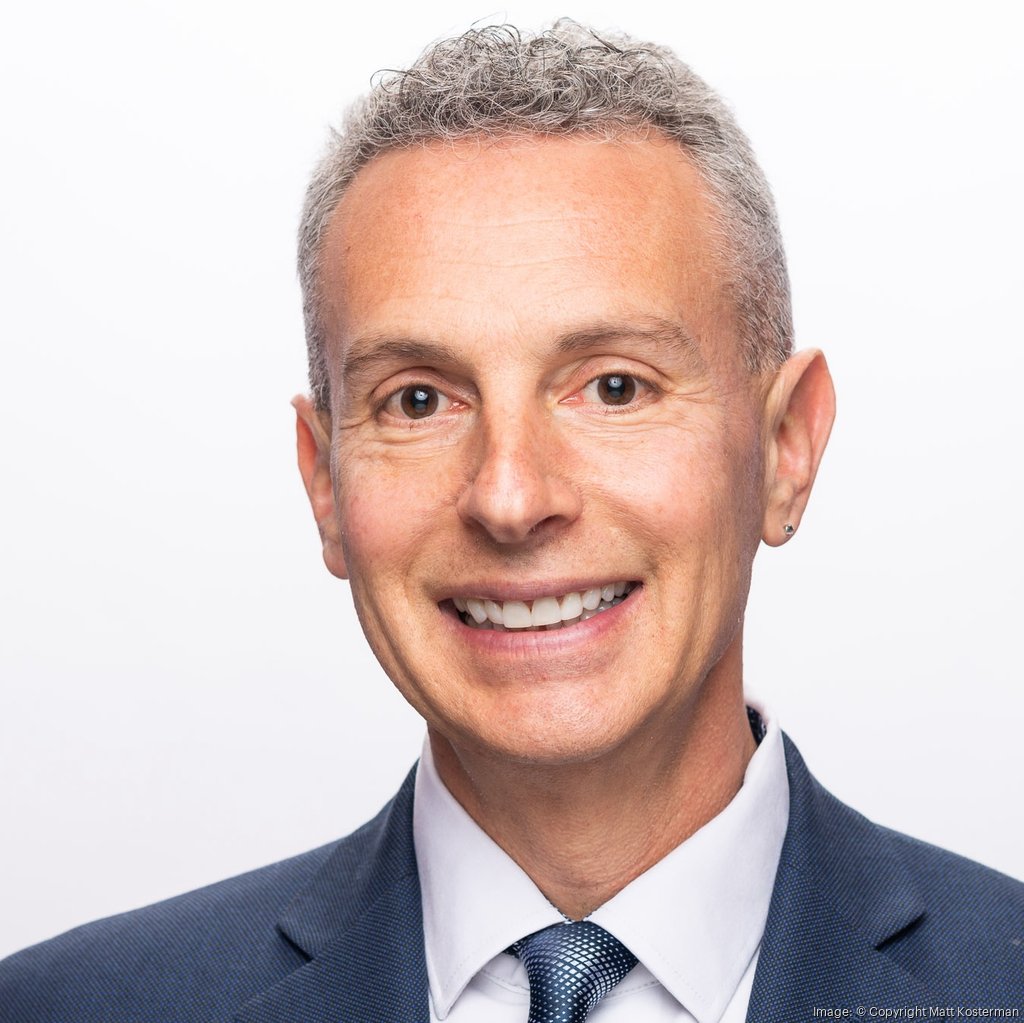
Brad Fuster, DMA, has extensive experience in higher education leadership. As a respected music professor and academic leader, Fuster brings deep expertise in academic affairs, enrollment management, international program management, and technological innovation to SFBU. He has held key leadership positions at SUNY Buffalo State University where he was a Vice President, and at Keuka College (NY), where he served as provost and intermittently as acting president, managing a substantial institutional budget and leading numerous academic campus-wide initiatives.
During his tenure at Keuka College, Fuster led sweeping advancements in experiential learning, new program development, general education revision, international growth strategies, and led a successful Middle States reaffirmation. He significantly improved student retention and success by demonstrating his strong commitment to diversity and inclusion, as well as helped stabilize institutional finances through grantsmanship and innovation.
As an expert in higher education, Fuster has published numerous articles and book chapters and presented at national and international higher education conferences by special invitation. He hosts the EdUp Innovation podcast, is s frequent podcast guest, and wrote about higher education under contract for US News & World Report.