


 Spotify

 iHeartRadio

 Apple Podcasts

 TuneIn

 Pandora

 Audible

 Amazon Music

 YouTube

 Castbox
Dr. Jennifer Young Wallace—Leaving a STAMP on Education and Her ATE Presidency (Part 1 of 2)
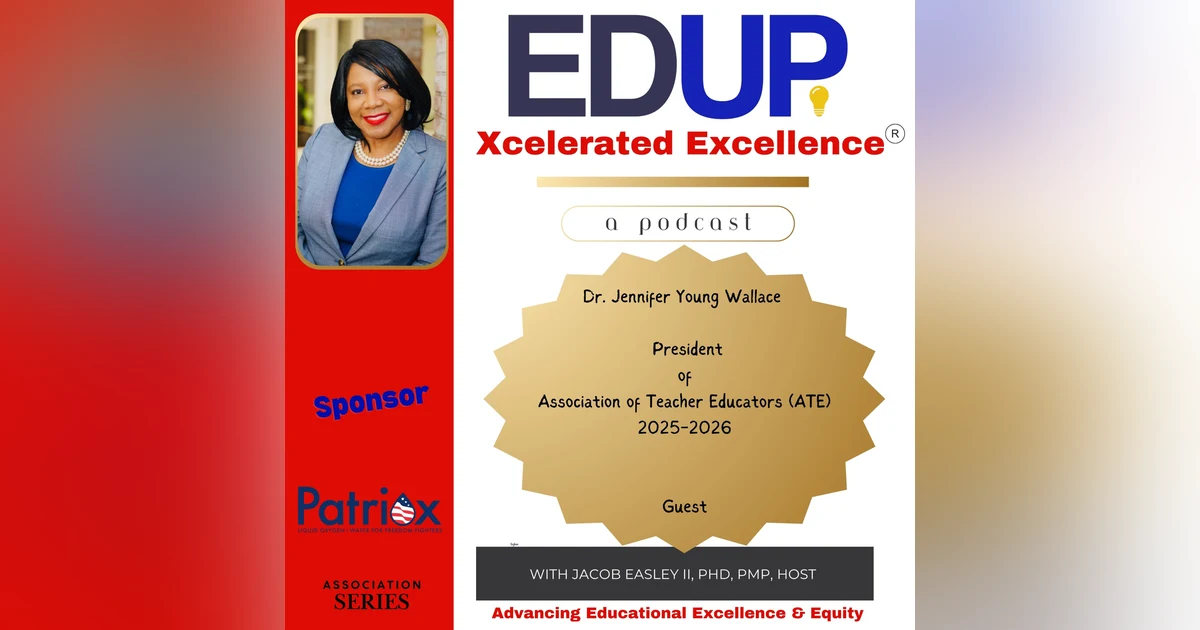

Our Guest, Dr. Jennifer Young Wallace, is a tenured Associate Professor/Coordinator of the. Doctoral Program-Educational Leadership for the College of Education at Jackson State University, a Tier II research university, where she presently serves as JSU Faculty Senate President.
Dr. Wallace served as national President 2025-2026 for the Association of Teacher Educators (ATE), making history as the first president who is an alumnus of and employed at an HBCU. She is the 5th African American president in the 105-year history of theorganization. She travels over the United States as keynote speaker for national conferences, baccalaureate exercises, organizations’ initiatives and others.
She will be presenting her research on Critical Race Theory in America in Dublin, Ireland, representing the United States as ATE President.
Wallace is the president of the Capital Area Sunset Rotary Club, where she is a charter member, and is having her second round as president. She is a product of Holmes County and graduated from SV Marshall High School in 1987 as Valedictorian.
Your Host: Jacob Easley II, PhD, PMP
Sponsor: Patriox oxygenated water. Drinking Patriox helps oxygenate the body, promoting overall health, energy, and vitality. Receive a 10% discount on your next purchase with the code EDUPXE.
Resources:
Greeting: Nicholas Hartlep
Research Assistant: Emma Worthington
#EDUPXE #EDUCATIONALEXCELLENCE #EDUCATIONALEQUITY
0:04 We are so focused on content and I believe content is so, so needed. I am not by any means knocking out our content, but a part of our professional practices is understanding the need to reach our students mentally. So, so, so my message out there is let's train teachers to teach people. And we know that when we're dealing with people, that also requires a special skill and that also requires a love and a heart for the work that we're doing. So that's the message that I am reiterating as we are going out there, as well as those things that are important like transforming, advocating, understanding who you are and extending and understanding that trends change, so your professional practices must also change. So it's it's, it's all one big picture of leaving that stem because for me, one doesn't work without the other, not effectively.
1:21 This is Nicholas Hartlett, Robert Charles Billings Endowed Chair and Education at Berea College, and you're listening to Add Up Accelerated Excellence. Are you listening? Listening is more than just hearing. It's the engine of transformation. When leaders truly listen, they unlock hidden insights and spark meaningful change. The power of listening turns quiet voices into catalysts for educational excellence and equity. That's why we've launched the XE Listening Tour, a journey dedicated to amplifying every voice, especially those least heard from this week.
2:09 Seek out and listen to a quiet voice, a student, a colleague, or parent. Let us know what you learned about educational excellence or equity from their story and record your experience and insights via voicemail at Add Up xe.com. Your contribution may be featured on this podcast. Are you listening? We are join the XE listening tour at Add Up xe.com. This episode is supported in part by Patriarchs. Ultra High Oxygen Content Water drinking.
2:51 Patriarchs helps oxygenate the body, promoting overall health, energy and vitality. In 2026. Try Patriarchs on your journey for accelerated Excellence. Receive a 10% discount on your next purchase with the code Add Up XE. That's 10% off with the code Add Up XE at Patriarchs dot US. Patriarchs dot US. Find more details in the show notes. Welcome, welcome. Welcome to Add Up Accelerated Excellence, the podcast for the advancement of educational excellence and equity. And I'm your host, Jacob Easley, the second PhD PMP. And today's guest is the wonderful doctor, Doctor Jennifer Young Wallace.
3:49 She is the immediate past president of the Association of Teacher Educators or ATE and is an associate professor at Jackson State University. Doctor Young Wallace, welcome to the show. And would you introduce yourself to the add up accelerated excellence community by giving voice to your name? It's only you're able to do so and provide 1/3 elevator pitch of what's happening currently in your sphere just leaving the dais of ATE as the national president at your conference just a few weeks ago.
4:31 Thank you, Doctor Easley. I am Jennifer Young Wallace. I am an associate professor of leadership at Jackson State University, one of our premier HBC News. I'm also Faculty Senate President there where we are really interested in in the future of higher education. So today I am excited to share with you some of my vision and some of my experience in education. Presently as as as Doctor Easley stated, I am the immediate past president of ATE and it was a fabulous year of reiterating to educators as we train educators to leave a stamp on education.
5:16 Leave a stamp on education. So my national theme was empowering a global community of leaders to lead a stamp. Stamp is an acronym stamp on education. Ask for social emotional learning, T for transformational leadership, A for advocacy, M for multiculturalism, and P for professional practices. I'm so excited about that work because that work is extending into a, a model, a model for leaders and a model for teachers. I think that every leader, every teacher needs to be intentional about leaving a stamp on education.
5:58 And many times, especially in this world where we are focused on testing and we're focused on test scores so that we are showing that we are accountable for what we are doing in the classroom, we forget that we are teaching people. So oftentimes we have teachers who are teaching the curriculum, but actually you are teaching people the curriculum. So we go from teaching to curriculum when we should be saying teaching students, people with feelings, with emotions, with challenges, with concerns, the curriculum.
6:40 So that is my my refrain for, for this work that I am continuing from my presidency. So I'm excited today to talk about this and I look forward to sharing more as we go through this interview. So Jennifer, thank you so much for that. So I'm going to take us back a bit and we're definitely going to talk about what it means to leave a stamp on the education profession. But looking back on your journey, when did education begin to feel like a career path for you? And and when did you know that it was a calling of sorts for you as as your professional purpose?
7:26 So I'm going to go back to, I think my mom said I was three years old. I went to a starting school. The teacher told my mom that I was teaching students how to write their names. She told my mom, Jennifer really doesn't need to be in this school. She needs to be in a, a higher grade. But of course, back then, then we didn't have the gifted programs in the in the early 70s, right? But mom said that I was teaching my sister and I always wanted to be the teacher. So. So we're sick of paying in that as I went through school, I was always chosen to tutor students. I learning was so natural for me and teaching others how to to understand what what was being taught was innate. It was it was something that I had a passion for. But yet Doctor Easley, I tried to get away from that. I wanted to be the next Black Barbara Walters. And at the time, Oprah was not out there. So that was Barbara Walters who was a woman, right? And so in high school and in college, they called me the Black Barbara Walters.
8:38 I wanted to be the Black Barbara Walters with a low background so that I can pull out stuff and we could talk about issues. So I'm like, OK, that's what I really want to do. But then I ended up getting minor in education because I was like, but I still love teaching. Somewhere in the, in the back of my mind and and probably in the core of my heart, teaching was what I wanted to do. So I I went after I graduated, I worked in in and a hospital as APR because my degree was English journalism with a minor in pre law in in education. So I am, I'm, I'm, I'm working as a PR in a hospital.
9:23 I find myself counseling a lot of people. And so I go on and I get a degree in counseling. They were like, well, Jennifer, you know, you are certified, so why don't you do the K12 counseling? And I did that. And then all of a sudden I realized that I wanted to teach. So I went, I applied for a job and became a high school teacher. And when I tell you, the moment that I walked in that classroom, I knew that I was supposed to be a teacher, not to disregard my, my communication skills because now I'm doing this to me. This is a part of journalism, right? So, so those skills did not go to waste at all.
10:05 But, but, but teaching is my passion. When I walk in that classroom, it invigorates me. It does something to me. It is my goal to empower. I tell my students, or I told my students back when I was teaching high school, that I want you to be better than I am. I want you to go and do greater things. And so for me, that was my start and that was a realization that education is my pathway and it is my passion. So I'm probably going to call you or I'm probably going to shift between Jennifer and Doctor Wallace when I refer to you. I hope that's OK.
10:47 That's OK. So Doctor Wallace, at first I have to say your passionate energy is definitely infectious. So, but you mentioned something about a natural love for learning and, but you also anchored that that your closing statement there about imparting upon students that you want them to be better than who you were are are as a student and, and, and you want the best for them. So how do you think we can go about tapping into this idea of helping students to actually love learning, particularly those students who struggle?
11:30 So it goes back to leaving a stamp. In order for students to understand the importance, especially coming from some of their environments where education is not stressed, we as teachers have to build relationships with these students. These students come with all kinds of of experiences, some that awed me every time when I was a teacher. For example, just for a student to tell me that she hated her mom was like blasphemy for me because my relationship with my mom is so awesome and I love my mom so dearly.
12:14 And of course my dad too. Another student who tells me that he doesn't see his mom until the weekend, but he said she works, but he also felt that she was doing some other things. And so having the those type of students with those types of experiences, especially in the areas where where most teachers are probably going to teach, we have to build relationships with those students and we have to tap into what they're good at and we have to empower them in those areas. When you empower them in those areas where they are confident and feel that they're good at, they become more hungry to learn more. But relationship building is first. I keep telling teachers we are not going to relate or reach these students until we build some type of relationship with them.
13:13 So my personality is a relationship builder of type personality because once they are built, doors open, minds are free to receive. And that way we began to learn and we began to explore things that we may have been afraid of had we not built those relationships. So for me as a teacher, it was about building those relationships with those students passing by, our students saying what's going on today? You're not your jolly self. And then the student looks at you as if, oh, you paid attention. A few days ago, I was reading a post that a student posted a few years ago. She said Doctor Miss Young.
13:59 I wasn't Doctor Wallace then. Then she said Miss Young was my favorite teacher because she knew when something was wrong with me, when I didn't even want to tell her. And she took the time to listen to me. And when she listened to me, I was able to to heard back up and get back into the lesson. And because of that, I was an A student. So again, we can go out and we can be the the most skillful teacher when it comes to content and knowledge. If we are not practicing those social emotional skills to reach our students, we are going to lose the best students. And that is one of my focuses.
14:46 I cannot go back because I've seen the difference. And so really in some ways what what I capture for that is the act of caring that when we walk into schools, it's not simply about the content knowledge, but when you say those relationships is 1 and letting students know that you actually have a genuine concern and care about their well-being as foundational to your work in the classroom. Yes, it is important. Otherwise the best students are not going to focus. They're they're they're if they don't see a need for it.
15:26 So I'm just going to interject this right here. I had a group of young males in my class who had probationary officers, right? They had some type of violation or infraction out there in society, but they were in school because they had to go to school, otherwise they would be jailed. Well, the principal decided that I was the teacher for these students and I, and I was a rather novice teacher, maybe three years in. The principal said Miss Young, you're the one who can do this.
16:07 Let me tell you what those students taught Miss Young. They taught to me that somewhere along the road they never grasped the interest in education or saw the need for it. Now mind you, I tried to teach these students according to my pacing guide and I tried to teach the traditional way. These were two year repeaters. They were 10th grade, should have been 12th grade. Those students know the content, know what verbs were, know how to how to answer questions correctly.
16:54 Knowing the content was not their issue. Applying themselves or feeling that it was necessary to apply themselves was the challenge. So what did I have to do? I had to look in the mirror and say what you're doing, Miss Young, is not going to work for these students. You're going to lose them too if you don't change. So I had to go back and find what some of their interests were and I had to take what their interests were and and incorporate lessons according to what they were interested in and allow them an opportunity to share.
17:34 What I thought was going to be a horrible year turned out to be one of the best years in my teaching career because those young men taught me that they had been categorized, generalized, and nobody went in or cared enough to really understand what was going on with them or how to approach them in teaching. And so from that experience, I realized that that differentiating instructions are necessary, even though I didn't know that what I was doing back then was differentiating instructions.
18:22 I saw a need and I felt that I had to readjust, otherwise I was going to have a stressful year. And let me tell you what those guys did. And the principal said in the, in one of our faculty meetings, he said, what is it about Miss Young that this group of guys come to her class the first period after the first period, they dot that gate. And what he mean meant was they had cut a hole in the, in the, in the fence that went around the school. And once they finished my class, they dotted that that fence, they went through the fence and they skipped class the rest of the day. But let me tell you how I got them the very first week of school.
19:09 They told me, Miss Young, don't don't worry, we are not coming to your class. So you are going to have a free period. The first period. I said, Oh my God, you all are not coming. I have so many great things. Oh no, we're not coming. We're just telling you right now. I said, but check this out. I said if you all don't come, I get a free period. I get I I can even come in a little late and I'll just chill and enjoy and have me an extra period that day to relax. Thank y'all so much. They got to thinking. They said no, we're not going to do that. No, no, no, you won't get a you're not going to use us, now that we think about it.
19:56 So I was reaching them, right. I used that reverse psychology. So the next day when they came, when they came to class, I was like, y'all came to class. Oh my goodness. I didn't really prepare because I thought I was going to have a three period. But since you're here, let's have a conversation. And that's how it all began. And. I miss my class. And I'm sure the conversation in some ways, although the reverse psychology, I believe it's probably that first conversation to understand that you actually are interested in them as individuals, as human beings and their well-being that set the tone. Yes.
20:40 And that's what I'm, that's the message that I'm trying to get out. As we educators are educating leaders, educators as we are, as we are educating teachers, future teachers, we are so focused on content. And I believe content is so, so needed. I am not by any means knocking out our content, but a part of our professional practices is understanding the need to reach our students mentally. So, so, so my message out there is let's train teachers to teach people. And we know that when we're dealing with people, that also requires a special skill and that also requires a love and a heart for the work that we are doing.
21:31 So that's the message that I am reiterating as we are going out there, as well as those things that are important like transforming, advocating, understanding, saying that who you are and extending and understanding that trends change. So your professional practices must also change. So it's it's, it's all one big picture of leaving that stem because for me, one doesn't work without the other, not effectively. Yeah, I definitely appreciate that. So let's look at your journey towards the presidency at ATE. So what first you? What first drew you to the Association of Teacher Educators?
22:18 So I was a professor at Alcorn State University and my Dean, Doctor Robert Carr at the time asked the chair to see who would like find 2 faculty members who wanted to go to ATE and it was held in Atlanta. I was one of the ones that that agreed to go. So when I went to Atlanta, I went a date early. I thought that they were getting ready to start registration that day that I actually got there. I didn't know I was early. I eventually got registered, got to meet people and got engaged. So that was my first, first journey. Doctor Robert Carr, who was the Dean at Alcorn at that time. So I, I attended, I was at Alcorn 2A year and a half after that and I went to Jackson State and Jackson State agreed to support me and in my endeavors at ATE. So that's how I got there.
23:18 It was, it was an awesome journey to get where I am, but it all began back when I did not even realize that conferences had such governance. You know, we go to these conferences, we make our presentations. We, we, we, we, we go to others, others presentations and we're out. But there is a whole mechanism that makes those conferences work. So I, I, I, I, I know it had to be divine intervention that I began relationships with people or professional relationships with people who were engaged in, in the governance of the organization and in a life came on like, wow, yes, somebody has to make this wheel turn. And that's how it all began.
24:14 We're speaking with Doctor Jennifer Young Wallace, who is the immediate past president of the Association of Teacher Educators. So Doctor Young Young Wallace, you've shared that ATE played a significant role in your professional growth. And I'm asking this because I'm hearing a, a sort of a trend. You've talked about relationships in the classroom and now relationships within the profession. So how did ATE open doors for you? You mentioned for publications, presentations, and national leadership. What made those early connections so formative for you going to your first ATE conference?
24:58 So, so I would just clearly state this and thank you. You've captured it very well. When I, when I got to ATE the very first year again, I believe it was divine intervention. The people that I met were actively engaged in publications, research, things that I absolutely, absolutely loved to do. Did not quite have the best skills at the time because I was new to the profession. I began to talk to them and this hunger to learn more.
25:39 And so that was this group who who always got together at at ATE to talk about education trends, research their work. I was in on the conversation guys like Doctor Walt poker doctor Freddie Bowles from Arkansas. Walt was from New York, Dr. Terrell from from Indiana, Doctor Shirley and the Fever from from Kansas, Doctor Judy Beck from South Carolina. All of these people were so engaged in research, so we started to just start having dinner lunch together and attending each other's presentations. And so from there we started talking about some things that we could do.
26:27 Doctor Walt Poker has has authored so many books and he has empowered so many people. He brings so many people along and he still does that. So Fast forward few years, I'm traveling with this group. We're meeting up at a ACTE other other conferences presenting our work together through them. I've read 4 words afterwards chapters. So again, that relationship building, building the relationships. Now understand that what each does right and each has his or her own individual purpose and passion. So you're sitting there and you're learning from these professionals and you're saying, I got to catch up. And the thing about it catching up, not to compete, but because something deep down inside of you reminds you that this is what this is the breakthrough that you've been wanting to do the work that has been placed in your spirit, in your heart. So that group began to take me to a whole number another level. Now mind you, I'm from an HBCU where one person does all the work, where one person, one position, one office may have two people.
27:49 And these guys are from PWI that may have six or seven people in the office doing different work. Where it's at an HBCU, one person is doing the work. So listening to them, you learn how how things are done differently. Then you also learn, well, you have to remember, OK, but you're one person. How can you take what you've learned from them and make what you do as, as a one person shift work efficiently? So again, having those types of experiences, that's what happened to me at ATE. My first national committee was at ATE and and guess what committee it was on? The.
28:31 Journal Committee. The Journal publication Committee, something that I was ready to do, taking my ideals, understanding how to really go about the research coming beyond, beyond the surface, right rise and above. That's what ATE did for me through relationships and engagement. So, so I wanted to make sure that I be the person that was shown me when I came in. So if people are coming along, I get emails all the time. I give them insight, made recommendations when I was president to put them on committees.
29:13 So again, learning empowering because as I tell people, it's enough to go around, it's enough work that I don't have to hold it all. It's enough knowledge out there that we can share and we can empower others so that they can, they can have an, an opportunity to explore their passions and to and to have products from their passions. That's that's that's what Ate did for me early on. So again, you're centering relationships, but you you brought up the idea of context. And I think this is something that many of us don't that we often don't fully recognize is that many institutions or many folks are working in under resourced institutions. So not just HBC user mentioned that one person has multiple roles.
30:10 This can happen in small colleges, PWI or predominantly white institutions. So, but particularly those who work in small units where you are wearing multiple hats throughout the academic year. And it does create a struggle for someone to be as deductive around teaching, scholarship and service when you have multiple responsibilities compared to those who perhaps may be at a better resource institution and you're allowed to focus primarily on research and maybe less on teaching and so on and so forth. And I think we have to recognize that within the profession and what we can, what we count as continuous progress towards whether it's two year promotion or whatever, that whatever the benchmarks might be within the profession, but also at the local level with given the context that we just described.
31:10 Yes. This episode is supported in part by Patriarchs. Ultra high oxygen content water drinking. Patriarchs helps oxygenate the body, promoting overall health, energy and vitality. In 2026. Try Patriarchs on your journey for accelerated Excellence. Receive a 10% discount on your next purchase with the code Add Up XE. That's 10% off with the Code Add Up XE at Patriarchs dot US. Patriarchs dot US. Find more details in the show notes. Listen.
31:58 Are you listening? Listening is more than hearing. It's the engine of transformation. When leaders truly listen, they unlock hidden insights and spark meaningful change. The power of listening turns quiet voices into catalysts for educational excellence and equity. We've launched the XE Listening Tour, a journey dedicated to amplifying every voice, especially those least heard from. And we want to hear from you. This week, seek out a voice least heard from a community member, a parent, or a student. Let us know what you learn about educational excellence or equity from their story and record your voicemail at edupxe.com.
32:48 Your contribution may be featured on this podcast. Are you listening? We are join the XE listening tour at Add Up xe.com. So I want to talk about the positionality and the significance of your presidency, particularly for those of us who graduated from HBCUS. So you're the first ATE president who's both an alumni and an employee of an HBCU. What does that represent or what did that representation mean or continues to mean at this moment in time, holding a position as president of a national organization? That that that's a very good question and I'm so glad that you asked that really stresses diversity And remember the position as president is in an elected president where the members and I think right now back then we may have had about 1800 members, right members elect you. So, so you're there is a ballot that goes out and I was so excited coming from an HBCU and also being an African American, not again focusing so much on race, but I guess more so to focus on position because now I
34:22 had a lot of people from HBCU who knew nothing about ATE. So here I am, the face as a president, and they see my face as an African American woman as president. They began to ask questions, I guess because sometimes familiarity makes it easier to ask certain questions. And I was able to share with them those experiences that I had early on in ATE and how they embrace diversity. And now this is an opportunity for me to share with HBC us across the nation, how their novice faculty can come into ATE, get their feet rounded and have opportunities to be empowered and to empower, have opportunities to grow, to learn.
35:19 A safe space for them to say, oh, I'm not good at that. How can I get good at this? Or a safe space to say, you know, could you tell me more? I heard about this, but I don't know a lot about it. So for me, having that opportunity to share with people from HBCUS as well as PWIS and Ms. is minority serving institutions, to share with them the opportunities that were allotted for me that are also available for them. And again, I did, I did not leave out people because it was not about race, but I guess more so about the positionality of having a an African American face, something that has been a different for a while because I think the last African American president was 10 or 11 years ago. So again, to share, to share those experiences for me coming from an HBCU and working as a professor at an HBCU, here are some opportunities here here at ATE. This is this the same opportunity for you. And and this year at the conference, we had so many African American Americans to register. We also had a large group from
36:49 FAMU to come. We had Tennessee State, we had I think 13 registrants from Mississippi when normally they are 3 or 4. So so again, having those opportunities to share. And now we are, we we are, we are reemerging or should I say rechartering the Mississippi State Union for ate here in Mississippi. And Mississippi has three HBC us we're actually 3 state HBC us. We we have I think there are eight. Well, if you count on private universities, colleges like Tougaloo College, Coahoma Community College, Hinds Community College, Rusk College. So again, again, having that opportunity to share and say, come on in and see what ATE can offer you. So for me, again, I like to stress, it was not anything about race from that perspective, more about having the opportunity for people who come from smaller universities that happened to be HBC US and having their novice faculty engaged so that they can think outside of what they see in HBC us.
38:05 Because that's what it did for me, Jacob. It, it, it, it took me outside of my box, just as probably some PW Oz is listening to me took them outside of some of their boxes to, to understand the work, how we have to train and to give me some, some advice and some suggestions on how to move forward. So it you could just, I couldn't lose. You just can't lose. Again, brokering relationships and I'm really excited and perhaps I want to hear about the development of the ATE state group in your state that has developed as a result of some of that relationship building while you were president with the organization and for individuals at HBC US in your state.
38:57 So let's now talk a bit about leaving a stamp because I know that was your campaign theme or your theme for your presidential, your presidency and the president sits in that role for is elected, but sits in that role for one year, correct? Yes. So when you're elected, you come in as second vice president, you start the work, you start you, you find your chairs for your conferences. And at the time that I was elected, ATE was having a summer conference and an annual meeting and the president. Now this would be the last summer conference. Thereafter, we would just go to one annual meeting.
39:38 So I came in as second vice President. Then after that year you move the 1st vice president. But all during that time you are setting your year in motion when you actually received the gavel. So by the time I received the gavel last year in New Orleans, 2025, my, my past had been set and the work had begun. So. So when I move in now I'm ready to execute. You had a. Runway. So you had a few years of a runway. Brilliant. So what I want to know then? So stamp, empowering global, a global community of leaders to leave a stamp on education. The stamp stands for, as you mentioned earlier, social, emotional learning, transformative leadership, advocacy, multiculturalism and professional practices. So I understand that you are relationship broker by just naturally and haven't had the runway for two years at least to think about what your presidency would look like. Tell us about what data, what circumstances, what was happening in the field and and ATE that inspired this theme that made it feel so urgent for you at that time during your presidency.
41:02 So we had come when I got elected, we were, we were still somewhat in the pandemic, right? I think I was elected in 22. We were still in the pandemic. Teachers were struggling, trying to to move to a virtual platform. Students, so many students just didn't come to school. They didn't log in. So when I say come to school, they were not logging in. And even when we went back physically, it took schools a while to get back. Teachers were in a frenzy. School leaders were in a frenzy about how do we get through this?
41:43 What is happening? How do we get back or do we need to get back to the way we were? Do we need to start gearing our minds to a new era of learning, which I believe that there was some pieces of getting back that were important, but I thought that we had to recalibrate and and redirect and move in a new direction. So how do you do that? How do you get back there? How how? I mean, I mean, how do you start? How do you start to move forward? How do you pull up pieces that you needed from back there in order to go up there? Right. So, so I was, I was looking through past presidents things and it dawned on me, presidents choose things based on the era or the trends of that time. Things from presidents can tell you a lot about what could have been happening in education at that time, right? So, so for me, I began the research to see what are the hot items in this post pandemic era.
43:01 The hot items were social emotional learning, leaders who need to change the way they're doing things, leaders who need to make sure that the people are empowered to do this work in this new way of learning, in this new way of teaching advocacy. Especially teachers having the having to face this critical race theory journey, right and, and afraid of what to teach because there appears to be no autonomy or authenticity in teaching multiculturalism in this time. Do we know who we are? You know, diversity is good, but what are my norms, my beliefs, what are my values as as an educator and professional practices? What do professional practices look like in this post post pandemic era?
43:54 So it it. So again, I was like, leave a stamp on it. They got it in this time, Jennifer, they need to leave a stamp. They got it. They got to get these students back into this world of learning. They got as an educator, they got to get back into this world of teaching. They're going to have to, they're going to have to refocus and they're going to have to be intentional about building relationships to get back or, or to get moving forward. And, and, and how do you do that? You're going, they're going to have to make a difference right now. They don't have time to make a difference 10 years from now. This difference has to start right now.
44:35 So Jennifer, what do you do? They need to leave a stamp on education right now. They need to start stamping. And so my chair is called educator stampers. You all are stampers. So that's the new term stampers. So we were walking around at the conference like leave a stamp on education, you are stampers. So, so based on that research that I, I, I came up with the acronym stamp and in, in short, leave a stamp on it. But I said in order to leave a stamp, we have to empower. And this thing is global. The pandemic hit all around, and we don't know where we're going to be or where our students are going to come from.
45:17 So that's how it all came together. It was based on research, it was based on experience, and it was based on the need to empower Jacob. And we do not empower our teachers in the classroom to be leaders and we do not empower with them to empower students. We are going to be a lost generation and people feel better. People will work for you when they feel that you want them to be great. Not all work them. Not just be great just to get a test score up so a district can look good or so the principal can say, well, my school had the teachers with the highest scores. No, not just for that notoriety, empowerment for the person so that that person can embrace what he or she has to offer in that classroom.
46:16 That is the difference. And that's to me, is important. Yeah, that's that's actually powerful when you think about it in that way. So leaving a stamp and you have your stampers who are contributing during the conference, but how did you see this theme contributing to the life of Ates commissions and initiatives? So launching this last year as part of your as as your presidential theme, how did you see it unfold? Oh, so that the strands in the in the conference were stamped social, emotional learning, transformational leadership.
47:03 So when people applied or or proposed, it was centered around that. I had an opportunity to drop in on some sessions. I was flown at how this thing was resonating and and even to hear someone may have chosen A multiculturalism and how they were reiterate, you know, if we're going to leave a stamp on this. Even though they were discussing their research, they found ways to bring it back to why their research is important. Not just to present, not just to get tenure and promotion.
47:45 This research is to empower. And maybe the ones who are listening to me, when you leave my session, you are in not only empowered, but you have a step. I've left a step and impression on you to take this work to the next level. So as I was walking around and even in conversations when I stopped in, in huddles because I imposed myself I guess and they were happy to have me to, to contribute. I was very impressed and moved by the conversations. I I was able to interject or share some of my personal experiences of, of stamp. So that's what I saw unfold as I'm getting emails, I have not gotten 1 e-mail that didn't say I am so excited to leave a stamp on education or I, or I've been encouraged to be intentional about leaving a stamp on education. And I believe that this is going to resonate for a while. And, and, and, and, and new presidents are coming in with their themes and, and they're going to be great. The new president has an awesome thing about bridge in the past to the present, which I think is important. She's focusing on purpose, passion, and, and I think of productivity.
49:06 And I think that that's an awesome thing that, that, that also is going to help people to also give a stamp on education. So, so I saw it on the phone and I saw it unfold. I saw it put a voice to what was in my spirit. This, this thing put a voice, a face to what what has been conjuring up in my spirit for a long time. And so now we are moving, we are copyrighted. We're moving into, into a framework of what this could look like. So, so this work has really just begun, but I, it's unfolding and it's unfolding and, and I am so excited about it, especially, especially in their time when teachers are not sure what they can even teach.
49:55 What is this going to look like for them being a stamp educator? Thank you for engaging with Ed Up Accelerated Excellence, a member of the Ed UP Experience Network of educational podcast. Join us in one week for the second part of our conversation with Doctor Jennifer Young Wallace, the immediate past president of the Association of Teacher Educators. And we encourage you to participate in our XE Listening tour by listening to the educational stories of others and sharing your thoughts with us at EDUP xe.com. You can find this and other episodes on Spotify, iHeartRadio, Ale Radio, YouTube, and other outlets where you listen to your favorite podcasts.
50:38 If you like this episode, don't forget to follow us and share within your network. To leave a comment or suggest a guest, contact us online at edux ecom. A special thanks to our research assistant, Emma Worthington, a PhD student of Fordham University School Psychology Program, and we want to hear from you. If you have feedback on this or other episodes or would like to nominate a guest, contact us online at EDUP xe.com, where you can leave an e-mail or a voice message. That's at UP xe.com.
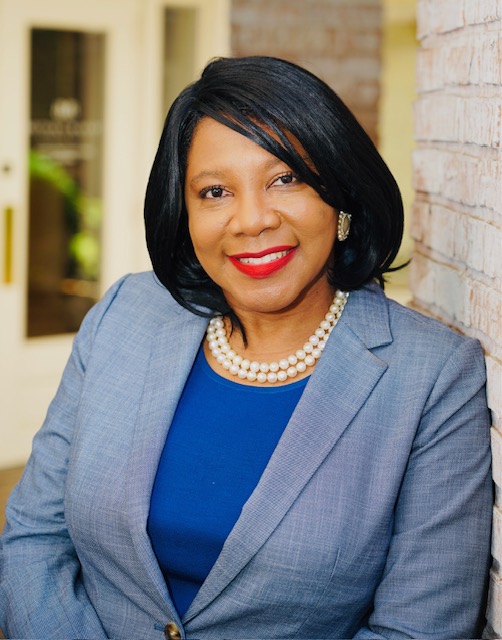
President, Association of Teacher Educators
Dr. Jennifer Young Wallace is a tenured Associate Professor/Coordinator of
the Doctoral Program-Educational Leadership for the College of Education
at Jackson State University, a Tier II research university, where she
presently serves as JSU Faculty Senate President.
Dr. Wallace serves as national President 2025-2026 for the Association of
Teacher Educators (ATE), making history as the first president who is an
alumnus of, and employed at an HBCU. She is the 5 th African American
president in the 105-year history of the organization. She travels over the
United States as keynote speaker for national conferences, commencement
& baccalaureate exercises, organizations’ initiatives and others. She will be
presenting her research on Critical Race Theory in America in Dublin, Ireland, representing the
United States as ATE President.
Wallace is the president of the Capital Area Sunset Rotary Club, where she is a charter member, and
is having her second round as president. She is a product of Holmes County and graduated from SV
Marshall High School in 1987 as Valedictorian.
Wallace was recently recognized on the floor of the Mississippi House of Representatives after the
House voted on a resolution (MS H.R. 44 – 2025) recognizing her work in k12/higher education on
state and national levels. The resolution is a part of the MS History archives. She was awarded the
competitive Summer 2024 Institute of Social Justice Faculty Fellowship for her social justice
research project, An Injustice to Social Jus… Read More