


 Spotify

 iHeartRadio

 Apple Podcasts

 TuneIn

 Pandora

 Audible

 Amazon Music

 YouTube

 Castbox
Dr. Jennifer Young Wallace—Leaving a STAMP on Education and Her ATE Presidency (Part 2 of 2)
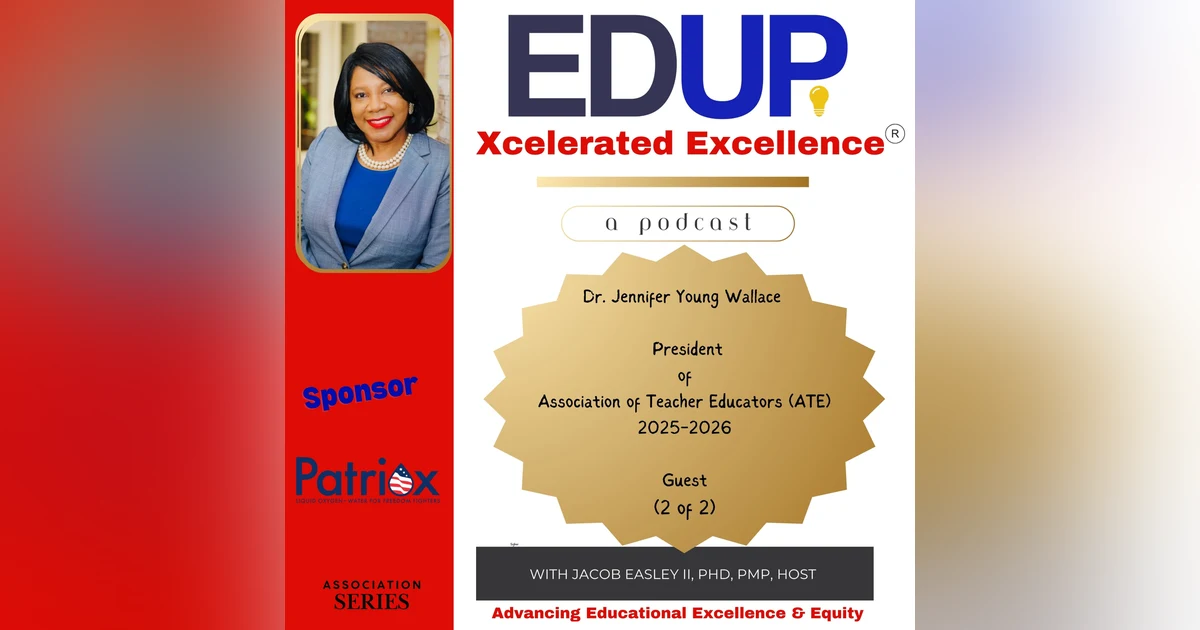

Our Guest, Dr. Jennifer Young Wallace, is a tenured Associate Professor/Coordinator of the. Doctoral Program-Educational Leadership for the College of Education at Jackson State University, a Tier II research university, where she presently serves as JSU Faculty Senate President.
Dr. Wallace served as national President 2025-2026 for the Association of Teacher Educators (ATE), making history as the first president who is an alumnus of and employed at an HBCU. She is the 5th African American president in the 105-year history of the organization. She travels over the United States as keynote speaker for national conferences, baccalaureate exercises, organizations’ initiatives and others. She will be presenting her research on Critical Race Theory in America in Dublin, Ireland, representing the United States as ATE President.
Wallace is the president of the Capital Area Sunset Rotary Club, where she is a charter member, and is having her second round as president. She is a product of Holmes County and graduated from SV Marshall High School in 1987 as Valedictorian.
Your Host: Jacob Easley II, PhD, PMP
Sponsor: Patriox oxygenated water. Drinking Patriox helps oxygenate the body, promoting overall health, energy, and vitality. Receive a 10% discount on your next purchase with the code EDUPXE.
Resources:
Greeting: Nicholas Hartlep
Research Assistant: Emma Worthington
#EDUPXE #EDUCATIONALEXCELLENCE #EDUCATIONALEQUITY
0:04 Oh, so that the strands in the in the conference were stamped social, emotional learning, transformational leadership. So when people applied or or proposed, it was centered around that. I had an opportunity to drop in on some sessions. I was flawed at how this thing was resonating and and even to hear someone may have chosen A multiculturalism and how they were reiterate, you know, if we're going to leave a stamp on this. Even though they were discussing their research, they found ways to bring it back to why their research is important.
0:49 Not just to present, not just to get tenure and promotion. This research is to empower. And maybe the ones who are listening to me, when you leave my session, you are in not only empowered, but you have a step. I've left a step, an impression on you to take this work to the next level. This is Nicholas. Hartlett, Robert Charles Billings Endowed Chair and Education at Berea College. And you're listening to Add Up Accelerated Excellence.
1:34 Are you listening? Listening is more than just hearing. It's the engine of transformation. When leaders truly listen, they unlock hidden insights and spark meaningful change. The power of listening turns quiet voices into catalysts for educational excellence and equity. That's why we've launched the XE Listening Tour, a journey dedicated to amplifying every voice, especially those least heard from this week. Seek out and listen to a quiet voice, a student, a colleague, or parent.
2:16 Let us know what you learn about educational excellence or equity from their story, and record your experience and insights via voicemail at Add Up xe.com. Your contribution may be featured on this podcast. Are you listening? We are join the XE listening tour at Add Up xe.com. This episode is supported in part by Patriarchs. Ultra high oxygen content water drinking. Patriarchs helps oxygenate the body, promoting overall health, energy and vitality. In 2026.
3:00 Try Patriarchs on your journey for accelerated Excellence. Receive a 10% discount on your next purchase with the code Add Up XE. That's 10% off with the code Add Up XE at Patriarchs dot US. Patriarchs dot US. Find more details in the show notes. Welcome, welcome. Welcome to Add Up Accelerated Excellence, the podcast for the advancement of educational excellence and equity. And I'm your host, Jacob Easley, the second PhD PMP. And today's guest is the wonderful doctor, Doctor Jennifer Young Wallace.
3:47 She is the immediate past president of the Association of Teacher Educators or ATE, and is an associate professor at Jackson State University. Thank you for tuning into the second part of our conversation with Doctor Wallace, where she continues to explain the complexities of National Association leadership and the growing diversification of engagement by members across different types of universities. Thank you, Doctor Easley. I am Jennifer Young Wallace. I am an associate professor of leadership at Jackson State University, one of our premier HBC US.
4:33 I'm also Faculty Senate President there where we are really interested in in the future of higher education. So today I am excited to share with you some of my vision and some of my experience in education. Presently as as as Doctor Easley stated, I am the immediate past president of ATE and it was a fabulous year of reiterating to educators as we train educators to leave a stamp on education, leave a stamp on education. So my national theme was empowering a global community of leaders to lead a stamp.
5:16 Stamp is an acronym STAMP on Education asks for social emotional learning, T for transformational leadership, A for advocacy, M for multiculturalism, and P for professional practices. I'm so excited about that work because that work is extending into a a model, a model for leaders and a model for teachers. I think that every leader, every teacher needs to be intentional about leaving a stamp on education. So Jennifer, I, I want to make sure that we can have a balanced perspective on this. I'm so glad to hear about how your theme of leaving a stamp resonated with folks and and was translated into the themes or the the the framework for the conference itself. But I also want folks to be to be aware that leadership is not is sometimes can be difficult.
6:20 So what were most, what were some of the most challenging aspects of stepping into the presidency at ATE and how did you navigate those challenges during your leadership in that position? So as as education is changing in America, so is ATE. So we have a new set of bylaws and going into a presidency, there are so many things that can that need to be done right. And you have a year. So you are trying to work your vision with your commissions and with with your thing, but you also have the business of the other organization. So as a leader, what I had to realize that I had a year. What are some priorities that I can bite off because there could be 101 things to do, but what are those things that you feel are readily available to address or those things that that need to be addressed at this point?
7:27 What are some things that are way behind? So in speaking with the CEO, we got together, we talked about some things that needed to be done. So we, we, we, we made sure that we have our five year report because those, the, those types of documents are important when you are being audited or when you are trying to move forward to write for grants, like what has this Organism done over the past years? So we were able to to get that five year report and thanks to Doctor Lisa Chapman, the CEO, the work was done. So again, picking those things, I'm talking about the governance piece now, because you're still doing all your work with your presidency and your vision.
8:10 But the governance piece or the OR the operational piece, you have to choose those things that you can accomplish. And as my my my advice to the incoming president was this, you see a whole lot of things that need to be done that need to be addressed. Choose those things that are most important to you. Bite off go that those pieces and make sure that those pieces come to fruition. And even though there were 101 things I would have loved to have done in my presidency, a good leader recognizes that priority is essential. Otherwise you have so many moving pieces that nothing gets done so that so so, so some.
9:05 The main challenge was what pieces do I really want to bite off because I really want to eat the whole apple, but but it's just not feasible in this one year time. So as a leader, I had to to work with the CEO to see what, what her vision was from the operational perspective and see how we as a board and I as a president can ensure that this work gets done or work with them to get this work done. So that that was the biggest challenge because my personality will want to get it all done. But but but leadership, good leadership recognizes that priority is necessary and it's OK for the next person to come in and pick up and move a move on with whatever was left behind and then the person after her.
10:02 That's how that that's how you build a tower. So I like this idea of building a tower. And as you were speaking, it made me think about something heaven set on set on boards for for associations had leadership roles. And when it comes to conference making each year there's often a new theme. As you just mentioned, the new president has heard theme. I'm wondering if you talked about how you anchored your thing by going back into the Chronicles, looking at the older things. So it makes me wonder, sometimes it can feel a bit schizophrenic. So you'll see a theme that says one thing this year, the next theme is something else.
10:54 And then the third year it sort of Harkins back to the year before. How do we as folks who have associations and you're developing this work for member engagement and community engagement, particularly around our conferences, how do we ensure that some level of continuity? Because if we in some ways just leave one thing for one year and go to a completely different focus, are we driving continuity or are we, as you mentioned earlier, as a leader spreading ourselves too thinly across too many different interests? And what is the ongoing impact from conference to conference based around this this conference making enterprise? That is an excellent question.
11:44 And that is why I created an initial task force on presidential presidentials. 10 years, 10 years. I'm sorry. So what, what, what, what I did when I was when I became president, I went back into, I guess you could say the archives and look what some things were. I saw a recurrence of advocacy over the years. So a lot of things are not new. I remember, I remember when multiculturalism and diversity was really hidden in American education. You will see several things around multiculturalism. You will see several things that that may not have said professional practices, but they were related. They were professional practices. So you are seeing, you are seeing some, you'll see inconsistency, but word it in a different way because of the trend or the politics policies of that time, right. So when I went back, I saw things and I saw some general, some general descriptions and I was like you, how do we get continuity?
13:00 Because I would like to know why this person chose this thing which I could not find because there was there were descriptions. But why did Doctor Kerry Robinson, who was president from from new president from New York, the state of New York? Why did Doctor Karen Genlick choose her theme? Who was from Texas? Why did Doctor Nancy Gallivan choose her theme or Doctor Shirley Lafever choose her theme? Why did they choose them? So I was not able to see the why, but I saw a thing. I saw the error and I saw a brief description which could, which was indicative.
13:41 So as a result of that, I saw the task force. We have about 20 living presidents right now. We we have a questionnaire that has gone out and Doctor Liz Ward, Doctor Kristen McIntyre, who's the past president who started work on AT ES History, and Doctor Barbara Cassidy Perman from from Texas. All of them are from Texas. They are working with this initiative, right? That that that falls under my presidency. We are going back to ask those presidents, why did you choose this thing? What was happening in America at that time that impacted your theme? What were your commissions and why were they important to you?
14:22 So 200 years from now, when, when, when, when, when our relatives are great grands, great, great, great, great, great, etcetera. Go back and do research. They will have a, a, a more precise understanding of the world of education for their time because presidential themes are built around whether we vocalize it or not, but there is something innate that help us choose our things based on what we're experiencing in the world during that time. So, so that's why that initiative was set, that task force was set in place so that we can be more specific, specific. And maybe in the future, when the president comes in and reads about the why for these things, they can have a better understanding of why it is important to choose things that are relevant.
15:21 And, and, and, and, and, and I, and I do believe that presidents have chosen things that are relevant, but they really now have an intentional understanding about why these things were implemented during those presidencies. Thank you for that, that, that, that, that that solidified. That really makes me feel good that this task force is important for someone who didn't even know and to ask the question that I asked when I was president and could not find a lot of information. I just had general explanations. Now we are delving in to get specifics. Thank you for that question. You're welcome.
16:03 That I think that's just a really good, perhaps not in the same format that you're talking about, but I think it's a really good suggestion for organizations to have a brief on the context for the development of that theme for that particular year. So as you mentioned, I think yes, the time or the context does shape how we think about what the theme might be, which really Harkins back to this idea that all politics are personal. And what I mean by personal means that the context, so you may not be directly impacted, but you know folks are impacted by the the contemporary context and so and what your peers and community members are feeling and seeing and how they're responding to the context.
16:51 So yes, all of those decisions in some ways are very personal in that regard. So you've made as you mentioned earlier, increasing HBC your representation within ATA priority through finessing as you mentioned early relationship building. So why is this, Why would you say this focus is so important for the future of the organization given that I believe you alluded to there were in some states very few are very limited engagement of HBC us with ATE? Yes, across the nation it's it's very few. I had never heard of ATE until 2013. ATE has been around since 1920.
17:39 As a matter of fact, I think in the 70s, ATE had his first president from Mississippi. He was from Mississippi State, a white male from Mississippi State. I never heard of ATE. As I talk to colleges of education Deans and professors who are working at those universities, a lot of them don't know anything about ATEI have been there for their introduction to it. So commissions usually kick off after your presidency because you have three years to work with them. So we are just surging into this work because during that year you are you have so many things going on and you're still trying to build and see how your Commission is going to be beneficial to the organization in the long run.
18:25 So again, commissions are are based on interests that are that, that that help move the organization to the next level based on the trends of the time. And so having we are a, an organization of diversity where where we we support the, the, the, the different diverse cultures and leadership styles, etcetera. So they ate embraced that the board thought it was a good idea. Of course, they you get your vetting from the board for your Commission. So now this work will begin. Doctor Edith Davison from FAMU is leading this charge.
19:05 And we are we are getting ready to have our first meeting in late April. We're starting with a group of Deans from different HBC us that have colleges of education because not all HBC US have degrees in education. So we're starting with those colleges of education that may also have be a College of social science education and psychology. But again, education is embedded in there. So we're starting those conversations with those Deans and chairs to to share with them the the importance of Ates of impact on on their faculty and how their faculty can grow. So we're hoping to launch our first gathering in Seattle at the conference of where Doctor Valerie Wright from Saint Leo University is the president.
19:55 So this work will continue and hopefully we can we can emerge into a sig where where HBCU faculty. And again I stressed HBCU. We are not saying black teachers or African American teachers and educators. We are seeing faculty from HBCUS so like them. You is very diverse. Tennessee State is very diverse. The Jackson State's faculty is very diverse. It's so it's not about the race of the university, university's faculty. It's about the category of the university, the HBCU, the MSI. So we're starting with HBC US and then we're moving to Ms. is having those representations at ATE. So I just wanted to stress that because our faculty are very diverse and our faculty, the goal is to get representation from HBC US regardless of the ethnic background of the faculty.
20:57 So, you know, my heart is worn by this description. And I'm saying this because, and I've never actually shared this before, but my first ATE conference I attended as a doctoral student, I was at the Pennsylvania State University. We were receiving an award for our partnership in educated preparation. And I remember as a young African American doctoral student, I'm not going to say young doctoral student, African American male doctoral student, attending this conference for the first time. It was a bit concerning for me because, and maybe through my lens at that time, I found it to be predominantly white, predominantly in the leadership role.
21:49 It seemed like they were mostly men and everyone seemed to be of a generation, one or two generations my senior. So it it, it, it was a strange place to be in there. What did I didn't see a lot of junior or anymore individuals new to the profession. I didn't see a lot of people who look like me at the conference and I think that may have had colored why. I have attended ATE since a few years later, but it has not been sort of the go to place for me for a number of reasons. But there's also a reason why I went to ATEA A/C TE because my institution had a stronger partnership with a ACTE in my dog program and then getting engaged, continue the work to my current day professional role and experiences. So, but I will say that that first experience at ATE was quite shocking and that was in the early 2000s. So now here you talk about this ongoing working on professional, professional relationship building. In some ways, personal relationship building but also diversifying the voices at the table really does speak volumes. Yes, so, so the trends have definitely changed. We have an influx of younger
23:19 people. We have a new commerce reception and they are, they make me feel old, right? I was the, I was the almost 20 years, 15 years ago. I was a younger one, right? They make me feel feel old. But but the, the trends have changed and, and we have a, a large number of young professors who are coming in. We have, we saw, we are seeing more African Americans register and present at, at the conference. But I, I do understand because when I went in 20, 13, I did not see a large representation from African Americans.
24:03 As a matter of fact, when I was elected to the board, I saw that was a, an African American male in attendance. So they introduced the board and of course I stood. He came up to me after the after the session, the general session, and said, Oh my God, I am so excited to see a black face on the board because I've not seen that in a long time or no, as a matter of fact, he said he had never seen me. But I did share with him that over the years there have been some representation, maybe not as frequently as, as you would think, but those trends are changing now. They as a matter of fact, when fact when I was president, there were two other African Americans on the board at some given time.
24:52 So, so the trends are changing again. The I, I, I would hate for a person from an HBCU or of, or of a minority ethnic background to miss out on the opportunities that ATE has to offer and, and, and the professional, the opportunity for professional growth to, to, to go to waste because people don't see people that look like them. So that is one reason why my task force or my Commission was established so that people won't be deterred from, from what could be a pot of gold because the gold may not be shining or, or have the, or have the, or have the color that you are familiar with. Because I understand I'm an African American female. I understand and, and I had the same thought. But fortunately, by building relationships, I really got to see that this was a great opportunity to professional for professional growth and engagement and empowerment. Being empowered to empower that color kind of became the back in the back of my mind.
26:22 But but as I began to emerge in the operations of the organization, it, it came back to surface that OK, now is an opportunity to have more visibilities from those HBC us as well as from people of color, even from the PWI because there are people of color working at PWI that are now also becoming more engaged in ATE. Yeah. I want to extend that a bit because it's making me think about representation broadly. So when we think about these the our traditional conference making machine at some of the large associations, representation does matter.
27:05 But if you're in a traditional organization, it's often it's easy because as we talked about context, your context is your context and drives how you think about your work. And they're folks who are in other contexts such as community colleges, as you mentioned earlier, HBC, US, MSI, small institutions, alternate route institutions. If you're in a large institution, traditional traditionally formed and then traditional base preparation, you're less likely to think about those others because that's not part of your lived experience and daily work environmental context. So I think it's important that we have to then think a bit more.
27:54 We have that challenge ourselves to think beyond where we currently send sit and the context in which we work to expand ourselves and think about others, particularly at at the national level. And I believe that calls for different types of conversations. So with that, I'm going to lead us into a question about your research. So your research centers critical race theory through the lens of the Mississippi Black Caucus, and that's one of your projects. So how does scholarship grounded in history and justice inform your leadership in teaching and administration in general?
28:39 So, so that research on critical race theory, which is undergoing and we got a lot of stuff that we are looking forward to implementing there, that research reiterates the need to advocate. And the big question is how do educators advocate? Because right now there is a fear factor that is prevalent, right? So, so, so for me in this research, there is a need to advocate. There is also a need to, I think, to revisit what we're arguing for. Because personally, through my research, I'm wondering why are we calling it critical race theory?
29:27 Because this also calling it critical race theory appears to intimidate or claw the minds of the people who are in place to make these policies and and to reinforce these bans, right? Why are we calling it critical race theorem? It's authentic history. Why are we? Why are we saying, Oh well, we want students to think critically? Well, we do want the student to to think critically. But but to me, history is based on facts occurrences. These things actually occurred.
30:11 Slavery occurred, the Black Wall Street massacre, massacre occurred, the Holocaust occurred, while we calling this critical race theory when this is history. So if you look at history books back in the 80s and 90s and start looking at history books, not even publishing companies are facing these challenges because they don't want to put anything in there about slavery. And if they put Martin Luther King in the book, it has nothing to do with the argument or or the fight for civil rights. The right to go through the front door or the right to drink out of the same water fountain or the right to sit in the same area on the bus or in any public facility. So again, why are we calling this critical race theory when these were occurrences?
31:09 History is based on occurrence. Why are we saying critical race theory when we need to be saying authentic occurrences known AKA history? So we're fighting under the auspices of critical race theory. What we need to be fighting under the auspices of authentic occurrences, teaching of history. So that is my whole concern here. And yeah, and I know they are the theoretical verges of critical race theory and, and critical race theory has its place because I understand what it, what is it is to do from its from, from its conception of, of, of, of the term and the conception of the courses that were taught.
32:02 Like for example, at Ole Miss here in Mississippi, the critical race theory was taught at Ole Miss, the first critical race theory course in the state. So why are they called what we teach our children of the occurrences? World War One is not taken out, Vietnam War is not taken out. World War 2 is not taken out. The Revolutionary War is not taken out. That's authentic history occurrences. Why have we taken out slavery? Why have we taken out the civil rights movement? To understand why have we taken out the lynching? It is not intended to make anybody feel bad.
32:42 It's just teaching history. So I'm not understanding the term critical race theory as it relates to the classroom. Critical race theory is over here on its own for something else to to dig a little deeper to to why people might have done things and and using your critical thinking. But no, I'm talking about teaching facts. You, you don't even have to bring in my opinion, but just teaching facts. So I think our approach, we're under the wrong we're we're we're under the wrong auspices. We are on they're saying critical race 0 when we need to be advocating for authentic history.
33:28 That's what I take on it. So Doctor Wallace, I get. Passionate about that. I'm sorry, I get passionate about that. And I love this passion. And I think this is a circular sort of position because I think this, the idea of racist makes people very uncomfortable. And that's because we really have not seriously dealt with our racial history in this country. And so it still makes people. Uncomfortable. Uncomfortable and I and I don't want to say both sides of the aisle because I think there's more than one aisle. This is sort of one of those. There are multiple aisles that lead us down to to this point around race and in society.
34:11 But CRT or critical race theory, I think in many ways lends itself for you to be able to even ask this question about authentic history. Does that make sense? Yes, yes it does. It does again. I'm still wondering why we why are we even there or when it comes to that. This episode is supported in part by Patriarchs. Ultra high oxygen content water drinking Patriarchs helps oxygenate the body, promoting overall health, energy and vitality.
34:57 In 2026, try Patriarchs on your journey for accelerated excellence. Receive a 10% discount on your next purchase with the code. Add. Up Xe. That's 10% off with the code. Add up Xe at Patriarchs dot US. Patriarchs dot US. Find more details in the show notes. Listen. Are you listening? Listening is more than hearing. It's the engine of transformation. When leaders truly listen, they unlock hidden insights and spark meaningful change.
35:39 The power of listening turns quiet voices into catalysts for educational excellence and equity. We've launched the XE Listening Tour, a journey dedicated to amplifying every voice, especially those least heard from. And we want to hear from you. This week, seek out a voice least heard from a community member, a parent, or a student. Let us know what you learned about educational excellence or equity from their story and record your voicemail at edupxe.com. Your contribution may be featured on this podcast.
36:21 Are you listening? We are join the XE listening tour at add up xe.com. I was. In Connecticut last year, I visited the Mark Twain's museum and in I think it's symbolic. There's a case like a bird cage locked up. And they have books that America has poured off the shelf like Tom Sawyer, the Adventures of Huckleberry Finn books, even Alice Walker's a book about different people, different cultures.
37:09 It's a cartoon. It's a it's a child's book. They poured it anything that that that talked about differences in there. And if you read her book, her book has all races. Like if she's not degraded in any race, she was just saying we're all different. I am black, I am Hispanic, I am white. I am I am Indian, I'm Native American. So it's poured off the shell. And I heard my governor here in Mississippi saying we don't want our children to feel bad about the actions of our forefathers. OK, then take history out all together. Revolutionary War, you fought, you left, you left, you left Europe, you came to America, you fought the British, blood was shed.
37:59 But you don't want to teach the Civil War again. Those discrepancy, the discrepancies appear to me hypocrisy. So. So discrepancy in this case equals hypocrisy because some can can stay and some can't. You get to choose what's what does not offend certain groups of people, certain a certain group of persons. Usually, again, politics are personal, so it doesn't offend me and my constituent group.
38:41 Right. Not, not necessarily certain people. It doesn't offend me. It's a constituent group or groups and. I know where you're going. Yes. So, so so again, again, my, my, my big concern is the term. Sometimes I think terms can misdirect intent or, or should I say phrases or titles or this or, or what's your name and the cause can can negatively impact the actual intent.
39:29 And again, OK, for example, you know, when I learned about Black Wall Street, I went to Oklahoma, Tulsa, OK to visit a friend and this may have been 10 years ago and saw the stature like what is that had never I'm I'm embarrassed to admit, but when I thought when I found out about it, I went and and and read about it and I was like, wow, a lot of. African Americans who made contributions to society.
40:11 I would not have known about it had I not been a reader or or or or. My mom bought a book on on African American contributions to America. But again, that was just one household. Did not see them in my history books. And now if you think it scarce back then, imagine what it looks like now with this critical race theory ban, which I'm still trying to understand why. Well, I guess I'm trying to. I'm trying to make logic of it. I understand why, but I'm just trying to make logic. And sometimes there's just no logic. Well, all the time Grandmama used to say there is no logic in foolishness, point blank.
41:06 So, so I'm just trying to understand why are we banning our teachers from teaching authentic history? So it's so bad that teachers don't know what to teach. So I interviewed legislators who were meeting with their constituents and and teachers were concerned because they don't know what a child may go back and tell his or her mom about the lesson for the day. And if a parent complaints and it becomes problematic, districts can lose money funding. So teachers don't know what to do. They don't know what to teach and history teachers are limited.
41:51 But there is there is policy out there. There are laws out there that say that say no, you cannot teach this in this book, To Kill a Mockingbird was poor from the shell. Really. Black Boy was poor from the shell. I mean, it is amazing. Anything that alluded to slavery and the treatment of African Americans during that time, those books are banned. Or anything that's fiction, nonfiction. Regardless, it's poor.
42:33 And my question is why? Because teaching history, it's not intended to make somebody feel bad about what occurred hundreds of years ago, as as one legislature said in my in my findings, he said. If we don't, if people don't know where we've been, they don't know what to advocate for in the future. And history can repeat itself because you never knew what to stand a gas because it has been banned and and eventually the goal is that this totally fades out. Slavery would be something up in cyberspace somewhere. It won't even be in print anywhere. That is the goal.
43:17 And so the advocacy piece here is so important. How are we advocating for this? So now people got to vote. You got to vote and you have to put people back in their places that can go back into and we can overturn these laws and policies that have been set during this era. That's the state of education we're in right now in America. And that that's where that advocacy piece came in for me. Because in order to leave us there, sometimes we got to advocate so, so, so, so so that we're able to teach and do what we need to do in the classroom. I can't imagine trying to make anybody feel bad about history that occurred because history means something that happened in the past, right?
44:07 Or or something. So, so whatever I do today, tomorrow is in the past. So history is going to keep on making. It's always going to be in the past. So, so my concern is why are we making it look that the subject itself? Why are we making it look bad to teach what occurred and why don't who gets to choose what's OK? That's the big question. Who said you get to choose what's OK? I I think we're going to leave that right there because those are powerful questions and we're going to let it breathe for a minute.
44:50 So Doctor Wallace, what advice would you give to anyone who is considering education as a profession in this current context, as you're advocating for leaving a stamp? What, what advice would you give them? And, and I'm going to, I'm going to open this up. When I say the profession, I mean P12, but also university level preparation for those who might want to pursue educator preparation. You know, someone asked me that question a few weeks ago and it has stuck with me.
45:32 And then this is just in general conversation in this time, first of all. So of course, I'm just going to reiterate the challenges, challenges, low pay, and this is based on research that I've read that reiterate these things. Low pay teachers feel unappreciated, stigmas, bands on what can be taught and how it can be taught, lack of discipline, lack of parental engagement, lack of parental and sometimes district and school support from leaders.
46:16 All of that. And what can I tell a teacher? What could I tell someone who says Doctor Wallace, I was thinking about teaching, what do you think? And my first thing that I would have to say, ask them, do you have a passion to make a difference in a child's life or a student's life? Because if it's higher end, do you have a passion to make a difference? Do you have a love to empower somebody to be great?
47:02 Do you, do you really want to interact with students who come from different backgrounds, different social, economic statuses, different values, beliefs, norms? Do you really want to have to work with this kind of population? If your answer is yes, you're in the right field. So my advice to you is that you are needed and if this is your passion and something you really want to do, we need you because you aren't going to be the change agent that's going to impact the world because you are releasing students into the world.
48:04 The meaning, the reward comes from your passion to serve, to teach, to learn, to empower. So my recommendation to you is go in there and leave a stamp on it. You know, that's beautiful because it, it, it speaking to me in a different way, a different wavelength. So for those people who say yes, those aspiring individuals. Who say yes? Then what is our role and responsibilities as stewards within the profession to now support and develop them? Very good.
48:52 So again, as we are teaching content and that's why scenarios are so important. I love using scenarios in and when I'm teaching, I teach leadership, I teach multiculturalism, I teach theories. We have we have scenarios that of course are real occurrences. I think that that's important in our teaching and I know research is good, but something there are times when we are training, when we're teaching Doctor Isa, we got to get real practical. We got to we got to come on down to to what are some real scenarios that are occurring in these schools so that students are not shocked like I was. I didn't have a whole lot of scenarios. So let me give you an example.
49:46 I came from a home again, this understanding who are who you are. I came from a home with a Mama and daddy rules. We had books. Learning was in the background. I mean, not the background was in the forefront. Education was was in the forefront. So we're investing in you and your sister. So I wanted to work. I wanted to work my junior year. I wanted to work a job at McDonald's. I went to my parents and asked them could I work? They said no. My dad said I'll take care of this house. You don't need to work. You got everything you need. I was like, when I water work, I have opportunity. I can make some money and buy some of the things I want I want and I and so of course you get to go to your mom.
50:32 I was able to get to my mom, my mom talking to my dad. They came back, they said OK, here are the are the rules for you to work. Number one, you can order work on Friday and Saturday. You will not work on through the week because your grades are important and you are getting a scholarship to college. OK #2 You work on Friday night, of course, from 5:00 to 11:00 because you get out of school at three. You go to your great aunt's house and you call us when you get there. It should take you about 30 minutes to get to her house. At 11:30, you, because my mom knew the schedule, she had talked to the manager. You get to your auntie's house and you call us Saturday you work from 11:00 to 5:00.
51:21 At 7:00 you need to be in this house Sunday. You get up and go to church Friday and Saturday. So my grades didn't change. I was excited making my money. Here I am a teacher, student is sleeping in my class and I'm just a I'm just insensitive, nervous, no real training or scenario or social emotional learning. A student is sleeping and every day I'm like, wake up, why are you sleeping in my class? I'm going to send you to the principal office and I'm just all over the place as a teacher. And one day I guess the student was had enough of me and the student says, Miss Young, I'm going to talk to you after class. And when class was over, he came to me. He said, Miss Young, I sleep in your class because I don't get off work.
52:09 I don't get home till 1:00. I have to get up at 5:00 to catch the bus. I work. I'm looking, I work. And my Mama told me that if I didn't work, I had to get my aid out of her M Bell's house. Now, do you know how I felt this small? I felt like a speck that you couldn't see with a microscope because I didn't even take the time to see what was going on with this student. Because where I'm from, you don't work your Mama and your their prevention that surely if your Mama allows you to work, she's going to have some rules and regulations that don't impede upon your education.
52:52 That's everybody is like me because that's the way it is. As a teacher, these are my laws and my values and my belief and everybody is like it. Well, guess what? That kid changed my world because you I had to go back and you know what I did? I found out that was a smart kid. I worked with him. I allowed him time because he had to lay his head somewhere. But but I was totally insensitive and did not have those scenarios to make me think about me imposing what I my experiences up on these students.
53:36 Now, of course you can get some guidance and some recommendations, but I was totally imposing. So that's why I say in preparation, we have to have scenarios that are real and to talk about these things because in this day and era, this day and time, this era of learning, these teachers are going to face things a lot worse than kids who have to work in their homes. So that that to me, that's an important part of training. That social emotional learning piece is crucial. So I'm going to empathize with you and hopefully that you because I can hear that you're still feeling some guilt around that first experience, which is not warranted because you could only operate out of the knowledge base that you had at the time.
54:26 And your intentions were not negative towards the towards the demise, the demise of this particular student. But I'm so happy that as you talk about, you know, advocate advocacy is one of those elements of taking a stamp, making a stamp or leaving a stamp. Your student was able to advocate for himself having a conversation with you. But I also think that you answered the question around the critical race and authentic history and why we make the rules we make because we're operating out of our own lived experiences. So if you've never had that experience of having your family sort of really restrict you from working, and if you do work, lay down these parameters because you asked to work.
55:16 It wasn't a matter of your parents asking you to work. And here's a student whose parent is saying, if you don't work, you cannot stay under my roof. And so that's not something that many of us would conceive of. And so when we make rules and policies, we're operating out of our own lived experiences without having as a very top of the conversation. You talked about relationship building, which means you have to speak to other people outside of your sphere. And that's why I think this has become a full circle moment. And this interview is really stirring up some stuff to, to see what you're really reiterating to me why this work is important.
56:07 Thank you for this. Thank you because you are really you're. You're you're you're reminding me why I do this. So, Doctor Jennifer Young Wallace, what is next for you through your scholarship, through your advocacy, through your ongoing relationship with ATE? And how might the Add Up Accelerated Excellence community engage with your work? Well, thank you. So first, I am I am excited to really get this framework for stamp for leaders and for for educators. So when I said leaders, I'm talking about principal superintendents, even though they can be similar, but there's still some some difference on on what a stamp administrator could look like and what a stamp educator teacher could look like, right?
57:10 Even I've been a school counselor, maybe what a stamp counselor could look like, right? Because that's a whole nother conversation about how counselors are not being used for what they were trained. But but so, so, so, so this work that I'm kicking off into is the framework of stamping what that could look like, right? And just starting the research on on making this, making this. I'm not trying to get something that's so philosophical. I just want something that's ABC. If I want to be a stamp educator, what how would I look in the mirror? OK, the AB CS of a stamp educator and then? Can I change it to the STAMP of the educator and educator leaders?
58:01 Yes, yes, that's right. That's right. That is it. I like that. I like that. And then I want, I want to, I want to research my research. And I have right now I have two error 3 errors of major interests and and I have these three. Damn. The first one is I want to finish the work on critical race theory to see how this could be maybe reworded, retitled, I don't know. But I need, I want to, I want to go on and get back into this research. And I also want I have, I had begun talking to drop offs based on my experience as a teacher, having those guys who have probationary officers that I learned they've never graduated, right? Because they need more than my class to pass, right? So why what happened?
59:02 And I know that there's research out that is very theoretical. I don't even want to be theoretical in this. I want to sit down and have these conversations and I want to find out and I want to turn these conversations into scenarios that could be beneficial to teachers to recognize a kid that I heard somebody say at risk. But then I heard I read where they said, no, you're not at risk. You are, you are and you are not a risk. You are a possibility, right? So, so, but but these did this drop out these kids that drop out why? And and even white males. I want to I want to go to the jail and I want to talk to these black and white males to find out why did they drop out of school? What happened?
59:48 As I want to find out from the right bill, why did you drop out? America is was built for your success. What happened? Maybe that can be an impact that could be impactful for teachers that could also be reflected in African Americans or when we're teaching African American boys. So, so I had to go on this work and I'm still, I want to finish this work. And lastly, academic mobbing. And let me tell you what I mean by academic mobbing. That's start on the list. So. So I'm talking about my research with my publications. Again, that that would also lead lead into books. Of course, we've talked about the HBCU initiative, so that that's more of like an initiative Commission that stands on its own.
1:00:38 And we're that work, a lot of this work is going to fall into the HBCU because there's academic mob in there. There is the issue with critical race theory there. We have a lot of students who drop out who come to college for semester drop out. So it's all going to kind of overlap with the HBCU. But academic mobbing on college campuses among faculty, you will be surprised at some of the where you may not be surprised. There's a difference in politicking and flat out mistreatment because sometimes they're politicking. We don't always get the promotion, we don't always get the raise, we don't always get the recognition. That's different.
1:01:31 But I'm talking about just flat foot targeting and, and, and, and to the point that your goal is to push them out. So you have gone beyond the politics and you have now become hostile and you are literally mobbing the, the, these people. So again, those are my 3 focuses there. So that's the future for Doctor Wallace at this point. And how might folks connect with you? I can be reached at jkywallacejkywallace@yahoo.com.
1:02:17 I can also be reached at Jackson State University, jennifer.k.young@jsums.edu. And once you make that connection with me, I will get back with you. My website. Right now, again, as we're building this framework, I have someone not working on my logo and also working on my social media as well as my e-mail address URL. So right now I'm using JKY and jennifer.k.young@gsums.edu. But there are some things that are in the work that are, that are literally probably at work as we are speaking. Tina, Doctor Wallace, I believe you're also on LinkedIn. Oh yes, Oh yes, I'm on LinkedIn and Facebook. Jennifer Young Wallace, I am on LinkedIn. Please feel free to contact me there. And even when I get this other stuff completed and my goal is may to have all of that done, I'm still going to stay on Facebook and I'm going to stay on LinkedIn and looking forward to Instagram.
1:03:44 So Doctor Jennifer Young Wallace, thank you for this opportunity to learn with and from you here at Add Up Accelerated Excellence, where we seek to advance education of excellence and equity. Thank you. This has been a an honor, an opportunity and a true privilege. Thank you. Thank you for engaging with Ed Up Accelerated Excellence, a member of the Ed Up Experience network of educational podcasts. Join us and we encourage you to participate in our XE Listening tour by listening to the educational stories of others and sharing your thoughts with us at EDUP xe.com.
1:04:25 You can find this and other episodes on Spotify, iHeartRadio, Apple Radio, YouTube, and other outlets where you listen to your favorite podcasts. If you like this episode, don't forget to follow us and share within your network. To leave a comment or suggest a guest, contact us online at eduxe.com. A special thanks to our research assistant, Emma Worthington, a PhD student of Fordham University School Psychology Program, and we want to hear from you. If you have feedback on this or other episodes or would like to nominate a guest, contact us online at EDUP xe.com, where you can leave an e-mail or a voice message. That's at UP xe.com.

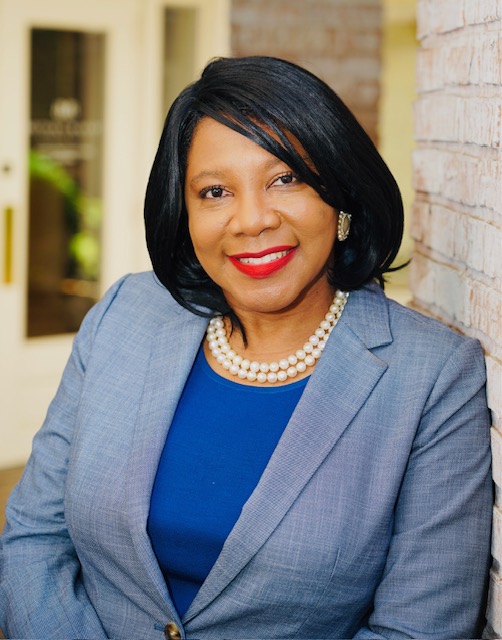
President, Association of Teacher Educators
Dr. Jennifer Young Wallace is a tenured Associate Professor/Coordinator of
the Doctoral Program-Educational Leadership for the College of Education
at Jackson State University, a Tier II research university, where she
presently serves as JSU Faculty Senate President.
Dr. Wallace serves as national President 2025-2026 for the Association of
Teacher Educators (ATE), making history as the first president who is an
alumnus of, and employed at an HBCU. She is the 5 th African American
president in the 105-year history of the organization. She travels over the
United States as keynote speaker for national conferences, commencement
& baccalaureate exercises, organizations’ initiatives and others. She will be
presenting her research on Critical Race Theory in America in Dublin, Ireland, representing the
United States as ATE President.
Wallace is the president of the Capital Area Sunset Rotary Club, where she is a charter member, and
is having her second round as president. She is a product of Holmes County and graduated from SV
Marshall High School in 1987 as Valedictorian.
Wallace was recently recognized on the floor of the Mississippi House of Representatives after the
House voted on a resolution (MS H.R. 44 – 2025) recognizing her work in k12/higher education on
state and national levels. The resolution is a part of the MS History archives. She was awarded the
competitive Summer 2024 Institute of Social Justice Faculty Fellowship for her social justice
research project, An Injustice to Social Jus… Read More