


 Spotify

 iHeartRadio

 Apple Podcasts

 TuneIn

 Pandora

 Audible

 Amazon Music

 YouTube

 Castbox
Dr. Marvin Lynn—Leading Educator Preparation and Justice through Collaboration & Engagement
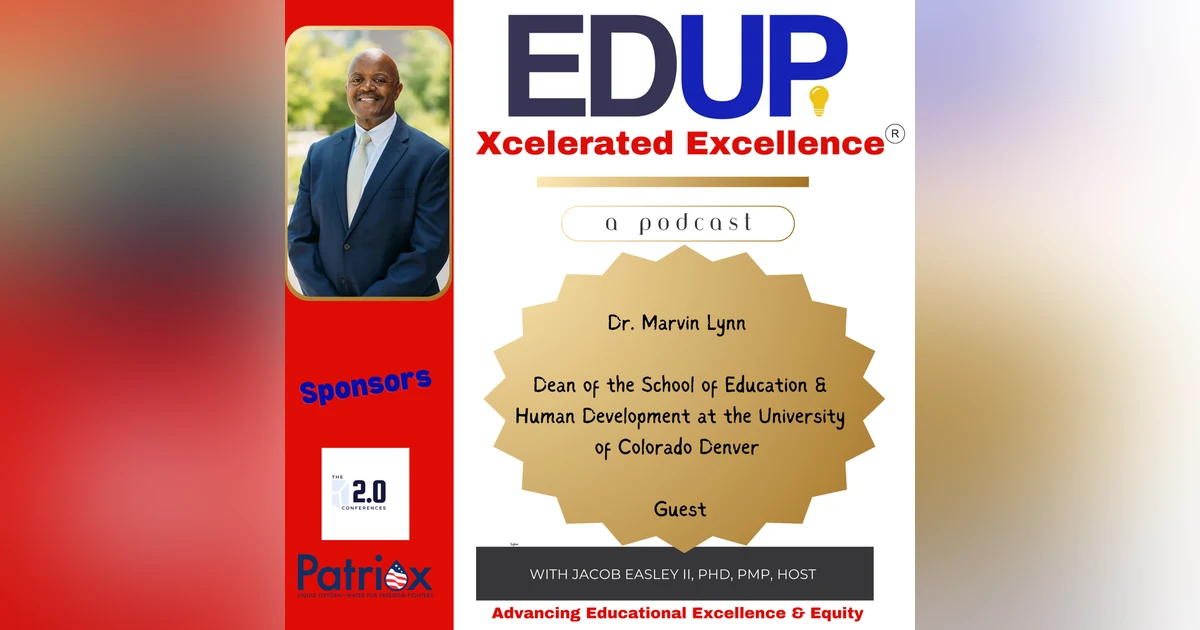

Our Guest, Dr. Marvin Lynn, Dean of the School of Education & Human Development (SEHD) at the University of Colorado Denver, has enjoyed a robust career as a teacher, scholar, public university administrator, and artist. SEHD is a statewide and national leader for education quality and access across the education and human development lifespan. It is the largest graduate school of its kind in Colorado and is highly regarded for its high-quality academic programs that demonstrate evidence of a strong commitment to equity, diversity, and inclusion.
Dr. Lynn earned his bachelor’s in Elementary Education from DePaul University in Chicago and a master’s in Curriculum & Teaching from Teachers College-Columbia University. He started his career as an elementary teacher in New York City Public Schools and Chicago Public Schools. He went on to earn his PhD in Race and Ethnic Studies in Education from University of California, Los Angeles. Before his arrival at CU Denver in June of 2022, he served as dean and professor of education at Portland State University and Indiana University South Bend.
Dean Lynn is one of the most highly cited researchers in the nation. His research focuses on race, education, the work and lives of Black male educators, and best practices for advancing teacher diversity in the United States. Dr. Lynn is quoted regularly in local, national, and international news stories. His research has been recognized by the American Educational Research Association, and the University of the Free State in South Africa.
At the national level, he has served as an Executive Board Member of the American Association of Colleges for Teacher Education (AACTE) and currently serves on the Boards of Directors for the Carnegie Project for the Education Doctorate (CPED), and the National Association of Community College Teacher Education Programs (NACCTEP). At the state level, Dean Lynn serves as the Co-Chair for the Colorado Deans of Colleges of Education (CCODE) and is the inaugural Chair of the Colorado Educator Preparation Advisory (CPEAC). CPEAC is part of Colorado statute.
Dr. Lynn is also an accomplished singer—performing in a variety of genres including classical and gospel. He has performed with the Oregon Symphony Orchestra, Annapolis Opera Company, the Soul Children of Chicago, Rev. Clay Evans, the Fellowship Baptist Church, and others. He is the founder of the South Shore Opera Company of Chicago where he has also performed regularly.
Your Host: Jacob Easley II, PhD, PMP
Sponsor: The 2.0 Conferences. Register for the 2026 2.0 Conferences in Las Vegas, Nevada and receive a discount courtesy of EDUP Xcelerated Excellence with the code EDUPXE15OFF.
Your choice of the 2.0 Conferences include: CXO 2.0, Education 2.0, Health 2.0, Founders 2.0, and the Fueld Conference.
Sponsor: Patriox oxygenated water. Drinking Patriox helps oxygenate the body, promoting overall health, energy, and vitality. Receive a 10% discount on your next purchase with the code EDUPXE.
Resources:
Greeting: Eric Almonte
Research Assistant: Emma Worthington
#EDUPXE #EDUCATIONALEXCELLENCE #EDUCATIONALEQUITY
0:06 They're going to be recognizing the partnership that we have with the Saint Vrain School District that has been that has become very, very, very productive in in so many ways. And Cindy Gutierrez and Barbara Seidel started that partnership and I had the opportunity as a Dean. And this is another important role of a Dean is to recognize good work, right and say, keep going. I got you. I want to support you, right to be continued. But so I didn't start that. But because I came in and said and recognized that it was an outstanding work, I threw my support behind it. And they didn't have to worry about whether they were going to have a new Dean come in and break it up or stop it.
0:51 But then I was going to support it because I knew I recognized it was good work. So now I'm getting an award for. This is Eric Almonte, Assistant Vice President for Capital Giving at Princeton University. And you are listening to Add Up Accelerated Excellence. This episode of Add Up Accelerated Excellence is supported by the two Point O conferences to be held in Las Vegas, NV, April 7th through 9th, 2026. Business Leaders.
1:32 Educators, healthcare experts, marketing and tech professionals, and founding entrepreneurs are welcome to take part. Reserve your space today and receive a 15% discount courtesy of Add Up Accelerated Excellence with the Code Add Up XE 15-OF F That's EDUPX E15 off. Check the show notes For more information or learn more and register online at the two conf.com. That's the two conf.com with the code Ed up EXE15 0FF. This episode is supported in part by Patriarchs. Ultra high oxygen content water drinking Patriarchs helps oxygenate the body, promoting overall health, energy and vitality. In 2026, try Patriarchs on your journey for accelerated Excellence.
2:30 Receive a 10% discount on your next purchase with the Code Add Up XE. That's 10% off with the Code Add Up XE at Patriarchs dot US. Patriarchs dot US. Find more details in the show notes. Welcome, welcome. Welcome to Add Up Accelerated Excellence, the podcast for the advancement of educational excellence and equity. And today's guest is an accomplished leader in the field of higher education, particularly in educated preparation.
3:12 He is the Dean for the School of Education and Human Development at the University of Colorado Denver. He is Doctor Marvin Lin So Marvin, would you please introduce yourself to the Ed Up Accelerated Excellence community, giving voice to your name If only you can and if you can give us a high level, that elevator pitch from floor one to three. Overview of the School of Education and Human Development at the University of Colorado, Denver. Well, Doctor Easley, thank you so much for having me. I have, as you know, we've known each other a long time and starting at A A/C TE and serving on the board together and, and doing all that important work.
3:59 I am thrilled to be here and, and it's wonderful to be able to participate in this show. The University of Colorado Denver is really the largest, most comprehensive Graduate School of education of of its kind in the state of Colorado. We are the second best school of Ed and I think behind Boulder in the state. But we're bigger than Boulder. We are one of the top schools of Ed in the region. We're we're the school of education and human development because while we are focused on teacher preparation, principal preparation, we are also very, very focused on preparing counselors, both mental health counselors as well as school counselors. We have a very robust school psychology program, It's a doctoral program, and we have a human development and family relations program at the undergraduate level that prepares people to come in and and be community leaders working in all kinds of settings.
5:01 Our students are the most diverse in the state. We have about 1200 mostly graduate students. About 80% of our students are graduate students. Majority of our students are Latin X African American and Asian American and Indigenous. So we are really proud of that. We are also a school that is contest continue to be focused on equity, diversity and inclusion and preparing young people and older people who really want to go out and make a difference. But who had that as a frame of reference as they begin their work in school settings and clinics and in all these settings in which they work. So really proud to be Dean at the School of Education Human Development at CU Denver. CU Denver itself is a comprehensive research university.
5:49 We actually have research one status because we are tied to the N Chute School of Medicine, which is another campus. But we are considered 1 institution. And so I have faculty who are publishing at some of the highest levels. In fact, three of my faculty are among the most published in their fields and so really excited about being at this place. But we also have people who are committed to be to being outstanding teachers, right, and who focus on that. And we have others who are active in community service and so on. Our alumni are some of the best in the world. State treasurer is an alum of mine. We have a woman who is the inaugural director of executive director of the early childhood in the state of Colorado is is my alum and the state Superintendent right now is an alum of mine.
6:45 So it goes on and on and on. I just, I just can't say enough wonderful things about the school of education of human development. So you Denver, and just happy to be in the position of leadership at such a time as this when, when things in the country are, as we say, challenging. So in the challenging times, we're going to get into some of those, but it's just amazing to hear about the, the reach that your school is having, particularly having alumni serving in key roles within the state in the field of education. But also I, I'm, I'm, it's really heartfelt to hear you talk about community working, community development.
7:28 So this is going to be a wonderful conversation today. So I'm going to refer to you as Marvin. I know you're Doctor Lynn. Absolutely. And as you mentioned, we've known each other for a while. So Marvin, you began your career as a teacher in New York City. You also worked in Chicago in the public schools, mind you. Yes, right. So looking back, is there a moment from those early years that continue to shape how you approach and think about education today? Well, Jacob, as you know, I grew up, I say poor working class because on one side, my mother and my family on my mom's side was very poor. But I had a stepdad who did, who worked in the steel mills. And so I had understood the, the whole sort of the working class ethos and, and what it meant to really go to work every day. And my, my stepdad was a man who used his hands right. He was also a union worker.
8:29 And so growing up on the South Side of Chicago, we, we had struggles and challenges and school was a safe place for me. School was a place where black teachers said, you're going to be somebody and we're going to support you in your development in the future. And so I really had a love for school. And that really translated into me wanting to become a teacher because I thought they did that for me. I want to do that for somebody else. And as I grew up, as I went to college, as I started to to go out and do field work in the schools, I would see these young black boys who reminded me of me. I remember being at Newberry Academy over on in, in downtown in Chicago, which is not far from where I live. And it was supposed to be this kind of elite elementary school with these mostly white middle class kids. And I see this, this one black boy who looks like his, he's unkempt.
9:31 His hair hadn't been combed. And you can see, you know, he, he had some struggles. And I just went over to him and I just touched the top of his head and I said, how you doing? You know, and, and I was there to, to, to observe, but I wanted to make sure I had an impact on that kid because somebody did that for me. And, and that was really my, my whole impetus is is to, to go into teaching to really help to make young black boys and girls feel seen, feel supported, feel loved, feel cared for. And that really is what I tried to do as a teacher. I wasn't a teacher for very long because I got the research bug early on in in my life. And the next thing I know I was a doctor program.
10:13 But I, I went into teacher education with that mindset that I would, as a teacher educator, prepare teachers who were going to be the kind of teachers that that cared for me, that that loved me. And that I would give teachers the background, the knowledge, the skills, hopefully to be able to, to have a positive impact, particularly on kids in under resourced, underserved communities and so on. And so that was my impetus as a teacher educator. And as a Dean, I have even more of an opportunity, as you know, Jacob, to impact who we hireright, the kind of teacher educators that we hire that are going to come into our buildings and into our our schools and colleges of education.
11:02 Really with a commitment to, to transforming the lives of young people, but also to engage my seasoned teacher educators in professional development opportunities and opportunities to get back in partnering with, for example, the Denver Public Schools, the Aurora Public Schools, where we where we have a lot of challenges and to and to really be key partners with those districts and to engage my faculty in conversations and in good work that helps advance those districts, but also advances the school of education, human development. And so that we are then together preparing people who are going to go out and really make a difference in the community.
11:45 And so that's really the whole reason I'm here and in this role is to really be able to make a difference on the lives on behalf of those kids like who are like me, who, you know, I had a good mother. My mother cared for me. My mother was a loving mother. And so I will take anything from her. But she, she, she struggled to provide the support that I needed, especially in the academic area. And so teachers stood in that gap for me and I and I will forever be grateful to those educators, Missus Williams, Missus White and, and so many others who stood in that gap to make sure that I was going to be OK. Missus Missus Williams was my fifth grade teacher. And I remember she had transferred from a different school and she would, she would refer to our school as the name of the old school which had closed down. And we would laugh and joke, but Missus Williams was the person who took me to college at DePaul University as a freshman. So, So look, 5th grade all the way up to college, freshman, right?
12:49 Missus Williams was there and bought me a small refrigerator to put in my room so that I would have food when the cafeteria had closed and just took care of my personal and social needs. And my mother was right there with her. But my mother wasn't able to do that. And so these are the kinds of educators that that I had in my life. And, and again, for me, this job is really about building that. And, and again, understanding that I have folks working across different fields, counseling, school psychology, human development and relations and, and having that same sort of focus in those fields as well, because that is also important. And again, working with my my, my faculty, with my staff and students to hopefully bring about that spirit.
13:35 So I absolutely, I absolutely love that and shout out to those teachers who use mentioned who went above and beyond. But there were two words in what you just described that stand out. And you and I have had conversations offline about some of these issues, but one is since the community. So you had a teacher who helped you at an early age to even think about going to college and then help you get settled into college. But you also talked about a love for for school. So you love school. So you think about the work and the partnerships you're doing now.
14:15 And I'm asking this question because we we have standards, state standards and national standards, but loving school is not one of those standards. So how do we create the conditions so that students like you and and like me and others can say I actually love school? Yeah, I I think we have to care about our students. In fact, we have to love our students. And I know we're, when you and I were coming up, a teacher could, could show love and be affectionate and, and, and I had teachers who I spent time at their home and things like that. And there was never anything weird about that. Today, we can't do that, right?
15:01 We have to be, we have to operate a little differently in terms of how we interact with students. But I, I think there are still ways to show love and to show care and concern for students livelihoods as a Dean, you know, as you know, we have a lot of students who, who come to us with concerns with, with issues. And I spent a lot of time with those students. I have a, a couple of students that I spent time with yesterday and we have that's our second meeting where they were expressing some real concerns about their program and and their progression through the program. And I wanted them to know like, we are going to make sure that there is a conversation about these concerns and that we are being proactive in trying to move you forward to make sure that you're successful.
15:50 But also trying to make sure that students who come behind you have a different experience, a better experience. And so that that showing of that concern and that that, that you're accessible to them is important. I, I find that my best teachers are teachers that we're busy, right? And I, so I couldn't just walk into their office and, and say, Hey, let's sit down. But, but when I did have to find the time I can, I can think about Daniel Solorcino at UCLA who was my doctoral advisor. Danny was very busy. Danny still is very busy with supporting and mentoring hundreds of students. So it may take you a couple of weeks to get a meeting. But when you sit down in that office with Danny, he's going to make you feel like you're the only student he has.
16:37 And he's going to give you advice that's going to encourage you, motivate you and propel you forward in ways that you didn't don't even imagine, right. And I remember I used to get upset with him because he was so busy and I couldn't get to him right away. And I walked out of that office thinking, man, he's the best advisor on the planet. And, and that's the kind of environment I try to create also with my students, right to so that they feel supported, that they feel like, hey, I'm going to be all right, I'm going to be successful. And that that even after they graduate, that this is also this will be a home place for them. And so I think if we create the environment where students feel cared for and even loved, they're going to want to come, they're going to want to be there, they're going to want to be successful. I agree with you.
17:28 So we're going to get back into when we're going to talk about the deanship a bit more. And you've held roles as a Dean at Indiana University of South Bend. That's what we first, we first met, you were in there, and then you had the opportunity to support and work with your colleagues at Portland State before coming to Denver. So, different times, different contexts, But how have those experiences across time and space shaped your understanding of the roles and responsibilities of a Dean globally? Yes, well, I'm glad that my first Dean ship was at a place like Indiana University South Bend. It was small.
18:17 I had mostly undergraduates. It was a, a, a regional comprehensive university, so there wasn't a focus on research. So in that way it was a bit of a mismatch. But what I liked about that was the was the intense focus on community and community relationships and community being central to everything. We did the at IU South Bend. Again, I have probably 3-4 hundred students maybe you know, 1520 faculty. So it was small. It, it's a, it was a good first Dean ship, right? And, and I couldn't build something. I had a directive from leadership to go in and grow enrollment.
19:00 We were able to stabilize it and grow it in some areas. And so I appreciated having the opportunity. It was also where I got introduced to organizations like a ACTE and develop connections with folks like yourself and others. And so I got a chance to get introduced to the to the world of the Dean ship and get to know a lot of Deans. And I think that was also the time that we began conversations around starting this black education Dean's group that that we started. I think back then that's correct. Or maybe it was a little after that. I'm not trying to remember, but, but it was, it was a great, great experience and being part of a system I used to have been, is one of four or five comprehensive, regional comprehensive universities within the system.
19:47 That is sort of where, where IU Bloomington is, is kind of at the at the helm. And, and, and I got an opportunity to work with some of the folks at IU Bloomington and, and, and people recognized my research background. And so I got, I got folded into the conversations. I was, I, you know, I was able to help some folks get tenure at those places up, up, up there. And then moved on to Portland State, which was much more of a research university in the Pacific Northwest. So a whole different sort of region. You know, Portland, the politics in Portland are different. And, and you know, it just turned out not to be the greatest fit, but I learned a lot in, in, in Oregon. And because I worked on a number of different statewide committees and so I worked, I also LED our the Oregon Association of Colleges for Teacher Ed and got to work closely with a ACTE.
20:53 That's where I first landed on the board of a A/C TE. And so Oregon really I, I, I expanded my reach in, in terms of working as a state leader, but also working within national organizations. I started working with the Carnegie Project for, for the education doctorate while I was there. And so I was just on any number of committees across the US and, and in the state of Oregon. And I think, you know, I felt like I was really having an impact at that level and then had the opportunity to come to the University of Colorado Denver, where I haven't been as involved at the national level. But I've really been working closely with my colleagues across the university, serving on committees, leading committees, and they're working with my faculty and my students. It really has been a good experience and a wonderful journey.
21:49 And so thinking about thinking on across those differences, if you had to speak to sort of the global roles and responsibilities of a Dean, what's the crux of it? So you talked about this notion of state leadership, university and community partnerships. And then I want to harken back to you now. You had a research one and your passion was research. And I think it's, it's striking to hear you talk about research and then some comprehensive schools that are more community based, those variations. You know, how, how would you, what would you say to other Deans who are thinking about the sort of the what is the question? Two or three things that irrespective of which role you're in, what's what's what does that role entail? The Dean role, yes, I think you're right. You know, the Dean sets the tone for the school or college, right?
22:49 And as as I have worked throughout my career to emphasize community, to emphasize community connections, but also to emphasize building and growing a sense of community within that. We are team, we work together. We don't work against each other, right? And that we embrace all people regardless of race, gender, sexual orientation of gender identity, social class, religion. I've got, for example, a number of faculty who are Jewish. I have also faculty and students who are Muslim. And so working with those two populations in this moment where there's all this tension, right, there has been an opportunity for me to really lead and continue to maintain close ties to both and to recognize and to say to all to say to everybody, I support everyone, right?
23:41 And, and I expect everybody here to support everyone. So if you're a Jewish faculty member, I, I expect you to support your Muslim students and vice versa, right? That we don't, that we don't reject people because of of who they are. And so as a Dean, I have the opportunity to set that as an expectation, but also to try to model that. Thank you for listening to Add Up Accelerated Excellence. This episode is supported by the two Point O conferences to be held in Las Vegas, NV, USA, April 7th through 9th, 2026. Business leaders, educators, healthcare experts, marketing and tech professionals, and founding entrepreneurs are welcome to take part.
24:27 Reserve your space today and receive a 15% discount courtesy of Add Up Accelerated Excellence with the Code Ed Up xe 15-OF F. That's Add up XE 15 off. Check out the details in the show notes or learn more and register online at the two conf.com. That's the two confat.com with the code Ed up XE15 0FF. This episode is supported in part by Patriarchs. Ultra high oxygen content water drinking Patriarchs helps oxygenate the body, promoting overall health, energy and vitality. In 2026, try Patriarchs on your journey for accelerated Excellence. Receive a 10% discount on your next purchase with the Code Add Up XE.
25:18 That's 10% off with the Code Add Up XE at Patriarchs dot US. Patriarchs dot US. Find more details in the show notes. I said I wasn't involved in state work here. Well, I don't know. I have to think about that because I, I am the inaugural chair of the Colorado Education Preparation Advisory Committee, which was a, it's, it's a group that was created by statute as a way for education preparation, educated preparation programs to have an opportunity to weigh in on statewide processes like reauthorization standards development.
26:08 There's fun teaching profession. And so I'm, I've been leading that group for the last three years and I'm in direct contact with the Colorado Department of Education around these issues, around these matters. How do we make the, the process of authorizing and reauthorizing teacher teacher education programs a little cleaner, a little easier, a little more well defined, right. And, and those kinds of things we, we get a chance to talk about. I also serve as the Co chair of the Colorado Deans for Education group. And and so in both and that role, I have an opportunity to really take a lead on policy advocacy for teacher preparation programs across the state and to develop relationships with other Deans and directors or whatever the title may be at their institutions across Colorado to, to advocate for educated preparation.
27:04 And so I've really, I think so the Dean has has an opportunity to continue to lead at the state level. And I think that's very important, particularly at an institution like mine, that I'd be engaged and highly visible and connected. We just, we're going to receive an award this year through NACTIV, the National Association for Community Colleges of Teacher Preparation, I think. And they're recognizing that CU Denver's School of Education and Human Development is one of the leading schools in the country that successfully partners with high schools, community colleges, to really prepare teachers in this really comprehensive and rich way. And so they're going to be recognizing the partnership that we have with the Saint Vrain School District that has been that has become very, very, very productive in in so many ways. And Cindy Gutierrez and Barbara Seidel started that partnership and I had the opportunity as a Dean. And this is another important role of a Dean is to recognize good work, right and say, keep going, I got you. I want to support you right to be continued. So I didn't start that, but because I came in and said and recognize that it was a outstanding work, I threw my support behind it.
28:27 And they didn't have to worry about whether they were going to have a, a new Dean come in and, and break it up or, or, or stop it, but that I was going to support it because I knew it when I recognized it was good work. So now I'm getting an award for simply supporting good work. And, and I think that that is an really important job of the Dean is to recognize where good work is happening and supported at the very highest level. I'll, I'll be honest, when I got here, I didn't come in with the mindset that I was going to change everything. Part of the reason I came to see you Denver. And I had an opportunity to be fairly selective about where I was going to go next after having had the experience in, in Oregon, right?
29:12 And I said, I've got to go to a place where there's alignment between what they want and what I want. There's got to be some structures in place already that we can continue to build and grow on. I don't want to have to build a ship from from the ground up, which is sort of what we had to do at IU South Bend. And so I came into an environment where there was just the need for support for ongoing initiatives that were already successful. And, and this is an example of 1. And then now we're in this place where we're taking a more critical look, and I'm in my 4th year. We think, OK, are there things that we do need to take a critical look at? And how do we do that together as a community?
29:52 And the Provost and the chancellor are also asking us to do that through the process where we really look at our academic programs to look at the history of enrollment and look at admissions and so on to try to determine how we might strengthen some areas where we might be a little weak or might, might sort of, you know, do some difference, do some things in a different way. And so, but I appreciate that I didn't have to walk in the door doing that, that after getting to know people, after, you know, developing some trust with the faculty and with, with students and staff, that we then have the opportunity to to look critically at our environment to say, all right, where do we want to continue to do what we do?
30:38 And where do we want to make some change so that we can be even better? So the Dean is a state leader. And then I've continued to do that work. The Dean also, I think should be a global leader. And I'll talk about that in a second. But I want to just revisit a couple of things I said in the past. I think the Dean also has an opportunity to set the example. And then I think when there's an opportunity for sort of positive change to move the place forward, then we can also do that. And so while we're looking critically at some of our programs that may not be as strong as they want them to be, we're also looking at new opportunities, right, and and new potential partnerships to grow in other ways.
31:20 I spent a week in East Africa in in 2024 with my colleague Dr. Margarita Bianco, and we went to Rwanda and Uganda for the sole purpose of instigating partnerships with East African universities. And so we have been in conversation over the last year with Kepler University about a joint doctoral program for their faculty. A number of the of their faculty don't have pH DS or Ed DS, and so they're interested in partnering with us to do that. And what we're looking for now are ways to support that either through federal or international grants. So. So the deed also has an opportunity to instigate partnerships, but to work with faculty to make sure the faculty are on board.
32:03 And Doctor Bianca would represented that and said, yeah, this is something we want to do. We also need the endorsement of the Dean. And so just the role is so varied. I could talk for days about all the different things that we do and how I think gratifying and challenging the job can be. Right, I definitely understand you on that. Again, again, I I'm hearing a pattern doctor land community, community at a local base community state level and as you just talked about community also on the international level. And I absolutely appreciate this idea of alignment. So you talked about choosing your current place of employment based on an an alignment of your values and the values of the institution.
32:55 Absolutely. I, I learned that that is so, so important. And so any job that you take, you have to make sure that they want what you want ultimately. Now how you get there, you figure that out along the way, right? But there has to be alignment in that sense. And I also recognize that I'm a certain type of communicator. I'm more direct and it it would, it would be difficult to be in an environment where people did not appreciate direct communication. I've been in that space before. And so that was something I also wanted to look at. And what I realized is that they had had a Dean here, the late Doctor Rebecca Cantor, who they revered, was a wonderful leader. You probably met her.
33:42 She was involved in cadre and AACT and other organizations. And then she passed in 2021. But Doctor Cantor was a direct communicator and she was an engaged leader at multiple levels. And so that was what they were looking for in an, in a leader. And so that was a great fit for me as well, right? That I had been in a place with a, with a, with a long term leader who didn't communicate directly, didn't say much of anything, didn't give feedback, didn't give input. And so I stepped in and there I am being my direct communicate herself. And that was, it was a conflict right away. And so I, I was also looking to make sure that there was alignment there and that I couldn't be involved in communication with people about things that were happening.
34:29 And I'd say, hey, here's what, here's what I see. But I also learned that as a Dean, you have to empower your faculty, you have to empower your staff to be able to make decisions that that they think are the most productive in terms of the programs that they work with. And so I can provide input and feedback, but ultimately it's up to them to to make those decisions. And so we don't need to try to micromanage what happens, but it's important for us to be able to offer our insights and to perhaps I can say here's what I know about what's happening on the East Coast, you know, at Fordham or wherever.
35:13 And we might learn from that as we think about how we move forward in these ways and to offer those examples and to draw in the relationships that I have with folks like yourself and others. Like, for example, I'm going to be talking to the a ACTE president about counseling because our counseling program is going through transformation. And so the A/C TE president happens to also be one of the top counseling scholars in the country and has been a part of and LED counseling programs across the nation. And so I have the opportunity to talk to someone at that level about counseling and about where we're headed and to get her input and her feedback to support my faculty as they consider these new opportunities that are before us.
36:03 And so I, I appreciate having the opportunity to, to draw on the long standing relationships that I've developed over the years to be able to support my, my community. And that would be Doctor Cheryl Holger McCoy, who has been a guest on the show. She's fabulous, love. Her and most definitely we love her as well. And we're speaking with Doctor Marvin Lynn, who is Dean for the School of Education and Human Development at the Universe in Colorado, Denver. Doctor Lynn, your doctoral work in race ethnic studies focused on the lived experiences of educators of color. So why do you think it is so important for education to consider race and ethnicity at every level, from policy to everyday practice?
36:54 Well, you know, Jacob, when you and I got into Graduate School, I, I may have, I'm trying to remember when you, when you started. I think I was maybe a little bit ahead of you, but I started in the mid 90s, right? You were a little bit. I started in 2000 but OK 2000. That's what I thought. I thought I was a little bit ahead of you. Yeah. And I went to, I got my masters before that. I got my masters in from, you know, 93 to 95. I was at teacher's College in Columbia and there was just, there was very little information out there about why our kids struggle. What, what I was exposed to was folks, and I mentioned the late John Abu, who is a great scholar, but I disagreed with with Doctor Abu because of his argument was that black kids didn't learn in school because their culture was not aligned with school, right.
37:59 And it was black culture that was sort of dragging us down. And there was a number of different studies like that. I, I remember other studies that that emphasized the, the dysfunction of our culture as black people as really being the primary reason for why we did not succeed. And so I'd gone through teachers college and and and struggle with that. Also got introduced, though, to people like Lisa Delpit, Gloria Ladson Billings who were telling, I think important stories about Jackie Jordan Irvine is another about I can I could go on and on.
38:40 That's just as I was thinking I'm like Joyce King, but these these folks were talking about the role of black educators, right, and how important black educators were. And so that story was was was evolving in the 90s. But then there was this whole history of research that relied on our deficiencies as a way to explain why we were not successful. Critical race theory wasn't even a thing yet, Right? I think critical race theory was, was, as was coined as a term, what an 89 or and in in the first big compendium around, critical race theory didn't come out until the mid 90s. Although if you were like Daniel Selorsenho, you were in the law libraries reading those, those law reviews in the early 90s, which is what people like Daniel Selorsenho and Gloria Lads and Billings and Bill Tate and Larry Parker were doing. And then as I went to UCLAI, got exposed to that. And I got access to the UCLA law library to be able to read some of these studies as they were emerging in the in the late 90s. But also to get familiar with this, this this concept of critical race theory as, as a way to really understand the experiences of racially minoritized folks like black folks, right?
39:57 And to understand the role that race. Play in shaping our experiences in in, in the law, but also in schools. And so at UCLA, I was surrounded by this community of scholars. Tara Yosa was one of them, who were also interested in that from different perspectives and different vantage points. And so we began to actively explore how race functioned in society, but how it also shaped outcomes at every level, right. We could talk about hospitals, we could talk about the law, we could talk about any housing, right, income disparities. And of course, our focus was on schools. And I was interested in the working lives of black male teachers.
40:45 And so critical race theory and, and race and ethnic studies could have been also called critical race theory and education. I mean, it was the same thing, but we were all focused on CRT as a way to really understand the, the dynamic of schools and what was happening. And particularly how that was shaping and influencing outcomes for our, for our students to move away from the deficit framework. That said that, that, that we weren't successful because of, because of our skin color, because of our family issues. I was an example of a kid who came out of a struggling household with a, with a stepdad that wasn't very stable. My mom didn't have an education yet I, I succeeded, right? And so according to some of those theories, I should have never been successful, but at the wheel of the drive to do so. And I, and I would argue, you know, the intelligence and there's so many kids like me who who grew up and go up in impoverished conditions, who struggle in different ways economically, but yet persist.
41:47 And so a lot of the research didn't tell that story because we get frayed in a particular way. But what CRT does is it helps us to understand why so many continue to, to fail, to falter in this, in a system that doesn't support their success. And we look at specific kinds of processes. I'm, I'm interested in classroom pedagogy and what happens in the classroom and how teachers, through their interactions with students on a day-to-day basis, can actually lead students toward abject failure in ways that perhaps they don't intend. But that, you know, they're dismissive of students and their identity and their culture.
42:28 They leave out entire swaths of information in terms of their curriculum, right? And they ignore the history and culture of Black and Brown communities and so on. And and and just also frame Black males as dangerous. I saw that with my own eyes when I was teaching. That was one of the most frustrating things about being a teacher is that to be a teacher who actually cared about students and wanted to see all of my students succeed, but especially my black and brown students and to and to have them student. Those students go to another classroom that next year with a teacher who did not give a damn about them and who, in fact, again, I won't say it was intentional, but in many ways when it was going to ensure their failure. And so I, I became very frustrated by that as a teacher. And so critical race theory is really giving me a lens and I and through which to better understand those dynamics, but also to think about how in fact, do we propel the success of Black and brown children in the classroom in today's classroom. And so I coined a term, critical race pedagogy, with the support of folks like Daniel Solorcino and, and in conversation with my colleagues like Tara Yoso around like, how do we take this theory and make it real in the lives of teachers and students? And, and how do we think about
43:58 this as as liberatory as something that ultimately is going to propel the success of students who would otherwise be ignored and shut out? And so ultimately, I believe race and ethnic studies at UCLA gave me a language voice for not just critiquing racism, but also thinking about how we build a kind of liberatory framework out of these conditions to really advance our students and our teachers in ways that I think are important for us to continue to do in this current moment.
44:39 And in a previous interview on the Early Link podcast, you described the US as a racially illiterate. So what responsibility do you think schools of education have been helping future educators and leaders? And, and in your case, you also have school counselors and and folks who are preparing to be psychologists so on and so forth in developing languages for understanding the needs to engage in conversations about race. Because I think as you mentioned earlier in that example from your P12 school, students leaving one classroom and going to another classroom where it's likely perceived but probably true that teachers did not love a care for students, certain students in the same way at the same level and perhaps didn't even know how to. Right, didn't know how to and I think about Rachel literally, I think about the amazing work of of Yolanda Seeley Ruiz at at Teachers College.
45:40 That's, that's her work. Yeah. I, you know, listen, I and this is, this is what I was, what I was saying earlier. We didn't, we didn't have a discourse in the 90s, but really being able to frame and talk about race. I remember being in a classroom of a very famous critical pedagogist at UCLA. And they had written a book about their own experience of coming into understanding about critical pedagogy. And they had been a teacher and they were sharing an experience they had as a classroom teacher. This great critical pedagogue was of working with a young black male who was failing.
46:24 And the way that this person who was a neo Marxist, who understood the relationship between capital and, and the human degradation and all of these things, they relied on John and Abu as an explanation for why this young black male was not succeeding. And I said, wait a minute, if you're a Marxist, don't you understand slavery and, and the economic processes involved in that and how black people's labor was exploited and how that led to these ghettos? And you know, right, I, I was looking for this really complex analysis and understanding of of our condition from the standpoint of a of a Marxist or neo Marxist.
47:05 And, and it was not there in part because there just wasn't a language or a discourse to help people understand it. Now the same person is still active, right. And if you if ask them that same question today, they have a much more nuanced, dynamic understanding of that situation that they were experiencing way back then because of the work that that Kimberly Crenshaw and and Danny Suerson or Larry Parker Glory likes abilities myself and others have done to help people develop a discourse for understanding the impact of race on, on, on peoples of color. And I'm and I include indigenous people in that, right? If you don't understand how race has shaped outcomes in the broader society, you are illiterate, right?
47:53 And so when you look at what is happening to black and brown people in school settings, you don't understand. And you, you, you're going to blame those kids and their Mamas and their daddies and their grandparents, right? And that's what I encountered with, with teachers and training is my parents valued education. And that's why I'm here today, right? And you look, you look out and you see a sea of whiteness in these elite universities. And you think that that's because you worked hard and other people didn't. That makes you illiterate, right? You don't understand the social, political, the economic processes that have shaped and influenced the outcomes that you see before you, how communities of color have been positioned, unfortunately, away from higher education and how and how white, particularly middle class communities up in the up in the position toward higher education. And so, and if we don't give teachers and and counselors and principals and school psychologist a language to really be able to understand what has happened to our communities, they go into those communities and they do more harm, unfortunately, because they don't understand the community, they don't understand the people, they don't understand the students.
49:11 And they, they get very frustrated and they get very upset and they blame people for their own situations without understanding how all of this stuff is come to be. So we, we, we have an obligation to give them a language to be able to understand the situation so that they can be of support and they can work hand in hand with folks to, to overcome. My teachers got it right. They never blamed me for not having, you know, the best shoes or the best clothes. They never blamed me for, for not living in, in the, in, in the ideal circumstances, right? They understood that if they were going to help me overcome some of those challenges that they had to support me, right? They had to, they had to sort of walk hand in hand with me and partner with me and my mom to ensure my success. And that's what we need.
50:04 But but they but you cannot develop that understanding of how to work with particularly poor and working class Black and Brown and Indigenous students if you don't understand their history and then you don't understand who they are and if you can't speak in in in racially literate ways about those experiences. Yeah, definitely agree with you. And then I definitely agree with you and this notion of blaming the victim when we often don't take a critical look at not only the culture and lived experiences, but the systems that shape those experiences. And because you aren't affected by the systems in the same way, because most times they're written, they are designed to place you, particularly if you're in a particular economic environment, irrespective of race. I would say sometimes you're privileged in ways that those who have fewer resources are, are not. And, and it's, it's often something that folks take for granted and assume that particularly in era we talk about meritocracy, is that you have, because you're in this space, you have the same opportunities when the reality is you don't have the same level of access. So you're in the school, but you don't have access to the same resources?
51:33 Absolutely. And research shows that. I mean, if you study the particularly in higher education at the doctoral level, right, when you can look at the outcomes of black doctoral students versus the outcomes of of white doctoral students. And what the research shows is and is a number of people doing research on this now is that white doctoral students, when they graduate, have had access to writing journal articles, presenting at major research conferences alongside their mentors, right? We haven't, a lot of times haven't had that. Now, I did, fortunately, because of because of who I was mentored by. But I know a lot of black students that did not have that exposure, that experience.
52:20 We just don't get the same level of support. And again, white students in those spaces don't always recognize the privileges that they have. And they think it's because they're smarter and they work harder than everybody else and don't recognize that that it's their that their black counterparts are just as smart and work just as hard as they do, but just don't have access to the same privileges. And so that is highly prevalent throughout the education system, right? So even though we're there, we are not being treated in the same way and we're not getting the same access to the mentorship, to the kind of support that's other students to get. It also happens with faculty, right? We, you and I could speak to the experience of, of how some faculty come into these institutions with all the support in the world to be successful, to get tenure. And oftentimes it's an uphill battle for us. And so we experience these disparities at every level, right?
53:18 And it, it doesn't start and end with what happens in elementary school. It continues, unfortunately. And those of us who are able to persist do so with the support of a lot of others. But also I believe we have to have a kind of stick to itiveness or something that that that propels us to go forward even when we don't feel supported, even when we don't feel like others want us to be successful. We have we have to have an inner drive that propels us to be successful Despite that. So adjacent to this idea of racial literacy, I'm going to talk about equity a bit and I want to try a case study.
54:00 So you and I understanding from the role of Deans, when you go into meetings, almost everybody will coalesce around fairness. Yes, let's make things fair. And so taking away the word equity. However, I have come to notice that when folks feel as though fairness means that they perceive that certain resources or privileges have to be distributed and they're going to receive less than perhaps what they're used to, fairness becomes a problem. Oh yeah. What are your thoughts on that and how might as a Dean address and we can think together on this one, how might Deans address that phenomena?
54:49 You know, it's a really challenging issue, particularly now, right? You know, we all work in environments where at least I work in an environment where I won't say we all almost speak for myself. I work in an environment where I do have projects and resources that are designed to support those who need it the most, right? And all of those things have come under great scrutiny, right? Because we are, we are in an environment now where that's considered discrimination. When you say I want to have a scholarship for Black males or for Latino females, right, To support them because I know that those populations struggle the most with kept getting access, first of all to higher education, but also with, with minor success within the walls of, of academia. And so we have to provide additional supports to ensure that those folks can be successful and all that's come under great scrutiny.
55:49 So what we've had to do is, and unfortunately, This is why I like being at CU Denver, right? I, I, I haven't been, I haven't been asked to no longer do that, but I have been asked to ensure that all of these opportunities that are set aside or whatever they might be scholarships that they are, are available to everyone. And that, that, that no one is limited from accessing scholarships and other things that we have available because of race or gender or identity, right? And so we don't frame them in those ways. And so that that's a real issue when it comes to trying to think about, well, how do we support those who are the least served. And you're right in academia, those some, a lot of times those who are the most privileged want access to all of the resources and we'll very quickly gobble those things up. And in some ways that is how they have obtained success is by having access to the most resources and not really worrying about those who don't.
57:01 And so Dean's have an opportunity to say, OK, let's, let's if we're going to look at equity, equity really is about giving people what they need to be successful. And it doesn't have to be aligned to race or ethnicity or gender or any of those controversial categories now. But if you just look across your system and say, well, where's the greatest need? And how can I be of, of support to those who really need, we need. And we're, so we're able to still do that without specifying that these things are about supporting particular races or, or whatever. And so I, I think that's continues to be important. And I think it is important for us to understand and to help other people understand why we have to lift each other up and support each other and why those of us with with more resources have to support those without.
57:58 And we have to bring each other along in different ways. So, Marvin, I'm going to turn the conversation a bit more on a personal level and something that just warms my heart. Yes, of course, I enjoy all the intellectual endeavors and pursuits. But surprisingly, we were at a conference, we were in Savannah, and I heard you sing at an event and it blew my mind. So for those who don't know, Doctor Marvin Lynn is an accomplished opera and gospel singer. So what are your perspectives on how being an artist, a creator in this in this regard shape the way you listen, lead or teach? Thank you for that question.
58:48 It's great. You know, for a long time the 2 worlds were very separate. I would like when I was a professor at the University of Maryland way back in the day with with Doctor Cheryl Hogan McCoy and she was a counselor educator there at the time. I would go on gigs and I would do opera gigs or club gigs on the weekend and come back to my academic job. And the two just did not mix. I did have the opportunity to take voice lessons with Carmen Belthrop at the University of Maryland. Carmen Belthrop was a was a really well known operatic artist, black woman. She starred in Tremonicia. The and there's AI think it was the first performance, I think it was at the Met. And she also has a recording of cast recording of Tremonicia, really legendary artist had a chance to take voice lessons with her.
59:38 So I, I, you know, I was doing my music thing and my and my scholarly thing, but kind of keeping those worlds separate. What I realized as a leader, though, is music is so important. It, it, it brings people together in ways that it's just hard to do right. People can also hear social criticism. And other types of things in that are embedded within music that may be hard to hear in other ways. And so it can be a way to to speak to sort of difficult and challenging issues and circumstances. But art is is, is the glue. And so I, I no longer keep to keep that way. I like this.
1:00:24 We just had a we, we every year we do a holiday gathering in my school and we try to do that in a way that respects all religions and cultures. But. And so this year they wanted to do karaoke. And I said, OK, yeah, no. And I and they said, you know, Dean Lynn, will you sing? It might be. My first instinct was, no, I don't want to make. And I decided, yeah, I will. And I had a chance to kind of cap off that whole celebration with what I think is a more it's it's a, it's a less specific sort of version of the Christmas song because I don't say the word Christmas.
1:01:04 I use the word holiday in it. But people appreciate that so much to be able to experience, you know, my artistry as a leader. And, and I wasn't forcing that. They asked me and I said, OK, you know, and so I want to be clear that I'm not forcing this on anybody, but that if people want to hear, you know, me saying I, I try to createspace for that now and to, and to have that being part of the community building work that we're trying to do in the school, because I think that's important. And, and art brings people together, like I said, in ways that are you just, it's just amazing how people come together around, around art.
1:01:45 And so I, I, I guess I'm being an opportunist really as a leader to say any tool that I can grab onto to build community, even if it, that means me performing and singing, let's do it, I'm happy to do it. I, I think it also demonstrates to younger faculty, staff as well as students that we can do what we do professionally, but we have to always feed the thing that we love because that thing feeds us, right? I would not be as healthy as I am today. It were not for music, right? And so I'm, I am intentional about being involved in music in some way all the time.
1:02:30 And it's necessary for me to be able to do that, to be the, the person that I am and to be open about that, but to also show people that, you know, we love our jobs, we love where we work, but we have to have other things that feed our souls. And then for me, music is that. And so I also, I think demonstrating that we need to have that balance in our lives, right? The things that we love, that we enjoy, that, that bring us joy are important. And then if I have the opportunity to bring joy to other people, even in the school of education, human development through my music, then then by all means. And, and that, that's a, that's a big change for me. I mean, 10 years ago, I would not have said that. And I, and I hope that that's as a result of, you know, growing and, and maturing and understanding that really everything is connected and, and, and that, that is that if we try to force these unnatural, the separations, it just becomes kind of difficult to do. And so you that, that we are these complex individuals. You know, I, I talk a lot at work about my, my sons, my kids, my, my spouse, you know, and, and the things that we can deal with.
1:03:35 And so people know me as a person, as a human being and not just as a leader. And I think that's important. And music, I think helps people to to better access the more human side. I couldn't agree more. And so Doctor Lynn, what would you say is next on the horizon for all the great work that you're doing at the University of Colorado Denver? And how might members of the Add Up Accelerated Excellence community engage with that work? Or if you would like, you can talk about where you're going to be performing or new research is coming out of where you're going to be speaking. So either with your university work or your individual professional or personal work, how might folks engage? So, yeah, the I I have a web page at the University of Colorado Denver.
1:04:33 If you go to the School of Education, human Development and go to the Dean's page, you can see my bio and information. You can, there's a that you can actually Click to all of my publications there. And there's and also talks about some of the musical stuff that I've done and continue to do. And then you can learn all about the School of Education and Development there that ucdenver.edu, and then go to the School of Education and Human development there. You know, my goal is to continue doing this good work here. We have the opportunity to continue to grow our influence, our impact, while also refining some of the work that we've been doing to make sure that we're doing it in the most efficient way possible and that we're reaching as many audience as we possibly can. So I see a kind of growth of our platform, but I see us also doing the work internally to strengthen what we've been doing and to do it at an even better level. So that, that's where I see myself, you know, in, in the future, I, I hope to continue to work in leadership, you know, at some point maybe take on larger roles, but that's certainly not in the cards at this moment.
1:05:47 I'm enjoying the work that I'm doing. I hope to continue to be involved at the state level, at the national level. I, I, I'm not doing a lot of national boards right now. I'm taking a break from that, which I don't mind, but I may sort of return to that in some way, you know, just kind of see where, see where that goes. As far as performing. I'm, I'm really right now performing in church. I can't think of any sort of big gigs I got coming up. So sorry, I can't point you to anything. And am am I speaking in engagements at this stage are are are limited. I just don't have the time to, to, to, to, to do as you do and run all over the country, the planet, you know, speaking at, at these various events. I'm laughing.
1:06:38 Don't do too much running these days. I'm still doing some writing. I just, I have a piece and and maybe I'll share this link with you at some point. I have great colleagues who sort of will pull me into projects from time to time. And my colleague I mentioned Doctor Margarita Bianco before, who I've known a long time. She's on the faculty year at CU Denver. And we she's been doing this work and I've been doing this work with her around understanding teacher diversity, but also understanding how we promote and advanced diverse educators. And so we did a kind of analysis of what's happened around policy wise in Colorado.
1:07:20 And we worked with Conrad Gist at the University of Houston, who is really interested in like understanding state policy and now state policy advances, teacher diversity and asked us if we would work with her on his broader project through the National School Board's group to better to understand what's happened in Colorado. And so we took a really clean look, clear, clear look at what's happened here and wrote a piece about it and published it in this National School board's journal recently. So I'm really proud of that, right? So that because it's what's interesting, what was interesting about that is because of the work I've been doing at the state level, policy is something that's not quite close to me, right?
1:08:04 And so I, I recognize that even though I'm not a policy scholar and I've never really been a, consider myself a policy expert, I'm deeply engaged in policy work through to the leadership of some of those committees and advancing policy and, and trying to advance policy that actually, you know, makes a difference. And so I was able to reflect on that experience and, and I also have an understanding of the, the sort of leadership infrastructure at the state level and how that either advances or doesn't advance teacher diversity. And we were able to talk about that in this piece that came out within the last year or so. Really proud of that.
1:08:46 To see my work go from kind of highly theoretical work that's focused on classrooms to really looking at policy around teacher diversity and actually talking about what's actually happening in my state and publishing that out of to to a broader audience. So, so I'll continue to do that type of work when those opportunities exist. And then I appreciate doing work that actually is based on what's happening in real time. So, Doctor Lane, I want to thank you for this opportunity to learn with and from you here at Add Up Accelerated Excellence, where we seek to advance educational excellence and equity. Thank you so much for having me. Thank you for engaging with Add Up Accelerated Excellence, a member of the Add Up Experience network of educational podcasts.
1:09:33 You can find this in other episodes on Spotify, iHeartRadio, Apple Radio, YouTube, and other outlets where you listen to your favorite podcasts. If you like this episode, don't forget to follow us and share within your network. To leave a comment or suggest a guest, contact us online at EDUP xe.com. A special thanks to our research assistant, Emma Worthington, a pH D student of Fordham University's School Psychology program, and we want to hear from you. If you have feedback on this or other episodes or would like to nominate a guest, contact us online at EDUP. xe.com, where you can leave an e-mail or a voice message that's add up.
1:10:15 Xe.com.


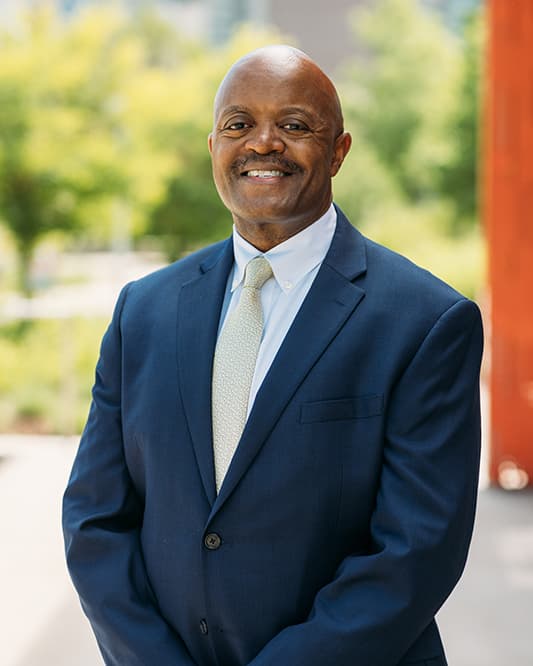
Dean & Professor
Dr. Marvin Lynn, Dean of the School of Education & Human Development (SEHD) at the University of Colorado Denver, has enjoyed a robust career as a teacher, scholar, public university administrator, and artist. SEHD is a statewide and national leader for education quality and access across the education and human development lifespan. It is the largest graduate school of its kind in Colorado and is highly regarded for its high-quality academic programs that demonstrate evidence of a strong commitment to equity, diversity, and inclusion.
Dr. Lynn earned his bachelor’s in Elementary Education from DePaul University in Chicago and a master’s in Curriculum & Teaching from Teachers College-Columbia University. He started his career as an elementary teacher in New York City Public Schools and Chicago Public Schools. He went on to earn his PhD in Race and Ethnic Studies in Education from University of California, Los Angeles. Before his arrival at CU Denver in June of 2022, he served as dean and professor of education at Portland State University and Indiana University South Bend.
Dean Lynn is one of the most highly cited researchers in the nation. His research focuses on race, education, the work and lives of Black male educators, and best practices for advancing teacher diversity in the United States. Dr. Lynn is quoted regularly in local, national, and international news stories. His research has been recognized by the American Educational Research Association, and the University of the Free State in South Africa.
At the national level, he has… Read More